
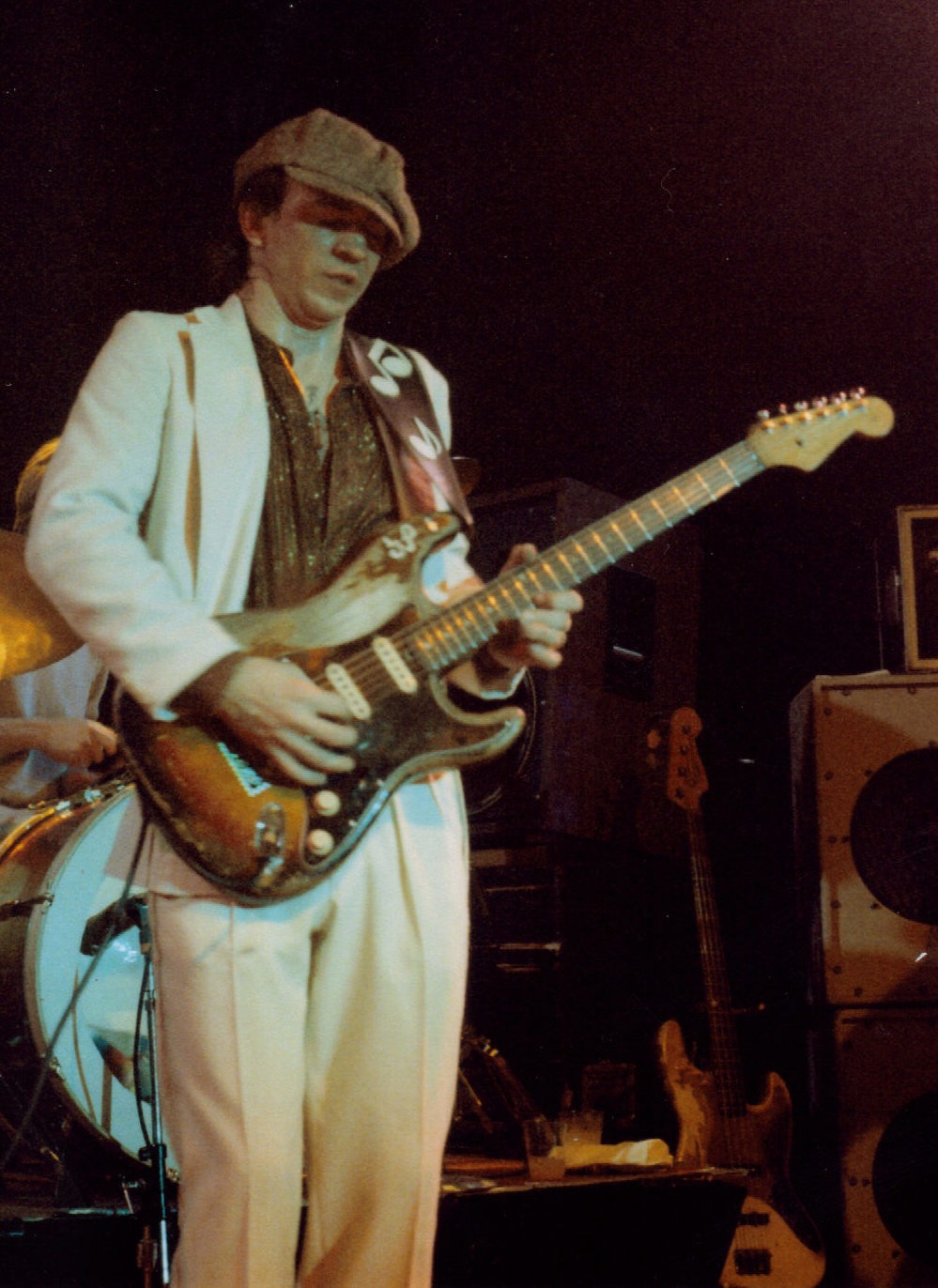
Stevie Ray Vaughan is often hailed as one of the most influential guitarists of all time, a legend whose talent transcended the blues genre and left an indelible mark on the world of music. Born on October 3, 1954, in Dallas, Texas, Vaughan’s life story is a fascinating blend of passion, perseverance, and ultimately, tragedy. His meteoric rise to fame, coupled with his untimely death, has solidified his place as a mythic figure in the annals of music history.
Early Life and Musical Beginnings
Stevie Ray Vaughan’s introduction to music began at a young age, deeply influenced by his older brother, Jimmie Vaughan, who would also become a celebrated guitarist. Growing up in a home where the sounds of blues legends like Albert King, Otis Rush, and Lonnie Mack were ever-present, Vaughan’s path to becoming a musician seemed almost predestined. He picked up the guitar in his early childhood, showing an innate ability to mimic the complex sounds he heard around him.
In 1972, Vaughan moved to Austin, Texas, a city known for its vibrant live music scene. Here, he honed his craft, playing with various bands and searching for his own unique sound. This period of his life was marked by relentless gigging, moving from one group to another, always in pursuit of something more—a sound that would define him.
The Formation of Double Trouble
Stevie Ray Vaughan’s search for musical fulfillment culminated in the formation of the band Double Trouble in 1977. Initially, the band was known as Triple Threat Revue, which included singer Lou Ann Barton. However, when Barton left the group in 1979, Vaughan took over as the lead vocalist and guitarist, transforming the band into a power trio with Chris Layton on drums and Tommy Shannon on bass.
Double Trouble quickly became a fixture in the Texas blues scene, with Vaughan’s fiery guitar playing and soulful voice drawing comparisons to the legendary Jimi Hendrix. The band’s reputation grew, and they began to attract attention from major figures in the music industry.
Discovery and Breakthrough
One of the pivotal moments in Vaughan’s career came when Mick Jagger, the iconic frontman of The Rolling Stones, took notice of his talent. Jagger was so impressed by Vaughan’s performances that he recommended him to producer Jerry Wexler, which led to Vaughan’s appearance at the Montreux Jazz Festival in 1982. This performance, though met with a mixed reaction, was a turning point—it brought Vaughan to the attention of David Bowie, who invited him to play on his 1983 album, Let’s Dance.
Although Vaughan’s collaboration with Bowie was brief—he left the tour midway due to creative differences—it provided him with the exposure he needed to launch his solo career. Shortly thereafter, Vaughan, with the help of legendary producer John Hammond Sr., released his debut album, Texas Flood, in 1983. The album was a critical and commercial success, showcasing Vaughan’s extraordinary guitar skills and cementing his status as a rising star in the music world.
The Ascent to Stardom
Following the success of Texas Flood, Vaughan released his second album, Couldn’t Stand the Weather in 1984. The album not only solidified his reputation but also demonstrated his ability to reinterpret the blues in a way that was both respectful of tradition and innovatively modern. The album included a cover of Jimi Hendrix’s “Voodoo Child (Slight Return),” a track that Vaughan made his own, turning it into a showcase of his virtuosity and deep understanding of the blues.
The success of these albums propelled Vaughan and Double Trouble into the mainstream, with Couldn’t Stand the Weather earning gold certification. Vaughan’s guitar playing was hailed as a revelation, blending the raw power of blues with the technical precision of rock, creating a sound that was uniquely his own.
Battles with Addiction and Redemption
Despite his professional success, Vaughan’s personal life was marred by struggles with addiction. The pressures of fame, combined with a relentless touring schedule, led him down a path of heavy alcohol and drug use. This period of his life was turbulent, and it eventually took a toll on his health. In 1986, during a European tour, Vaughan collapsed on stage and was rushed to the hospital—a wake-up call that forced him to confront his addiction.
Vaughan entered rehabilitation and emerged sober, a transformation that was reflected in his music. His 1989 album, In Step, was his first release after getting clean and it marked a significant milestone in his career. The album was a critical and commercial triumph, earning Vaughan his second Grammy Award and further solidifying his place as a blues icon.
The Tragic End and Legacy
Stevie Ray Vaughan’s life came to a tragic end on August 27, 1990. After performing at a concert in Alpine Valley Music Theatre in Wisconsin, alongside other legends like Eric Clapton and Buddy Guy, Vaughan boarded a helicopter bound for Chicago. Shortly after takeoff, the helicopter crashed into a hillside in dense fog, killing Vaughan and the other passengers instantly.
Vaughan’s death at the age of 35 shocked the music world. His passing was a tremendous loss, not just to the blues community, but to music as a whole. In the years since his death, Vaughan’s influence has only grown. He is remembered not only for his technical prowess but also for his ability to convey deep emotion through his playing—a quality that set him apart from many of his contemporaries.
Impact on Music and Culture
Stevie Ray Vaughan’s impact on music is immeasurable. He was a bridge between the old and new, bringing the blues to a younger generation and reinvigorating a genre that had been sidelined by the rise of rock and pop. His playing style, characterized by its intensity, clarity, and emotional depth, continues to inspire guitarists across all genres.
In the years following his death, Vaughan has been posthumously honored with numerous awards and accolades. His influence is evident in the work of countless musicians who cite him as a key inspiration. Albums like Texas Flood and In Step are considered classics, and his live performances, many of which have been released as albums, are legendary for their energy and passion.
Vaughan’s legacy is also preserved through various tributes, including the Stevie Ray Vaughan Memorial in Austin, Texas, and the annual Stevie Ray Vaughan Day in Dallas. His music continues to be celebrated by fans and musicians alike, ensuring that his contribution to the world of music will not be forgotten.
Conclusion
Stevie Ray Vaughan was more than just a guitar virtuoso; he was a transformative figure in the world of music. His ability to blend traditional blues with contemporary sounds made him a pioneer, and his influence is still felt today, decades after his untimely death. Vaughan’s life, though tragically short, was filled with remarkable achievements, and his music continues to resonate with listeners around the world.
As we reflect on his legacy, it is clear that Stevie Ray Vaughan was not only one of the greatest guitarists of his generation but also a musician who redefined what it meant to play the blues. His story is one of triumph and tragedy, but ultimately, it is a testament to the enduring power of music and the lasting impact of a true artist.


