
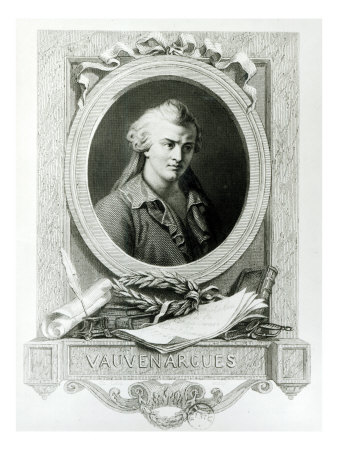
Luc de Clapiers, Marquis of Vauvenargues, is a name that resonates in the corridors of French literature and philosophy, though he remains less well-known than some of his contemporaries. Born on August 6, 1715, in Aix-en-Provence, France, Vauvenargues emerged as a significant figure in the realm of moral philosophy and literature, known for his insightful reflections on human nature and society. His life, though tragically short, was marked by intellectual rigor, military service, and an enduring influence on future generations of thinkers. This article delves into the life, works, and lasting impact of Luc de Clapiers de Vauvenargues, exploring the nuances of his philosophy and the historical context that shaped his ideas.
Early Life and Education: The Foundations of a Philosopher
Luc de Clapiers was born into a noble family in Aix-en-Provence, a region known for its rich cultural heritage. His upbringing was split between the family’s chateau in Vauvenargues and their residence in Aix, where he received his education. Despite his noble lineage, Vauvenargues faced challenges in his early education, particularly with Latin and Greek, which were essential for scholarly pursuits at the time. Nevertheless, he developed a profound admiration for classical thinkers, especially Plutarch and Seneca, whose works would influence his later writings.
The intellectual environment of Aix-en-Provence, combined with his exposure to the philosophical ideas of the Enlightenment, played a crucial role in shaping Vauvenargues’ worldview. His early struggles with formal education did not hinder his intellectual growth; instead, they fostered a self-reliant approach to learning, where he absorbed knowledge from a wide array of sources.
Military Service: A Different Path
At the age of 20, in 1735, Vauvenargues embarked on a military career, joining the French army as a lieutenant. His military service, which lasted nine years, took him through several significant campaigns, including the War of the Polish Succession and the Italian campaign under Marshal Villars in 1736. He also participated in the Bohemian campaign during the War of the Austrian Succession, where he served under Marshal de Belle-Isle.
Vauvenargues’ military career was marked by hardship and adversity. The grueling conditions of war took a toll on his health, particularly during the Bohemian campaign, where he suffered severe frostbite that left him hospitalized in Nancy. Despite his determination, these physical ailments, combined with deteriorating eyesight, eventually forced him to abandon his military career in 1744.
The experiences of war profoundly influenced Vauvenargues’ philosophical outlook. His writings reflect a deep understanding of human suffering, the nature of courage, and the futility of certain ambitions. The stark realities of military life provided him with a unique perspective on the human condition, which he later articulated in his essays and maxims.
A Turn to Literature: The Influence of Voltaire and Mirabeau
After retiring from the military, Vauvenargues turned to literature and philosophy, encouraged by his friend Victor Riqueti, Marquis de Mirabeau, and the famous philosopher Voltaire. The decision to pursue a literary career was not an easy one for Vauvenargues, as his health continued to decline, and his financial situation was precarious. Nevertheless, with the support of his influential friends, he moved to Paris in 1745, where he began to immerse himself in the intellectual circles of the city.
Paris, the epicenter of Enlightenment thought, offered Vauvenargues the opportunity to engage with some of the greatest minds of his time. His friendship with Voltaire was particularly significant. Voltaire recognized Vauvenargues’ intellectual potential and encouraged him to publish his thoughts. It was under Voltaire’s guidance that Vauvenargues began to compile his reflections on human nature, morality, and society.
In 1746, Vauvenargues published his first major work, Introduction à la connaissance de l’esprit humain (Introduction to the Knowledge of the Human Mind), followed by Réflexions et Maximes (Reflections and Maxims). These works, though not immediately successful, laid the foundation for Vauvenargues’ reputation as a moralist and philosopher. His writings were characterized by a concise and aphoristic style, blending philosophical insight with practical wisdom.
Philosophical Contributions: Reflections on Human Nature
Vauvenargues’ philosophy centers on the exploration of human nature, the complexities of character, and the moral dimensions of life. He was deeply influenced by the Stoics, particularly Seneca, and his work reflects a Stoic emphasis on self-control, virtue, and the acceptance of fate. However, Vauvenargues also departed from traditional Stoicism by emphasizing the importance of passion and emotion as driving forces in human life.
One of Vauvenargues’ most famous maxims is: “The art of pleasing is the art of deceiving.” This statement encapsulates his belief in the dual nature of human interactions—where charm and charisma often mask deeper intentions. His reflections on the nature of ambition, honor, and integrity offer a nuanced view of the human experience, acknowledging both the noble and the base elements of human character.
In his Introduction à la connaissance de l’esprit humain, Vauvenargues argues that understanding human nature is the key to understanding the world. He critiques the rationalism of his time, suggesting that reason alone cannot account for the complexities of human behavior. Instead, he advocates for a more holistic approach that considers emotions, instincts, and social influences.
Legacy and Influence: A Philosopher Ahead of His Time
Despite his contributions to philosophy, Vauvenargues’ work did not receive widespread recognition during his lifetime. His writings were overshadowed by those of more prominent figures like Voltaire and Rousseau, and his early death at the age of 31 in 1747 cut short what could have been a more extensive body of work. However, Vauvenargues’ influence grew in the years following his death, as later thinkers recognized the depth and originality of his insights.
Vauvenargues’ posthumous reputation was bolstered by the publication of a revised edition of his works, edited by the Abbés Trublet and Séguy, with Voltaire’s encouragement. This edition, published in 1747, removed over 200 maxims from the original, reflecting Vauvenargues’ meticulous approach to his work and his desire for precision in expression.
His influence can be seen in the works of later moralists and philosophers, particularly in the 19th century, when his maxims were rediscovered and appreciated for their psychological acuity. Vauvenargues’ emphasis on the complexity of human nature and his critique of rationalism anticipated some of the themes that would later be developed by existentialist and romantic thinkers.
The Historical Context: Enlightenment France
To fully appreciate Vauvenargues’ work, it is essential to understand the historical and intellectual context in which he lived. The early 18th century was a period of significant intellectual ferment in France, marked by the rise of the Enlightenment—a movement that emphasized reason, science, and the critique of traditional authority. Thinkers like Voltaire, Diderot, and Montesquieu were challenging established norms and promoting new ideas about society, politics, and human nature.
However, Vauvenargues’ work also reflects a certain ambivalence towards the Enlightenment’s rationalism. While he was undoubtedly influenced by the intellectual climate of his time, his writings suggest a more complex view of human nature that goes beyond the purely rational. In this sense, Vauvenargues can be seen as both a product of the Enlightenment and a precursor to later critiques of its limitations.
His reflections on the limitations of reason, the role of passion, and the importance of moral integrity resonate with the broader intellectual currents of his time, but they also offer a distinct perspective that sets him apart from his contemporaries. Vauvenargues’ work is characterized by a deep understanding of the human condition, rooted in personal experience and philosophical inquiry.
Conclusion: The Enduring Relevance of Vauvenargues
Luc de Clapiers, Marquis de Vauvenargues, may not be as widely known as some of his Enlightenment peers, but his contributions to moral philosophy and literature are significant. His reflections on human nature, character, and morality offer timeless insights that continue to resonate with readers today. Vauvenargues’ ability to distill complex ideas into succinct and powerful maxims makes his work accessible and relevant, even in the modern era.
His life, marked by hardship and intellectual pursuit, serves as a testament to the enduring power of ideas. Vauvenargues’ writings remind us that understanding the human mind requires more than just reason—it requires empathy, introspection, and a willingness to engage with the full spectrum of human experience.
As we continue to explore the works of great thinkers from the past, Vauvenargues’ reflections offer valuable lessons on the nature of ambition, the role of passion, and the importance of maintaining integrity in a complex and often contradictory world. His legacy, though not as widely celebrated as some, remains a vital part of the rich tapestry of French intellectual history.


