
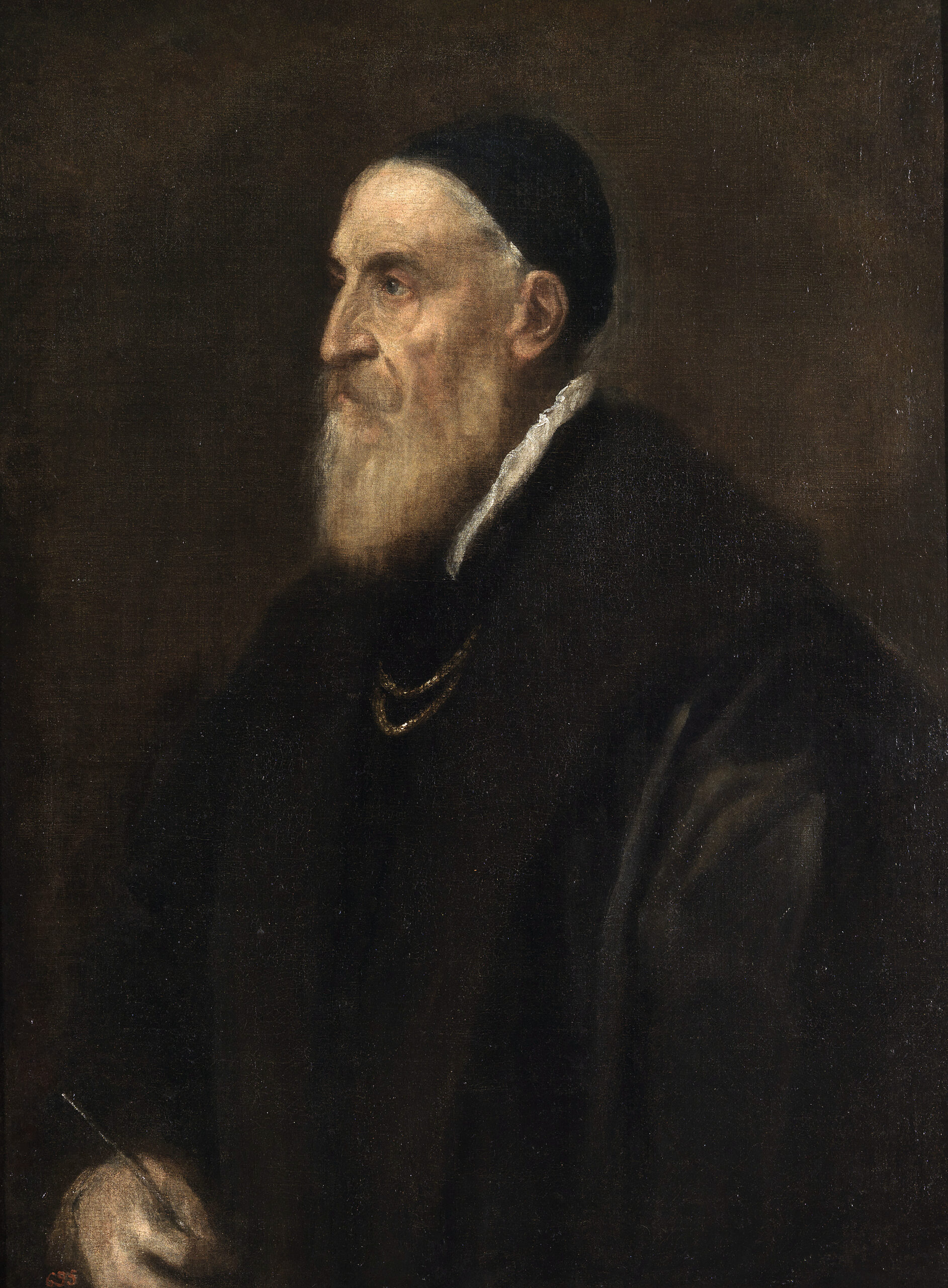
Tiziano Vecellio, commonly known as Titian, was a towering figure in the world of Renaissance art. Born in the small town of Pieve di Cadore, in the province of Belluno, nestled among the Dolomites, Titian’s exact birthdate remains a subject of scholarly debate. Historical estimates place his birth between 1480 and 1485, with some sources suggesting dates as early as 1477 or as late as 1490. Despite the uncertainty surrounding his birth, Titian’s impact on art is indisputable. His innovative use of color and masterful compositions have left an indelible mark on the art world, securing his place as one of the most influential artists of all time.
Early Life and Education
Titian hailed from a noble family with deep roots in the Cadore region. His father, Gregorio Vecellio, was a prominent figure, serving as a notary and a high-ranking officer in the militia of the Venetian Republic. Titian was the second of five children, and his mother, Lucia, played a significant role in his upbringing. His family background afforded him opportunities that many of his contemporaries could only dream of.
At a young age, Titian was sent to Venice, the heart of the Renaissance in Italy, to pursue his artistic education. Venice was a bustling center of commerce, culture, and art, making it an ideal environment for a young artist to develop his craft. Titian’s first apprenticeship was in the workshop of Gentile Bellini, one of the leading painters in Venice at the time. After Bellini’s death in 1507, Titian continued his training under Gentile’s brother, Giovanni Bellini, who had succeeded his brother as the court painter of Venice.
The vibrant and intellectually stimulating environment of Venice played a crucial role in shaping Titian’s artistic vision. The city was home to a thriving humanist community, and Titian was exposed to the works of other great artists, including Leonardo da Vinci, Albrecht Dürer, and Michelangelo. These interactions and influences helped Titian develop his unique style, characterized by his use of vibrant colors and dynamic compositions.
The Influence of Giorgione and Early Works
One of the most significant influences on Titian’s early work was Giorgione, another Venetian painter who was known for his innovative use of color and light. While the exact nature of their relationship remains unclear, it is widely believed that Titian and Giorgione worked closely together during the early 1500s. Some art historians suggest that Titian may have completed some of Giorgione’s unfinished works after his untimely death in 1510, including the famous “Sleeping Venus.”
This period marked the beginning of Titian’s rise to fame. In 1503, he received his first major commission from Jacopo Pesaro, the Bishop of Paphos, to create the “Paletta di Anversa.” This work, which displayed a strong influence from the Bellini brothers, established Titian as a promising young artist in Venice. However, it was his later works that would truly set him apart from his contemporaries.
Rise to Fame: The Venetian Years
By the early 1510s, Titian had begun to establish himself as one of the leading painters in Venice. His reputation grew rapidly, and he became known for his ability to capture the human form with unparalleled realism and emotion. His first official commission for the Venetian Republic came in 1507 when he was tasked with creating frescoes for the Fondaco dei Tedeschi, a prominent building in Venice. This work was followed by a series of commissions that solidified his status as the city’s premier painter.
One of the most important works of this period was the “Assunta” (The Assumption of the Virgin), completed in 1518 for the Basilica di Santa Maria Gloriosa dei Frari. This monumental altarpiece, characterized by its dramatic use of color and light, was a departure from the more restrained compositions of his earlier works. The “Assunta” was a critical and popular success, and it marked the beginning of a series of major commissions for religious institutions throughout Italy.
Another significant work from this period was the “Pala Pesaro” (Pesaro Madonna), commissioned by the Pesaro family for the same church. This painting, completed in 1526, is a masterful example of Titian’s ability to balance complex compositions with a sense of harmony and order. The “Pala Pesaro” features a dynamic arrangement of figures, with the Madonna and Child positioned off-center, creating a sense of movement and depth that was revolutionary for its time.
International Recognition and Court Painter
Titian’s fame soon spread beyond the borders of Venice, and he began to receive commissions from some of the most powerful rulers in Europe. In 1533, he was invited to the court of Emperor Charles V, who was so impressed with Titian’s work that he named him a Count Palatine and a Knight of the Golden Spur, two of the highest honors that could be bestowed upon an artist at the time. This relationship with Charles V marked the beginning of a long and fruitful career as a court painter, during which Titian produced some of his most famous works.
One of the most notable portraits from this period is the “Equestrian Portrait of Charles V,” completed in 1548. This painting, which depicts the emperor on horseback after his victory at the Battle of Mühlberg, is considered one of the greatest equestrian portraits in art history. The portrait captures the power and authority of Charles V, while also conveying a sense of his humanity and vulnerability.
Titian’s success at the imperial court led to commissions from other European monarchs, including King Philip II of Spain. For Philip, Titian created a series of mythological paintings known as the “poesie,” which are considered some of his greatest masterpieces. These works, including “Danaë,” “Venus and Adonis,” and “The Rape of Europa,” are characterized by their sensuous beauty and rich color palette.
Later Years and Legacy
As Titian’s fame grew, so did his wealth. He became one of the richest artists of his time, and his financial success allowed him to live a life of comfort and luxury. However, despite his success, Titian never stopped innovating. In his later years, he continued to push the boundaries of art, experimenting with new techniques and approaches.
One of the most striking features of Titian’s later work is his use of color. He developed a technique known as “colore,” in which he used layers of translucent glazes to create a sense of depth and luminosity in his paintings. This technique became a hallmark of his style and influenced generations of artists who came after him.
In the 1560s, as Titian entered his eighties, his health began to decline. However, he continued to work until his death in 1576, producing some of his most powerful and emotionally charged works during this period. One of his final works, the “Pietà,” was intended for his tomb in the Basilica di Santa Maria Gloriosa dei Frari. This painting, which was completed by his student Palma il Giovane after his death, is a testament to Titian’s enduring genius and his deep spiritual devotion.
Titian’s impact on the art world cannot be overstated. He was a pioneer of the Venetian School, and his innovative use of color and composition set new standards for artistic excellence. His influence can be seen in the works of later artists, including Peter Paul Rubens, Diego Velázquez, and Rembrandt, who all admired and were inspired by Titian’s mastery of the medium.
Conclusion
Tiziano Vecellio, or Titian, was more than just a painter; he was a revolutionary force in the world of art. His ability to capture the human experience with such vividness and emotion, combined with his innovative use of color, ensured that his work would endure for centuries. Today, Titian’s paintings continue to be celebrated for their beauty, complexity, and profound impact on the course of art history. From his humble beginnings in the Dolomites to his rise as one of the most sought-after artists in Europe, Titian’s life and work remain a testament to the transformative power of art.
His legacy is not only preserved in the countless masterpieces that hang in the world’s most prestigious museums but also in the way he transformed the very nature of painting, laying the groundwork for future generations of artists. Titian’s life story is a vivid reminder of how talent, ambition, and relentless innovation can leave an indelible mark on the world.


