
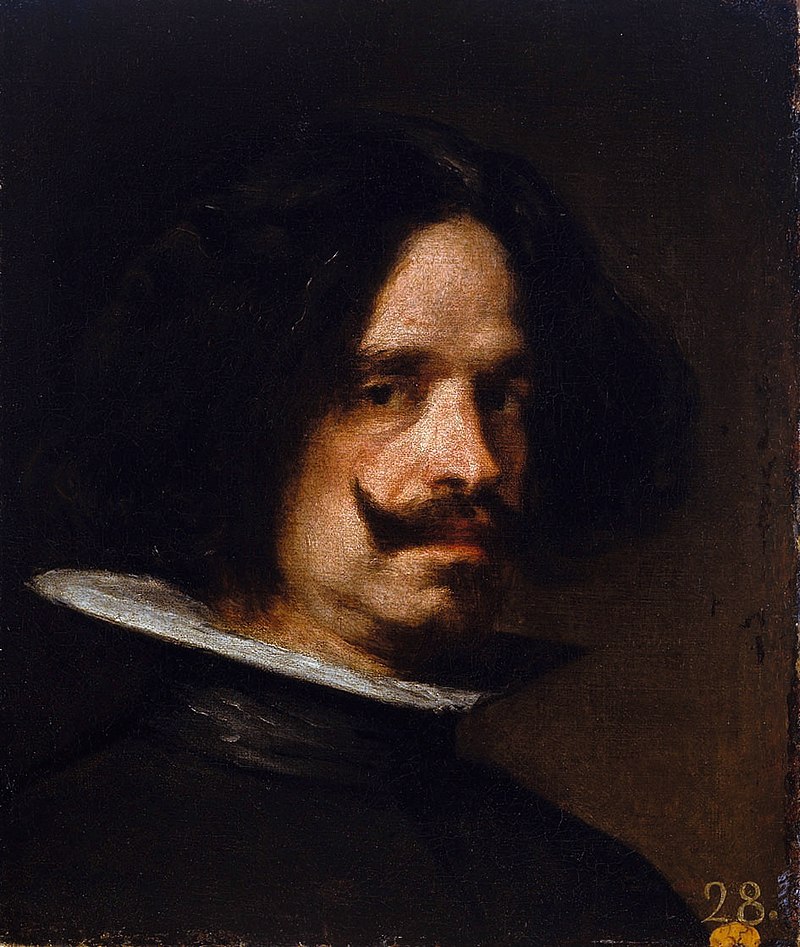
Diego Velázquez, born Diego Rodríguez de Silva y Velázquez in June 1599, is widely regarded as one of the most important figures in the history of Western art. His influence on the development of European painting is immense, and his works continue to be celebrated for their technical mastery, innovative compositions, and deep psychological insight. Velázquez’s life and career offer a fascinating glimpse into the world of 17th-century Spain, a time of great political, cultural, and artistic change.
Early Life and Background
Diego Velázquez was born in Seville, Spain, into a family of modest means. His father, Juan Rodríguez de Silva, was a lawyer of Portuguese Jewish descent, and his mother, Jerónima Velázquez, came from the lower nobility, known as the hidalgo class. Despite the challenges of his social standing, Velázquez’s talent was evident from a young age. He received a solid education in religion, philosophy, and languages, which would later inform the intellectual depth of his work.
At the age of 12, Velázquez began his artistic training under Francisco Herrera the Elder, a prominent painter in Seville. Herrera’s bold, vigorous style had a lasting impact on Velázquez, particularly in his use of long-bristled brushes. However, after only a year, Velázquez left Herrera’s studio to apprentice with Francisco Pacheco, a more conservative and academically oriented artist. Pacheco was not only a painter but also a theorist and writer, and his influence on Velázquez extended beyond technique to include an understanding of art’s role in society and its connection to literature and history.
During his apprenticeship, Velázquez honed his skills in perspective, proportion, and composition. Pacheco’s studio was a hub of intellectual activity, frequented by poets, scholars, and other artists. This environment helped shape Velázquez’s sophisticated approach to painting, blending technical precision with a keen awareness of cultural and intellectual trends.
Rise to Prominence: The Seville Period
By the early 1620s, Velázquez had already established a reputation as one of Seville’s leading painters. His works from this period, such as The Adoration of the Magi and The Immaculate Conception, are marked by a strong sense of realism and attention to detail. Velázquez’s early works are notable for their use of chiaroscuro—a technique that contrasts light and dark to create a sense of volume and depth—and his ability to capture the subtleties of human expression.
In 1618, Velázquez married Juana Pacheco, the daughter of his mentor. The couple had two daughters, and Velázquez’s growing family life coincided with his increasing success as an artist. His works from this period reflect a deepening engagement with religious themes, often imbued with a sense of quiet introspection and human vulnerability.
Velázquez’s reputation in Seville soon caught the attention of the Spanish court. In 1623, he was summoned to Madrid to paint a portrait of King Philip IV. The resulting portrait, completed in a single day, was a resounding success. The king and his chief minister, the Count-Duke of Olivares, were so impressed that they immediately appointed Velázquez as the official court painter. This marked the beginning of Velázquez’s long and illustrious career at the heart of Spanish power.
The Madrid Years: Court Painter to Philip IV
Velázquez’s move to Madrid in 1623 was a turning point in his career. As the court painter, he was tasked with creating portraits of the royal family and other members of the aristocracy. These portraits are among the most celebrated works in the history of art, combining meticulous attention to detail with a profound psychological insight into the character of his subjects.
One of Velázquez’s earliest commissions at court was a portrait of Philip IV, which established his reputation as the leading portraitist of his time. Velázquez’s portraits of the king, such as Philip IV in Brown and Silver and Philip IV in Armor, capture the monarch’s aloof dignity and regal presence, while also revealing the underlying humanity of the man behind the crown.
In 1627, Velázquez won a competition among the leading artists of Spain to create a painting on the theme of the expulsion of the Moors from Spain. Although the painting itself was later destroyed in a fire, the victory secured Velázquez’s position as the most important artist at court. He was subsequently appointed as the royal aposentador, a position that involved managing the king’s private apartments and organizing court ceremonies.
During this period, Velázquez began to develop his mature style, characterized by a greater emphasis on naturalism and a more sophisticated use of color and light. His works from the 1630s, such as The Surrender of Breda and The Forge of Vulcan, demonstrate his mastery of composition and his ability to convey complex narratives with clarity and elegance.
Travels to Italy and Artistic Development
In 1629, Velázquez embarked on his first journey to Italy, a trip that would have a profound impact on his work. Funded by King Philip IV, this trip allowed Velázquez to study the works of the great Italian masters, including Titian, Raphael, and Michelangelo. He also had the opportunity to meet and exchange ideas with contemporary Italian artists, further enriching his artistic vision.
During his time in Italy, Velázquez created several important works, including Joseph’s Bloody Coat Brought to Jacob and The Forge of Vulcan. These paintings reflect a shift towards a more refined and mature style, with a greater focus on the human figure and the depiction of dramatic narrative scenes.
Velázquez’s experience in Italy also led to a deepening of his interest in classical themes and mythology, which would later be evident in works such as The Rokeby Venus and Mars Resting. These works demonstrate his ability to blend classical ideals with a distinctly personal and innovative approach to painting.
After returning to Spain in 1631, Velázquez continued to produce some of his most iconic works, including a series of equestrian portraits of the royal family. These portraits, such as Philip IV on Horseback and Prince Balthasar Carlos on Horseback, are remarkable for their dynamic compositions and the way they convey the power and majesty of their subjects.
Masterpieces of the Spanish Golden Age
The 1640s and 1650s were the most productive and successful years of Velázquez’s career. During this period, he created some of his most famous works, including Las Meninas, The Spinners, and The Surrender of Breda.
Las Meninas, completed in 1656, is perhaps Velázquez’s most celebrated painting. The work is a complex and enigmatic composition that depicts a scene in the royal palace, with the young Infanta Margarita surrounded by her ladies-in-waiting, a dwarf, and a dog. Velázquez himself is shown at his easel, painting the scene that we, the viewers, are witnessing. The painting is a masterful exploration of perspective, light, and the relationship between the artist and his subject.
Las Meninas is widely regarded as one of the greatest paintings in the history of Western art. It has been the subject of extensive analysis and interpretation, with scholars debating its meaning and significance for centuries. The painting’s innovative use of composition and its exploration of the nature of representation have made it a touchstone for artists and art historians alike.
Another masterpiece from this period is The Surrender of Breda, a historical painting that depicts the surrender of the Dutch city of Breda to the Spanish army during the Eighty Years’ War. The painting is notable for its careful attention to detail, the dignity with which Velázquez portrays both the victors and the vanquished, and its use of color and light to create a sense of harmony and balance.
Velázquez’s ability to capture the human experience with empathy and realism is also evident in his portraits of court jesters and dwarfs, such as The Jester Don Juan de Austria and The Dwarf Francisco Lezcano. These portraits, far from being mere depictions of court entertainments, reveal the dignity and individuality of their subjects, offering a poignant commentary on the nature of human existence.
Legacy and Influence
Diego Velázquez’s influence on the art world is immeasurable. His innovative techniques and his ability to capture the complexities of human emotion have inspired generations of artists, from the Impressionists to the modernists. His work is often cited as a precursor to the realism of the 19th century, and his exploration of light and shadow laid the groundwork for later developments in art.
Velázquez’s legacy extends beyond his technical achievements. His deep engagement with the intellectual and cultural currents of his time, his ability to navigate the complex political landscape of the Spanish court, and his commitment to his craft have made him a model for artists and scholars alike.
In 1660, Velázquez was called upon to organize the ceremonial decorations for the marriage of Louis XIV of France and Maria Teresa of Spain, a union that marked a significant diplomatic alliance between the two countries. Shortly after completing this task, Velázquez fell ill and died in Madrid on August 6, 1660. He was buried in the Church of San Juan Bautista, but his tomb was destroyed during the Napoleonic Wars, and its exact location remains unknown.
Despite the loss of his physical resting place, Velázquez’s legacy endures in his art. His works continue to be studied, admired, and revered, not only for their technical brilliance but also for their profound insight into the human condition. Velázquez’s ability to transcend the limitations of his time and place, to speak to universal themes of power, beauty, and mortality, ensures that his art will continue to resonate with audiences for generations to come.


