
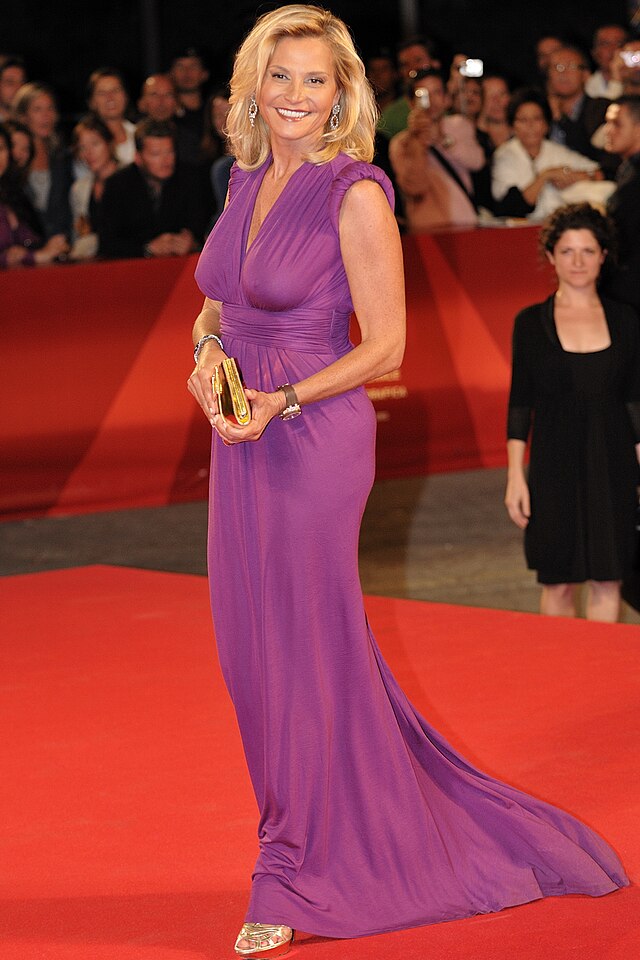
Simona Ventura, born on April 1, 1965, in Bologna, Italy, is a household name in Italian television, renowned for her dynamic personality and her ability to engage audiences across various genres. With a career spanning over three decades, Ventura has solidified her status as one of Italy’s most influential TV presenters. From sports journalism to reality television and talent shows, her versatility and charm have made her a beloved figure in Italian media. This article explores Simona Ventura’s life, her rise to fame, and the pivotal moments that have defined her illustrious career.
Early Life and Education
Simona Ventura was born in Bologna but moved to Turin at a young age with her family. Growing up, she showed a keen interest in sports, participating in ski competitions during her school years. Ventura attended the Liceo Scientifico and later the ISEF (Istituto Superiore di Educazione Fisica) in Turin, where she nurtured her passion for physical education. Her athletic background and love for sports would later play a significant role in shaping her career.
Before venturing into television, Ventura explored the world of beauty pageants, where she gained early recognition. She participated in several competitions, including the “Miss Muretto” contest in Alassio, which she won. Her big break in the beauty pageant circuit came in 1988 when she represented Italy in the “Miss Universe” pageant, finishing fourth—a significant achievement that set the stage for her entry into television.
Early Career: From Sports Journalism to National Television
Simona Ventura’s television career began in the late 1980s when she made her debut on the RAI program “Domani sposi,” co-hosting alongside Giancarlo Magalli. This experience marked her first foray into national television, but it was her move into sports journalism that truly launched her career.
Ventura started her journalism career with smaller television stations before joining TMC (Telemontecarlo), where she covered the 1990 FIFA World Cup in Italy. Her role involved reporting on both the Italian and Brazilian national teams, and her work earned her widespread recognition. She continued to build her reputation in sports journalism by covering the 1992 UEFA European Championship in Sweden and the 1992 Summer Olympics in Barcelona.
Her growing popularity caught the attention of legendary TV presenter Pippo Baudo, who invited her to co-host “Domenica In” in 1992. This opportunity exposed Ventura to a broader audience and marked the beginning of her rise to fame. She also became a regular on the “Domenica Sportiva,” Italy’s premier sports program, breaking new ground as one of the few women in a male-dominated field.
Breakthrough: The 1990s and “Mai dire gol”
The 1990s were a transformative decade for Simona Ventura, during which she became a central figure in Italian television. In 1993, she made a pivotal career move by joining Mediaset and becoming a part of the cast of “Mai dire gol,” a comedic sports program produced by the Gialappa’s Band. The show, which mixed sports commentary with humor and satire, became a huge hit, and Ventura’s role as a presenter helped her cement her status as a national celebrity.
Ventura’s natural comedic timing and ability to connect with both the audience and her co-hosts made her a standout on the show. Over the years, she co-hosted “Mai dire gol” with notable figures such as Claudio Lippi, Francesco Paolantoni, Teo Teocoli, and Antonio Albanese. Her work on the show not only showcased her versatility but also established her as a comedic talent in addition to her sports journalism credentials.
Throughout the 1990s, Ventura continued to expand her portfolio, hosting a variety of shows on Mediaset. She presented “Cuori e denari” (1995), “Scherzi a parte” (1995, 1999), “Boom” (with Gene Gnocchi), “Festivalbar” (1997), and “Gli indelebili” (1999). These programs allowed Ventura to demonstrate her wide-ranging skills as a presenter, from entertainment and comedy to music and reality TV.
The Face of “Le Iene” and Television Stardom
One of Simona Ventura’s most iconic roles came in the late 1990s when she began hosting “Le Iene,” a groundbreaking program that combined investigative journalism with humor. The show quickly became a cultural phenomenon in Italy, known for its satirical take on current events, pranks, and undercover investigations.
Ventura’s role on “Le Iene” solidified her image as a bold and fearless presenter. She brought a unique mix of style and substance to the show, with her daring outfits and sharp wit becoming her trademarks. Her work on “Le Iene” earned her critical acclaim and numerous awards, including the title of “Television Woman of the Year” in 1998 and 1999.
In addition to “Le Iene,” Ventura continued to host other successful programs, such as “Matricole” and “Zelig – Noi facciamo cabaret,” further establishing her dominance in Italian television. Her versatility and ability to handle different formats, from comedy to serious journalism, made her one of the most sought-after presenters in the industry.
The 2000s: Reality TV and Beyond
The new millennium brought new challenges and opportunities for Simona Ventura. In 2001, she made a significant career move by returning to RAI, where she took over as the host of “Quelli che il calcio,” a popular sports entertainment program. Taking the reins from Fabio Fazio, Ventura revitalized the show, bringing her unique blend of humor, insight, and energy to the role. Her tenure on “Quelli che il calcio” was marked by high ratings and widespread acclaim, as she became synonymous with the program.
In 2003, Ventura took on one of the most defining roles of her career: hosting the reality TV show “L’Isola dei Famosi.” The Italian version of “Survivor,” “L’Isola dei Famosi” became a massive hit under Ventura’s stewardship. Her ability to manage the drama and unpredictability of reality TV, while maintaining a connection with both the contestants and the audience, made the show a cornerstone of Italian television.
Ventura’s success with “L’Isola dei Famosi” led to other high-profile hosting gigs, including the 54th edition of the Sanremo Music Festival in 2004, where she co-hosted alongside Gene Gnocchi and Maurizio Crozza. She also hosted “Music Farm,” a reality show focused on discovering new musical talents.
Challenges and Reinvention
Despite her successes, Simona Ventura faced challenges in the mid-2000s, including personal struggles and professional setbacks. Her marriage to footballer Stefano Bettarini, with whom she had two sons, Nicolò and Giacomo, ended in separation in 2004. The public nature of their relationship and its eventual breakdown was widely covered in the media, adding pressure to Ventura’s public and private life.
In 2007, Ventura launched a new prime-time show, “Colpo di Genio,” with Teo Teocoli. However, the show struggled with ratings and was canceled after just two episodes. This setback was a rare misstep in Ventura’s otherwise successful career.
Undeterred, Ventura continued to evolve, taking on new challenges and exploring different avenues in television. In 2008, she became a judge on the Italian version of “X Factor,” joining a panel that included Morgan and Mara Maionchi. Her role on “X Factor” allowed Ventura to tap into her love of music while mentoring aspiring artists. The show was a hit, and Ventura’s involvement helped boost its popularity in Italy.
The 2010s: Reinventing the Brand
The 2010s saw Simona Ventura continue to reinvent herself while maintaining her status as a leading figure in Italian television. She hosted multiple seasons of “L’Isola dei Famosi,” including the 2011 edition, where she made headlines by joining the contestants in Honduras for a short stint to boost the show’s ratings.
In 2011, Ventura made another significant career move by joining Sky Italia, where she hosted various programs, including the Italian version of “MasterChef.” Her decision to move to Sky marked a new chapter in her career, as she explored different formats and reached new audiences.
In 2014, after a three-year hiatus from mainstream television, Ventura returned to host the “Miss Italia” pageant on LA7. Her return to the spotlight was met with enthusiasm, as she continued to prove her enduring appeal.
Ventura further expanded her repertoire in 2016 when she became a contestant on the 11th edition of “L’Isola dei Famosi,” this time as a participant rather than a host. Her participation showcased her adventurous spirit and willingness to take risks, both personally and professionally.
In 2018, Ventura returned to Mediaset to host new programs, including the first edition of “Temptation Island VIP,” a reality show that quickly became a hit. Her ability to adapt to the changing landscape of reality TV and her continued relevance in the industry underscored her staying power.
Recent Work and Legacy
Simona Ventura’s recent work includes hosting the 2019 edition of “The Voice of Italy” on Rai 2 and conducting an in-depth interview with Chiara Ferragni in the special “Fenomeno Ferragni” in 2020. In 2021, she continued to push the boundaries of her career by hosting the game show “Game of Games – Gioco Loco” on Rai 2.
Throughout her career, Ventura has consistently demonstrated her ability to adapt to new challenges and remain at the forefront of Italian television. Her journey from a beauty queen to a sports journalist, and eventually to one of Italy’s most recognized TV personalities, is a testament to her versatility, resilience, and talent.
Simona Ventura’s legacy in Italian television is undeniable. She has broken barriers, particularly for women in sports journalism, and has been a pioneer in reality TV. Her influence extends beyond the screen, as she continues to inspire a new generation of presenters and entertainers.
As she continues to evolve and take on new projects, Simona Ventura’s place in the annals of Italian television history is assured. Her ability to connect with audiences, adapt to changing trends, and maintain her authenticity has made her a beloved and enduring figure in Italian media.


