
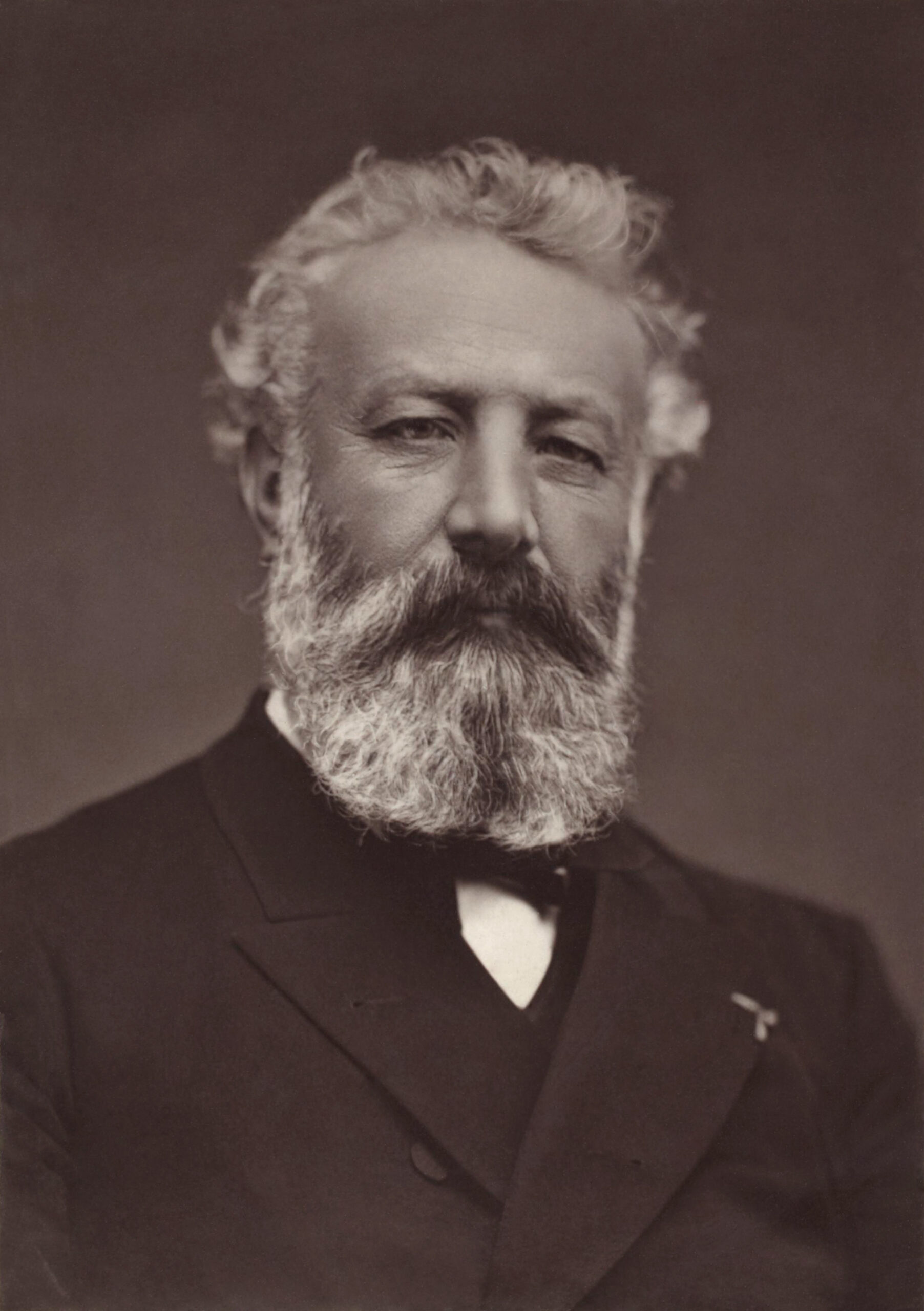
Jules Verne, born on February 8, 1828, in Nantes, France, is a name synonymous with visionary literature and pioneering adventure narratives. Known as one of the founding figures of science fiction, Verne’s works have transcended time, captivating readers of all ages across generations. His tales are filled with futuristic inventions, explorations of uncharted territories, and a profound understanding of the scientific advancements of his time. But who exactly was Jules Verne? What shaped his extraordinary life, and how did he achieve the fame that has made his name a permanent fixture in literary history?
Early Life and Education
Jules Verne was born into a well-to-do family. His father, Pierre Verne, was a lawyer, and his mother, Sophie Allotte, came from a wealthy family. Verne’s early education began under the tutelage of a sea captain’s widow, which perhaps sparked his lifelong fascination with the sea and adventure. At the tender age of eight, he was enrolled in a seminary with his brother, Paul. It was here that his first taste of rebellion surfaced, leading him to stow away on a ship bound for the Indies at just 11 years old. His father intercepted him at the first port of call, and young Jules was brought back home. When questioned about his motives, he famously declared that he would only travel “in his dreams” from then on.
Verne’s early schooling continued at the lycée in Nantes, where he showed a propensity for literature. However, his father’s ambitions for him lay in law, not literature. After completing his baccalauréat in 1846, Verne was sent to Paris to pursue a legal career.
The Struggle Between Law and Literature
In Paris, Verne was supposed to focus on his legal studies, but the vibrant literary scene of the city had a stronger pull on him. By 1848, he was writing his first dramatic work, which he read to a small circle of friends in Nantes. The theater in Paris became his second home, and he immersed himself in writing plays and making connections with established writers.
In 1849, Verne met Alexandre Dumas père, the famed author of “The Three Musketeers” and “The Count of Monte Cristo.” Dumas became a mentor to Verne and allowed him to stage a comedy in verse at his theater, which received favorable reviews. Despite this early success, Verne continued his legal studies, earning his law degree in 1850. His father wanted him to become a lawyer, but Jules had already decided that literature was his true calling.
Early Literary Works and Breakthrough
Verne’s first foray into literature came with the publication of “Un voyage en ballon” (A Balloon Voyage) in 1851. This was an adventurous story published in a magazine, and it marked the beginning of his lifelong fascination with the idea of flight and exploration. In the same year, Verne became the secretary of Edmond Seveste, the director of the Théâtre Lyrique. This position provided him with financial stability and the opportunity to continue writing.
During this period, Verne befriended Jacques Arago, a renowned traveler of the 19th century, who would often regale him with tales of his adventures. These stories would later inspire many of Verne’s works. In 1857, Verne married Honorine Morel, a widow with two children. Her father’s connections helped Verne secure a position as a stockbroker, which provided him with the financial security he needed to focus on his writing.
The Dawn of Fame: “Five Weeks in a Balloon”
Jules Verne’s literary career truly began to take off in 1862 when he presented the manuscript of “Cinq semaines en ballon” (Five Weeks in a Balloon) to the publisher Pierre-Jules Hetzel. Hetzel recognized Verne’s potential and signed him to a long-term contract that would last for twenty years. “Five Weeks in a Balloon” was an instant success, allowing Verne to leave his job as a stockbroker and dedicate himself fully to writing.
This novel set the tone for the works that would follow: a combination of adventure, scientific speculation, and exploration of unknown lands. The book was quickly followed by “Voyage au centre de la Terre” (Journey to the Center of the Earth) in 1864, and “De la Terre à la Lune” (From the Earth to the Moon) in 1865. These novels not only solidified Verne’s reputation as a master of adventure literature but also showcased his ability to blend fiction with science in a way that was both entertaining and educational.
Major Works and Contributions to Literature
Verne’s novels became widely popular across Europe and eventually the world, transcending language barriers and cultural differences. His works were translated into numerous languages, making him one of the most translated authors in the world. Some of his most famous works include:
-
“Vingt mille lieues sous les mers” (Twenty Thousand Leagues Under the Sea) – Published in 1870, this novel is one of Verne’s most famous and influential works. It follows the underwater adventures of Captain Nemo and his submarine, the Nautilus. The novel is not only an adventure story but also a commentary on the wonders and dangers of technological advancement.
-
“Le tour du monde en quatre-vingts jours” (Around the World in Eighty Days) – Published in 1873, this novel tells the story of Phileas Fogg, an Englishman who attempts to circumnavigate the globe in 80 days to win a bet. The novel is a celebration of the technological advancements of the time, particularly the railways and steamships that made such a journey possible.
-
“L’île mystérieuse” (The Mysterious Island) – Published in 1874, this novel is a sequel of sorts to “Twenty Thousand Leagues Under the Sea.” It tells the story of a group of castaways on an uncharted island in the Pacific, where they encounter strange phenomena and eventually discover that the island is the hideout of Captain Nemo.
-
“Michel Strogoff” – Published in 1876, this novel is a departure from Verne’s usual science fiction themes. It is a historical adventure set in Russia and follows the journey of a courier who must deliver an important message to the Tsar during a rebellion.
Verne’s works are often credited with predicting many future inventions and technological advancements, such as submarines, space travel, and even the internet. His detailed descriptions of these inventions, combined with his thorough research into the scientific knowledge of his time, have led many to consider him a visionary.
Later Life and Legacy
As his fame grew, so did Verne’s wealth, allowing him to purchase a home on the Somme estuary and a yacht, the Saint-Michel II, which he used to explore the seas that had so often inspired his work. In 1867, he traveled to the United States with his brother Paul on the Great Eastern, a massive steamship involved in laying the transatlantic telegraph cable. This journey inspired “Twenty Thousand Leagues Under the Sea,” one of his most enduring novels.
Verne’s life took a darker turn in 1886 when he was shot by a young man whose identity remains uncertain. The incident left Verne with a permanent limp and marked the beginning of a period of physical decline. Despite this, he continued to write, producing some of his most profound works during this time.
In the final years of his life, Verne settled in Amiens, where he was elected to the local council in 1889. He remained active in politics and literature until his death on March 24, 1905. His legacy lives on not only in the continued popularity of his novels but also in the influence he has had on the genre of science fiction and adventure literature.
The Enduring Appeal of Jules Verne
Jules Verne’s work remains popular today, more than a century after his death. His novels have been adapted into countless films, television shows, and stage productions, and his influence can be seen in the works of modern science fiction writers. Verne’s ability to imagine the future and his optimism about the potential of human achievement continue to resonate with readers and audiences around the world.
Verne’s work also serves as a reminder of the power of literature to inspire curiosity and a sense of wonder. His novels encourage readers to explore the world around them, to ask questions about the future, and to dream of possibilities that have yet to be realized. In this way, Jules Verne’s legacy is not just one of literary achievement but also of inspiration and imagination.


