
Introduction
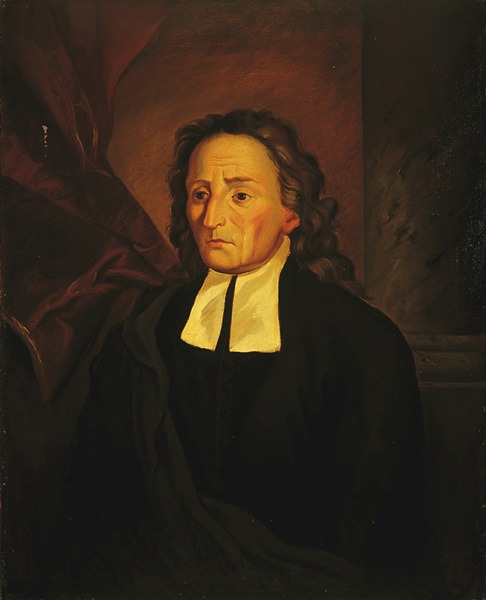
Giambattista Vico, born on June 23, 1668, in Naples, Italy, is a towering figure in the history of Western philosophy. His work laid the groundwork for many modern disciplines, including sociology, anthropology, and historical philosophy. Known for his original thoughts and contributions, particularly his magnum opus Scienza Nuova (New Science), Vico’s ideas have continued to influence thinkers long after his death. This article delves into Vico’s life, the development of his ideas, his rise to fame, and the highlights of his intellectual journey.
Early Life and Education
Giambattista Vico was born into a modest family in Naples. His father was a bookseller, a profession that undoubtedly exposed the young Vico to a wide range of literature and ideas from an early age. However, Vico’s childhood was not without challenges. At the age of seven, he suffered a severe head injury after falling from a ladder. This accident led to a prolonged period of convalescence during which he was unable to attend school. This setback, however, became a turning point in his life, as it marked the beginning of his self-directed education.
Vico’s formal education was interrupted at an early age, and he eventually abandoned regular schooling altogether in 1681. Instead, he became an autodidact, immersing himself in the study of grammar, logic, and jurisprudence. His intellectual pursuits were deeply influenced by the works of classical authors, as well as by the Catholic tradition that dominated Neapolitan culture at the time. This unique combination of influences would later play a crucial role in the development of his philosophical ideas.
Early Career and Academic Pursuits
In 1689, Vico accepted a position as a tutor to the sons of the Marquis of Rocca di Vatolla, a role that he would hold for several years. This period of his life, spent in the quiet countryside of Cilento, allowed him to deepen his studies and reflect on the nature of human knowledge. The Marquis’s extensive library provided Vico with access to a wealth of classical and contemporary texts, which he studied rigorously.
During this time, Vico began to formulate his ideas on history, language, and human nature. He was particularly influenced by the works of Augustine, Marsilio Ficino, and Pico della Mirandola, among others. These thinkers helped shape Vico’s understanding of the cyclical nature of history and the importance of human agency in the creation of cultural and social structures.
In 1693, Vico published his first work, a poetic piece titled Affetti di un disperato (Feelings of a Desperate Man), which was influenced by the Roman poet Lucretius. Although this work did not bring him fame, it marked the beginning of his literary and philosophical career.
The University of Naples and the Rise to Fame
By the late 1690s, Vico had returned to Naples, where he embarked on a more public academic career. In 1699, he was appointed to a professorship in rhetoric at the University of Naples, a position he would hold for the rest of his life. This role allowed him to engage with the intellectual community of Naples and to begin articulating his own philosophical ideas.
Vico’s inaugural lectures at the University of Naples, known as the “Inaugural Orations,” were delivered in Latin and reflected his deep commitment to classical rhetoric and philosophy. These orations were revised and published multiple times throughout his life, and they laid the foundation for much of his later work.
During this period, Vico became increasingly interested in the study of history and the role of language in shaping human thought. His ideas began to crystallize around the concept of a “new science” that would explain the development of human societies through the study of their historical and cultural artifacts.
The Scienza Nuova: Vico’s Magnum Opus
In 1725, Vico published the first edition of his most important work, Scienza Nuova (New Science). This groundbreaking book marked a departure from the dominant Cartesian philosophy of the time, which emphasized rationalism and mathematical logic as the foundations of knowledge. Instead, Vico argued that true knowledge of human nature could only be attained through an understanding of history and the cultural practices that define human societies.
Scienza Nuova posited that history is cyclical, following a pattern of rise, decline, and renewal. Vico identified three stages in this cycle: the age of gods, the age of heroes, and the age of men. According to Vico, societies begin in a mythic state, dominated by religious and supernatural beliefs (the age of gods). They then transition to a heroic age, characterized by the emergence of powerful leaders and the development of social hierarchies. Finally, societies enter an age of reason, where human beings govern themselves through laws and rational thought.
One of Vico’s most original contributions in Scienza Nuova was his concept of “corsi e ricorsi” (courses and recourses), which described the cyclical nature of history. He argued that human societies, while progressing through these stages, eventually return to earlier forms, but on a higher level of development. This idea of historical recursiveness was revolutionary and offered a new way of understanding the development of civilizations.
Vico also emphasized the importance of “poetic wisdom,” or the imaginative and symbolic thought that characterizes early human societies. He believed that this form of knowledge, embodied in myths, legends, and religious practices, was essential for understanding the origins of human culture.
Although Scienza Nuova was not widely recognized during Vico’s lifetime, it has since been hailed as one of the most important works in the history of philosophy. Its influence can be seen in the later development of fields such as anthropology, sociology, and historiography.
Personal Life and Later Years
Despite his intellectual achievements, Giambattista Vico’s personal life was marked by financial difficulties and a lack of widespread recognition. He married in 1699, the same year he secured his position at the University of Naples, and he struggled to support his growing family on his modest salary. Vico’s financial struggles were compounded by his lack of success in securing more prestigious academic positions, a situation that left him frustrated and somewhat isolated from the broader intellectual community.
Nevertheless, Vico continued to write and teach throughout his life. In 1735, he was appointed as the Royal Historiographer by the King of Naples, a position that provided him with some financial stability and recognition, albeit late in his career. This role allowed him to continue his research and to publish further editions of Scienza Nuova, each of which expanded and refined his ideas.
Vico’s final years were spent revising and refining his works, including his Autobiography, which provides valuable insights into his life and thought processes. He continued to struggle with poor health, and his physical condition deteriorated in the early 1740s.
Giambattista Vico passed away on January 23, 1744, in Naples at the age of 75. His death marked the end of a life dedicated to the pursuit of knowledge and the development of a new way of understanding human history and culture.
Posthumous Recognition and Legacy
While Vico’s work was not widely recognized during his lifetime, it gained significant attention in the centuries following his death. The 20th century, in particular, saw a resurgence of interest in Vico’s ideas, largely due to the efforts of Italian philosopher Benedetto Croce, who recognized Vico as a precursor to modern historical and cultural philosophy.
Vico’s influence can be seen in a wide range of disciplines, from philosophy and history to anthropology and sociology. His ideas about the cyclical nature of history, the importance of language and myth in shaping human thought, and the concept of “poetic wisdom” have had a lasting impact on the study of human societies.
In contemporary scholarship, Vico is often regarded as one of the founding figures of the philosophy of history. His emphasis on the importance of understanding the historical and cultural context of human societies has influenced thinkers across a variety of fields, including Karl Marx, James Joyce, and Michel Foucault.
Vico’s Scienza Nuova remains a seminal text in the study of historical philosophy, and his ideas continue to inspire and challenge scholars today. His work offers a unique perspective on the development of human societies and the ways in which history, culture, and language shape our understanding of the world.
Conclusion
Giambattista Vico’s life and work represent a remarkable contribution to the intellectual history of the Western world. From his early years as an autodidact in Naples to his development of a groundbreaking philosophy of history, Vico’s ideas have left an indelible mark on the study of human culture and society.
Although he faced many challenges during his lifetime, including financial difficulties and a lack of recognition, Vico’s perseverance and dedication to his intellectual pursuits have ensured that his work continues to be studied and celebrated today. His Scienza Nuova remains a foundational text in the philosophy of history, and his legacy as a thinker who challenged the dominant ideas of his time is secure.
As we reflect on Giambattista Vico’s contributions to the world of philosophy and history, it is clear that his work offers timeless insights into the nature of human societies and the ways in which we understand our past. His ideas continue to resonate with scholars and thinkers around the world, making him one of the most important figures in the history of Western thought.


