
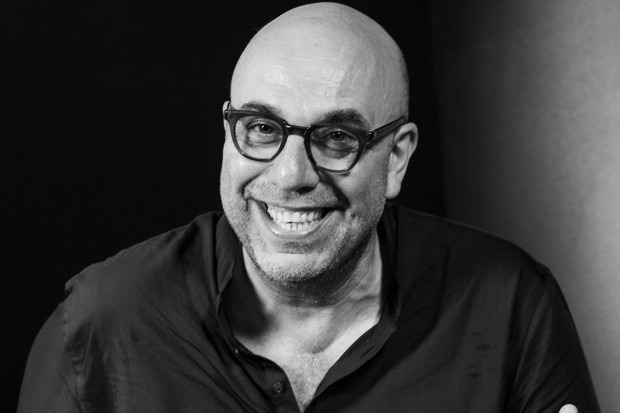
Paolo Virzì, born on March 4, 1964, in Livorno, Italy, is a renowned film director, screenwriter, and producer. His journey from a young boy in a modest neighborhood to one of Italy’s most celebrated filmmakers is not just a story of talent but of determination, resilience, and an unyielding passion for cinema. This article delves into the life, career, and achievements of Paolo Virzì, offering a comprehensive look at his contributions to Italian and global cinema.
Early Life and Education
Paolo Virzì’s early years were marked by geographical and cultural shifts. Born to a Sicilian father who served as a carabiniere, Virzì spent his childhood in various Italian cities. He began his schooling in Turin, a city known for its industrial prowess and rich cultural history. It was in the working-class neighborhoods of Santa Rita and Mirafiori Nord that young Paolo first began to explore his creative inclinations. The family later moved back to Livorno, where he spent his adolescence.
Livorno, a port city with a vibrant cultural scene, played a pivotal role in shaping Virzì’s early interests. He became involved in local amateur theater groups, where he not only acted but also began writing and directing plays. This period of his life laid the groundwork for his future in cinema, allowing him to experiment with storytelling and develop a deep understanding of human emotions, themes that would later become central to his films.
After completing high school, Virzì enrolled at the University of Pisa, where he studied Literature and Philosophy. His academic pursuits were soon overshadowed by his growing passion for film, leading him to the Centro Sperimentale di Cinematografia in Rome, Italy’s premier film school. Here, he studied screenwriting under the guidance of illustrious mentors like Furio Scarpelli and Gianni Amelio, both of whom would profoundly influence his cinematic style.
Early Career and Breakthrough
After graduating in 1987, Virzì began his career in the Italian film industry by collaborating with established filmmakers and screenwriters. His early work includes contributions to the screenplay of Giuliano Montaldo’s “Tempo di uccidere,” based on the novel by Ennio Flaiano. This experience honed his skills in adapting literature to film, a technique that would become a hallmark of his later work.
Virzì’s talent for storytelling caught the attention of industry veterans, and he soon found himself working on several notable projects in the early 1990s. These included writing the screenplay for “Turné,” directed by Gabriele Salvatores, and “Condominio,” directed by Felice Farina. His work during this period demonstrated his ability to blend humor with social commentary, a combination that would define his style.
Directorial Debut: “La bella vita” (1994)
Virzì made his directorial debut in 1994 with “La bella vita,” a film that would set the tone for his career. Starring Massimo Ghini and Sabrina Ferilli, the film is a poignant exploration of the lives of ordinary people in a small Italian town, dealing with themes of love, economic hardship, and the search for happiness. “La bella vita” was well-received by both critics and audiences, earning Virzì the Nastro d’Argento, Ciak d’Oro, and David di Donatello awards for Best Debut Director.
The film’s success was a clear indication of Virzì’s potential as a filmmaker. His ability to portray the complexities of human relationships with humor and empathy quickly established him as a significant new voice in Italian cinema. “La bella vita” also highlighted his knack for working with actors, drawing out performances that were both nuanced and deeply human.
Rise to Fame: “Ovosodo” (1997)
Virzì’s rise to fame was solidified with the release of “Ovosodo” in 1997. The film, which won the Silver Lion at the Venice Film Festival, is a semi-autobiographical coming-of-age story set in Livorno. It follows the life of Piero Mansani, a young boy from a working-class background, as he navigates the challenges of adolescence, love, and social mobility.
“Ovosodo” resonated with audiences for its authentic portrayal of life in a small Italian town and its insightful commentary on the socio-economic conditions of the time. The film’s success established Virzì as one of Italy’s leading filmmakers, capable of creating works that were both commercially successful and critically acclaimed.
2000s: Diversification and Critical Acclaim
The 2000s were a period of diversification for Virzì. In 2001, he founded his production company, Motorino Amaranto, which allowed him greater creative freedom. Despite facing financial challenges, particularly during the production of “My Name is Tanino” (2002), Virzì continued to produce films that were both innovative and accessible.
“My Name is Tanino” was a significant project for Virzì, as it marked his first foray into international filmmaking. The film, shot in Italy, the United States, and Canada, follows the adventures of a young Sicilian man who embarks on a journey across America. Although the production faced numerous financial difficulties, Virzì’s resilience ensured the film’s completion and release.
In 2003, Virzì released “Caterina va in città,” a film that explored the cultural and social divides in contemporary Italy. Starring Margherita Buy and Sergio Castellitto, the film was praised for its sharp social commentary and strong performances. It also won several awards, including the David di Donatello for Best Supporting Actress.
Virzì continued to experiment with different genres and themes throughout the decade. In 2006, he directed “N (Io e Napoleone),” an adaptation of Ernesto Ferrero’s novel “N,” which explores the exile of Napoleon Bonaparte through the eyes of his librarian. The film, starring Monica Bellucci and Daniel Auteuil, was a critical success and showcased Virzì’s ability to handle historical material with a modern sensibility.
2010s: International Recognition and Continued Success
The 2010s were a period of international recognition for Virzì. In 2013, he was appointed as the director of the Torino Film Festival, one of Italy’s most prestigious film festivals. This role further cemented his status as a leading figure in Italian cinema.
One of Virzì’s most significant films during this period was “Il capitale umano” (2014), a dark and gripping drama that examines the lives of two families entangled in a tragic accident. The film received widespread acclaim for its storytelling and performances, earning 19 nominations at the David di Donatello awards and winning seven, including Best Film. “Il capitale umano” was also selected as Italy’s entry for the Best Foreign Language Film at the 2015 Oscars.
Virzì’s success continued with “La pazza gioia” (2016), a comedy-drama about two women who escape from a psychiatric institution. The film was a critical and commercial success, winning numerous awards, including the David di Donatello for Best Director. In 2017, he made his English-language debut with “The Leisure Seeker,” starring Helen Mirren and Donald Sutherland, which was well-received by international audiences.
Personal Life and Legacy
Paolo Virzì’s personal life has often been intertwined with his professional career. In 2009, he married actress Micaela Ramazzotti, with whom he has two children. The couple has collaborated on several films, including “La prima cosa bella” (2009), which earned 18 nominations at the David di Donatello awards and solidified Virzì’s reputation as a master storyteller.
Virzì’s films are known for their deep humanism, blending humor with social commentary to create works that resonate with a wide audience. His ability to capture the intricacies of Italian life, from the struggles of the working class to the dilemmas of the bourgeoisie, has made him one of the most important filmmakers of his generation.
Conclusion
Paolo Virzì’s journey from a young boy in Livorno to one of Italy’s most celebrated filmmakers is a testament to his talent, perseverance, and passion for storytelling. His films, which explore the human condition with humor, empathy, and insight, have left an indelible mark on Italian and global cinema. As he continues to create and inspire, Virzì’s legacy as a master of contemporary filmmaking is assured.


