
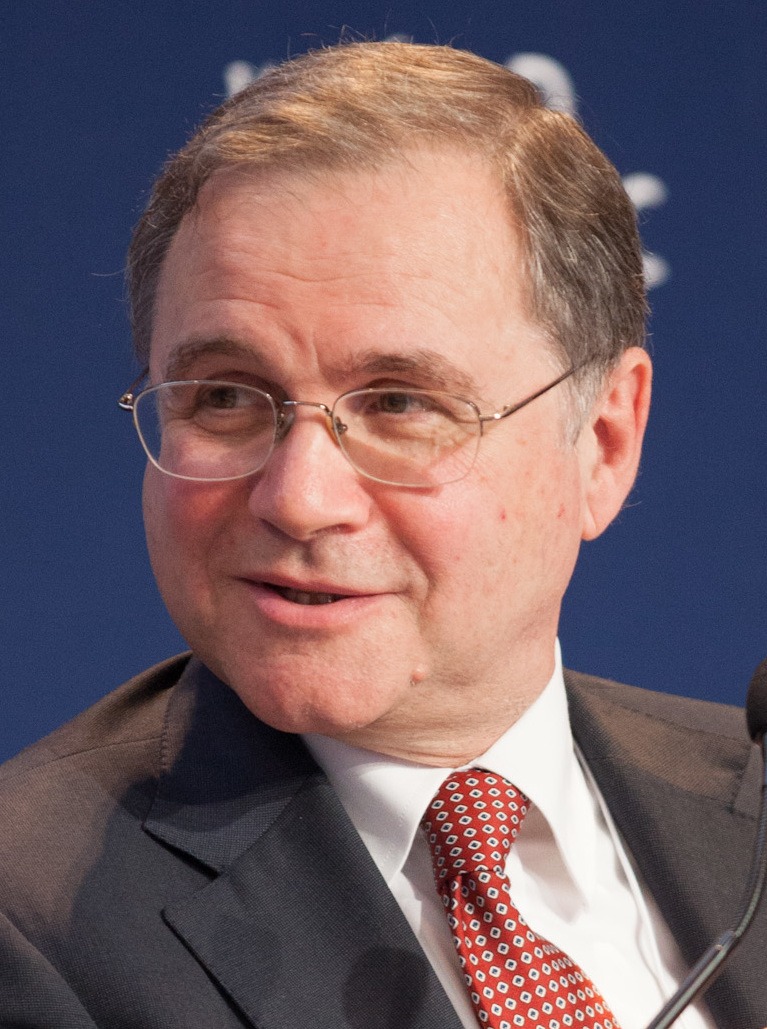
Ignazio Visco, a prominent figure in the global financial landscape, was born on November 21, 1949, in Naples, Italy. Over the course of his distinguished career, Visco has become one of Italy’s most respected economists, known for his deep expertise in macroeconomics, monetary policy, and international finance. His journey from a student of economics to the Governor of the Bank of Italy is a testament to his intellectual rigor, dedication, and ability to navigate the complex world of economic policy.
Early Life and Education
Ignazio Visco’s early life in Naples was marked by a strong academic inclination. He pursued his higher education at the prestigious University of Rome “La Sapienza,” where he graduated with honors in Economics and Commerce in 1971. His thesis, titled “Verification of the Hypothesis of Incorporating Price Increases into the Interest Rate,” was supervised by the renowned economist Federico Caffè. This early work hinted at the analytical depth that would characterize Visco’s contributions to economics throughout his career.
Following his graduation, Visco joined the Bank of Italy in 1972, a move that would define his professional trajectory. To further enhance his expertise, Visco pursued advanced studies in the United States. He attended the University of Pennsylvania, where he was awarded several scholarships, including the “B. Stringher,” “Luigi Einaudi,” and “Marco Fanno” scholarships. At Penn, Visco earned a Master of Arts in 1974 and a Ph.D. in Economics in 1981. His doctoral thesis, “The Measurement, Analysis, and Formation of Inflation Expectations,” under the guidance of esteemed economists such as Albert Ando, Lawrence Robert Klein, and R.S. Mariano, laid the groundwork for his future contributions to economic thought.
The Bank of Italy and Early Contributions
Upon completing his studies in the United States, Ignazio Visco returned to Italy and resumed his work at the Bank of Italy in 1974. His early years at the bank were spent in the Research Department, where he quickly rose through the ranks. By 1990, Visco had become the head of the department, a position that allowed him to influence the development of economic models and policies that would shape Italy’s economic strategy.
One of Visco’s notable achievements during this period was his coordination of the team responsible for constructing the Quarterly Model of the Italian Economy (1983-1986). This model became a crucial tool for analyzing and forecasting economic trends in Italy, providing the Bank of Italy with a robust framework for monetary policy and exchange rate interventions.
Visco’s work extended beyond the confines of the Bank of Italy. He represented the institution in various national and international organizations, including ISTAT (Italian National Institute of Statistics), CNEL (National Council for Economics and Labour), CNR (National Research Council), and the Prime Minister’s Office. His expertise was also sought by international bodies such as the OECD (Organisation for Economic Co-operation and Development) and the EU, where he contributed to discussions on global economic issues.
International Recognition and Roles
Ignazio Visco’s reputation as a leading economist grew beyond Italy’s borders, and in 1997, he was appointed Chief Economist and Director of the Economics Department at the OECD. In this role, Visco oversaw the analysis of economic policies in industrialized countries and led research projects on major global economic and financial challenges. His tenure at the OECD from 1997 to 2002 was marked by significant contributions to the understanding of macroeconomic policy and global economic stability.
During this period, Visco also became involved in several key international committees, including the Deputies Committee of the G-10 (Group of Ten), where he represented the Bank of Italy from 2004 to 2006, and the Commission on Global Ageing at the Center for Strategic and International Studies in Washington. These roles allowed Visco to influence global economic policy, particularly in areas related to aging populations and pension systems, issues that would become increasingly relevant in the years to come.
Return to the Bank of Italy and Ascension to Governor
In 2004, Ignazio Visco returned to the Bank of Italy as a General Manager, initially overseeing foreign activities and later the central bank’s economic research. His deep understanding of global economic dynamics and his extensive experience made him an invaluable asset to the Bank of Italy during a period of significant economic challenges.
Visco’s expertise and leadership were recognized when he was appointed Deputy Governor of the Bank of Italy on January 9, 2007. In this role, he played a critical part in guiding the bank’s monetary policy and its response to the global financial crisis that began in 2008. His work during this tumultuous period helped stabilize Italy’s financial system and ensured the country’s economic resilience.
On November 1, 2011, Ignazio Visco was appointed Governor of the Bank of Italy, succeeding Mario Draghi, who had moved on to become President of the European Central Bank. Visco’s appointment came at a time of significant economic uncertainty, both in Italy and across Europe. His tenure as Governor was characterized by a focus on maintaining financial stability, implementing necessary reforms, and navigating the complex landscape of the Eurozone’s economic challenges.
Publications and Academic Contributions
Throughout his career, Ignazio Visco has been a prolific writer and thinker, contributing to the field of economics through numerous publications. His works cover a wide range of topics, including inflation expectations, savings, wealth accumulation, and the economics of aging. Some of his notable publications include:
-
“Price Expectations in Rising Inflation” (1984) – This book, published by North Holland, delves into the formation of price expectations during periods of rising inflation, a topic that remains relevant in understanding inflationary pressures in modern economies.
-
“Le Aspettative nell’Analisi Economica” (1985) – Published by Il Mulino, this work explores the role of expectations in economic analysis, offering insights into how economic agents form expectations and how these expectations influence economic outcomes.
-
“Inflazione, Concorrenza e Sviluppo” (1993) – Co-authored with Stefano Micossi, this book examines the relationship between inflation, competition, and economic development, providing a comprehensive analysis of the factors that drive economic growth in an inflationary environment.
-
“Saving and the Accumulation of Wealth” (1994) – Co-authored with Albert Ando and Luigi Guiso, this publication by Cambridge University Press investigates the dynamics of saving and wealth accumulation, offering a detailed analysis of household saving behavior and its implications for economic policy.
-
“L’Economia Italiana” (2002) – Co-authored with Luigi Federico Signorini, this book offers an in-depth analysis of the Italian economy, discussing its strengths, weaknesses, and the challenges it faces in the global economic landscape.
-
“Investire in Conoscenza” (2009) – In this work, Visco argues for the importance of investing in knowledge and education as a means of fostering economic growth and innovation. He emphasizes the role of human capital in driving long-term economic prosperity.
Visco’s academic contributions extend beyond his publications. He has taught econometrics and economic policy at the University of Rome “La Sapienza” and has served as an Associate Editor for the European Economic Review. His involvement in various academic and research institutions, including the Fondazione Enrico Mattei and the International Center for Monetary and Banking Studies in Geneva, highlights his commitment to advancing economic knowledge and policy.
Leadership at the Bank of Italy
As Governor of the Bank of Italy, Ignazio Visco faced numerous challenges, including the ongoing fallout from the global financial crisis, the sovereign debt crisis in the Eurozone, and the need for structural reforms in Italy’s economy. His leadership was marked by a steady hand and a focus on maintaining the stability of Italy’s financial system.
Visco’s tenure as Governor saw the implementation of crucial reforms aimed at strengthening Italy’s banking sector and improving its regulatory framework. He also played a key role in the European Central Bank’s efforts to stabilize the Eurozone, working closely with other central bankers to navigate the complex dynamics of monetary union.
Under Visco’s leadership, the Bank of Italy maintained a strong emphasis on economic research and policy analysis, ensuring that the institution remained at the forefront of economic thinking in Europe. His commitment to transparency and communication helped build public trust in the Bank of Italy during a period of significant economic uncertainty.
The Legacy of Ignazio Visco
Ignazio Visco’s legacy as an economist and central banker is characterized by his deep intellectual rigor, his commitment to public service, and his ability to navigate the complexities of global economic policy. His contributions to the field of economics, both through his academic work and his leadership at the Bank of Italy, have had a lasting impact on Italy’s economic policy and its position within the global economy.
As Visco’s tenure as Governor of the Bank of Italy came to an end in 2023, he was succeeded by Fabio Panetta, marking the end of an era. However, Visco’s influence on Italian and global economic policy will continue to be felt for years to come. His work on inflation expectations, savings, and wealth accumulation remains relevant in today’s economic discussions, and his leadership during some of Italy’s most challenging economic periods will be remembered as a model of effective central banking.
Historical Context and Nuances
Understanding Ignazio Visco’s impact requires an appreciation of the broader historical and economic context in which he operated. Visco’s career spanned a period of significant change in the global economy, from the inflationary pressures of the 1970s to the financial crises of the early 21st century. His work at the Bank of Italy and the OECD placed him at the center of many of these developments, allowing him to influence economic policy at both the national and international levels.
Visco’s emphasis on the importance of expectations in economic analysis was particularly relevant during periods of economic instability. His research provided valuable insights into how expectations are formed and how they influence economic behavior, helping policymakers better understand and manage economic fluctuations.
Moreover, Visco’s focus on the interplay between savings, investment, and economic growth has informed discussions on how to foster long-term economic stability. His work on the economics of aging and pension reform remains particularly pertinent as countries around the world grapple with the challenges posed by aging populations and the sustainability of pension systems.
Conclusion
Ignazio Visco’s life and career are a testament to the power of knowledge, analysis, and public service in shaping economic policy. From his early days as a student of economics to his role as Governor of the Bank of Italy, Visco has consistently demonstrated a commitment to understanding and addressing the complex challenges facing the global economy.
As a scholar, Visco has made significant contributions to the field of economics, offering valuable insights into inflation, savings, and economic expectations. As a public servant, he has played a crucial role in guiding Italy through some of its most difficult economic periods, always with an eye toward stability and long-term prosperity.
Ignazio Visco’s legacy as an economist and central banker will continue to influence economic thought and policy for years to come. His work serves as a reminder of the importance of intellectual rigor, careful analysis, and a commitment to the public good in addressing the economic challenges of our time.


