
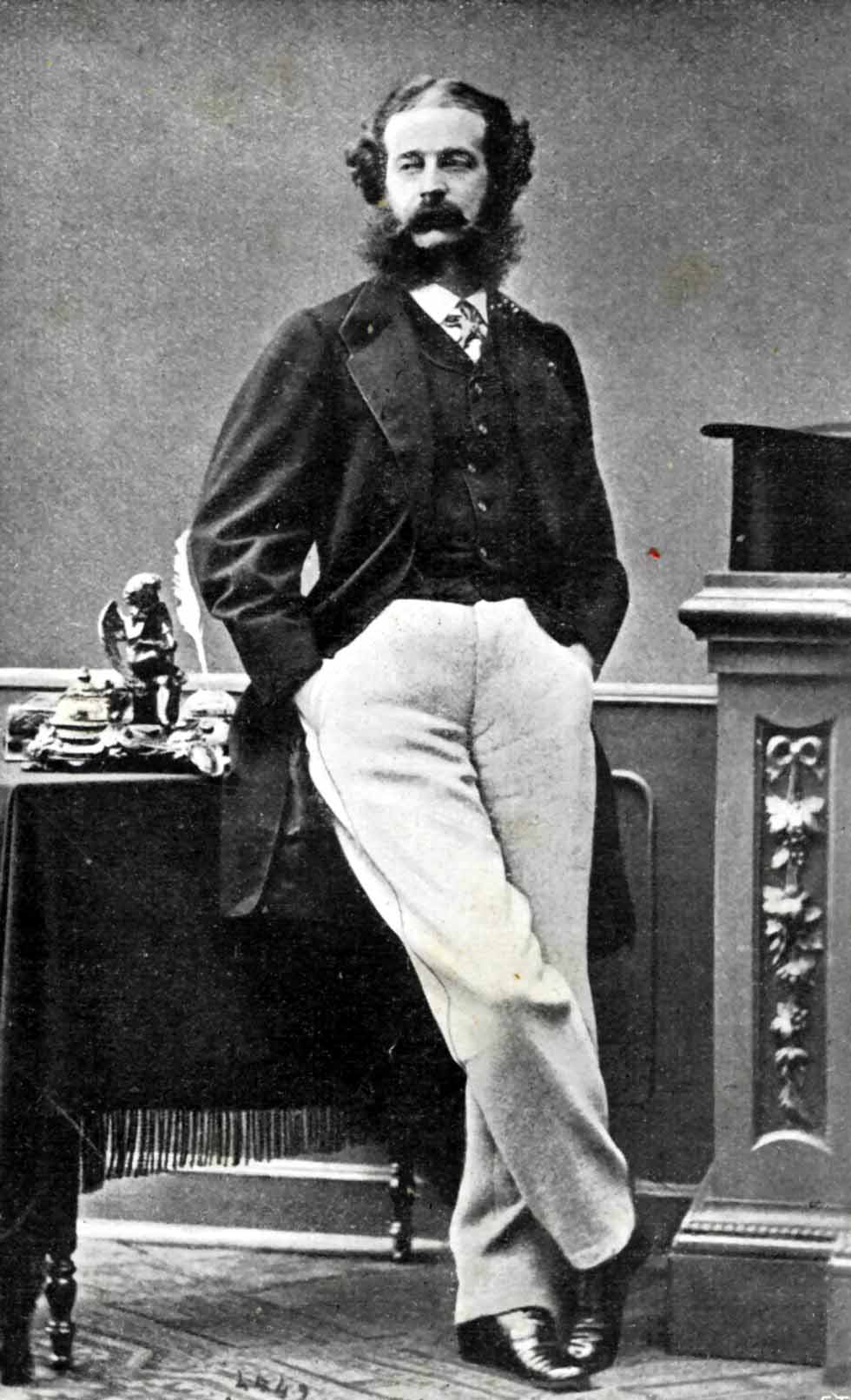
Introduction:
Emilio Visconti Venosta, born on January 22, 1829, in Milan, Italy, is a figure of significant historical importance. A distinguished diplomat, politician, and patriot, Visconti Venosta played a pivotal role in shaping modern Italy during the 19th and early 20th centuries. His life and career are a testament to his dedication to Italian unification, diplomatic finesse, and commitment to the principles of liberalism and patriotism. In this comprehensive exploration, we delve into the life, achievements, and legacy of Emilio Visconti Venosta, a man who left an indelible mark on Italian and European history.
Early Life and Education:
Emilio Visconti Venosta was born into an aristocratic family with deep roots in the Valtellina region. His upbringing in a family of the ancient nobility instilled in him a strong sense of duty and a commitment to the values of patriotism and public service. As a young man, Visconti Venosta was deeply influenced by the political and social upheavals of the time, particularly the revolutionary movements sweeping across Europe in the mid-19th century.
His early education was marked by a focus on liberal arts, which laid the groundwork for his later career in diplomacy and politics. The intellectual environment of Milan, a city at the forefront of the Italian Risorgimento (the movement for Italian unification), further shaped his worldview, fostering a deep commitment to the ideals of freedom, unity, and national independence.
Involvement in the Italian Unification Movement:
Emilio Visconti Venosta’s early political activities were closely tied to the Italian unification movement. He was an ardent supporter of Giuseppe Mazzini, a leading figure in the fight for Italian independence and unification. Mazzini’s vision of a united Italy as a democratic republic resonated deeply with the young Visconti Venosta, who actively participated in the political discourse of the time.
In 1853, Visconti Venosta took part in the revolutionary uprisings known as the Five Days of Milan, a significant event in the broader struggle for Italian independence from Austrian rule. However, the failure of the revolution and the harsh reprisals that followed led him to reconsider his political affiliations. Disillusioned with the radical approach of Mazzini and the republicans, Visconti Venosta began to gravitate towards a more moderate, liberal form of nationalism, aligning himself with the ideas of Camillo Benso, Count of Cavour, one of the architects of Italian unification.
Diplomatic Career and Political Rise:
Visconti Venosta’s transition to a more moderate political stance coincided with his entry into the world of diplomacy and statecraft. In 1859, he moved to Piedmont, where he began working closely with Cavour, who recognized his potential as a diplomat and statesman. Cavour appointed Visconti Venosta as a government commissioner in Varese, where he collaborated with Giuseppe Garibaldi during the campaigns of the Second Italian War of Independence.
In 1860, Visconti Venosta’s diplomatic skills were put to the test when he was sent to Paris, alongside Gioacchino Pepoli, to negotiate the terms of the annexation of central Italian states to the Kingdom of Sardinia. These negotiations with Napoleon III were crucial in shaping the future political landscape of Italy, leading to the eventual unification of the country under the House of Savoy.
The following year, Visconti Venosta was elected as a deputy to the first Italian Parliament, representing the historical Right. His election marked the beginning of a long and distinguished parliamentary career that spanned several decades. During this time, Visconti Venosta became known for his pragmatism, diplomatic acumen, and unwavering commitment to the cause of Italian unity and independence.
Ministerial Roles and Key Diplomatic Achievements:
Emilio Visconti Venosta’s most significant contributions to Italian and European diplomacy came during his tenure as Italy’s Minister of Foreign Affairs. He first assumed this role in 1863, under the government of Marco Minghetti, and quickly established himself as one of Italy’s most capable and respected diplomats.
One of his early successes was the negotiation of the “September Convention” with France in 1864. This agreement, which involved the transfer of Italy’s capital from Turin to Florence, was instrumental in securing the withdrawal of French troops from Rome, paving the way for the eventual unification of the city with the rest of Italy. The September Convention was a delicate balancing act, requiring Visconti Venosta to navigate the complex and often contradictory interests of France, the Papal States, and the burgeoning Italian nation.
In 1866, Visconti Venosta was appointed as Italy’s envoy to Constantinople, where he played a key role in managing Italy’s relations with the Ottoman Empire during a period of significant geopolitical tension in the Eastern Mediterranean. His diplomatic efforts during this time helped to stabilize Italy’s position in the region and prevent the escalation of conflicts that could have drawn the country into war.
Perhaps one of the most challenging issues Visconti Venosta faced as Foreign Minister was the “Roman Question” – the status of Rome and its relationship with the Papacy. Following the capture of Rome by Italian forces in 1870, Visconti Venosta was instrumental in drafting the “Law of Guarantees,” which sought to define the relationship between the Italian state and the Catholic Church. Although the law was only a temporary solution, it was a significant step in addressing the complex and often contentious issue of the Pope’s temporal power and the role of the Church in Italian society.
Later Career and the Italian-German Rapprochement:
As the 19th century drew to a close, Emilio Visconti Venosta continued to play a central role in Italian and European diplomacy. In 1896, under the government of Antonio di Rudinì, he returned to the position of Minister of Foreign Affairs. During this period, Visconti Venosta focused on repairing and strengthening Italy’s relations with France, which had been strained by decades of political and economic rivalry.
His diplomatic efforts culminated in the successful reconciliation of Franco-Italian relations, which laid the groundwork for Italy’s eventual alignment with France and Britain during World War I. Visconti Venosta also worked to secure Italy’s position within the broader framework of European alliances, advocating for closer ties with Germany, which had emerged as a dominant power on the continent.
In 1901, Visconti Venosta represented Italy at the Algeciras Conference, where he played a crucial role in mediating between France and Germany over their conflicting interests in Morocco. His skillful diplomacy at the conference helped to avert a major international crisis and reinforced Italy’s reputation as a stabilizing force in European affairs.
Legacy and Impact:
Emilio Visconti Venosta’s contributions to Italian and European diplomacy are widely recognized and celebrated. His career, which spanned more than five decades, was marked by a steadfast commitment to the principles of liberalism, patriotism, and international cooperation. Visconti Venosta’s diplomatic achievements, particularly his efforts to unify Italy and secure its place among the great powers of Europe, have left a lasting legacy.
He is remembered not only for his role in the Italian unification movement but also for his pragmatic approach to diplomacy, which prioritized the long-term stability and prosperity of Italy over short-term political gains. Visconti Venosta’s motto, “Indipendenti sempre, isolati mai” (“Always independent, never isolated”), reflects his belief in the importance of maintaining Italy’s sovereignty while engaging constructively with other nations.
Final Years and Death:
In his later years, Emilio Visconti Venosta remained an influential figure in Italian politics and diplomacy. Even after retiring from active government service, he continued to be sought after for his advice and insights on matters of national and international importance. His wisdom and experience were invaluable to the political leaders of the time, who often turned to him for guidance on the most sensitive issues.
Emilio Visconti Venosta passed away on November 24, 1914, in Rome, at the age of 85. His death marked the end of an era, but his legacy lived on through the many institutions and policies he helped to shape. As a statesman, diplomat, and patriot, Visconti Venosta’s contributions to the development of modern Italy and the broader European order are a testament to his enduring influence and vision.
Conclusion:
Emilio Visconti Venosta’s life and career are a rich tapestry of diplomacy, politics, and patriotism. As a key architect of Italian unification and a leading figure in European diplomacy, Visconti Venosta’s contributions have had a profound and lasting impact on the course of history. His ability to navigate the complexities of international relations, coupled with his unwavering commitment to the principles of independence and cooperation, make him a towering figure in the annals of Italian history.
Through his diplomatic achievements and his dedication to the cause of Italian unity, Emilio Visconti Venosta helped to shape the destiny of a nation and secure its place on the world stage. His legacy serves as a reminder of the importance of principled leadership and the enduring value of diplomacy in the pursuit of peace and prosperity.


