
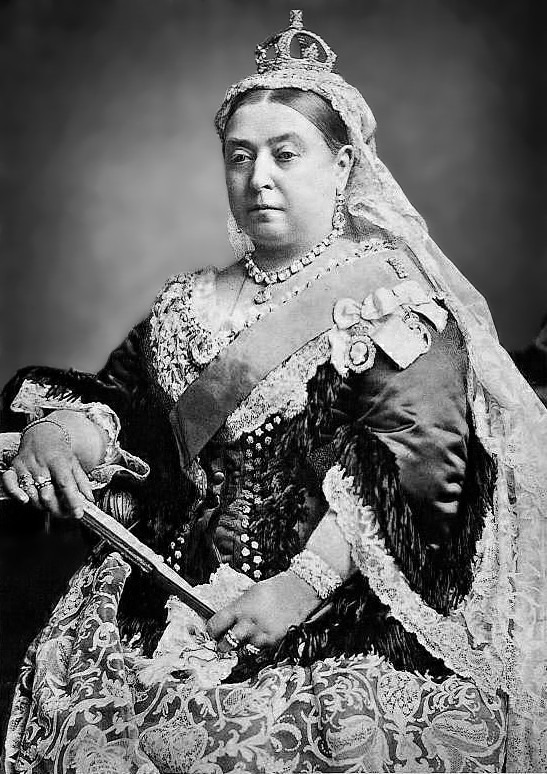
Queen Victoria, born Alexandrina Victoria on May 24, 1819, in Kensington Palace, London, was a monarch whose name is synonymous with an era of unprecedented change and expansion. Her reign, which lasted from June 20, 1837, until her death on January 22, 1901, is not only the longest in British history but also a period that saw the United Kingdom solidify its position as a global superpower. The Victorian Era, as it came to be known, was marked by industrial, cultural, political, scientific, and military advancements that shaped the modern world. In this article, we delve into the life of Queen Victoria, her path to the throne, her influence, and her enduring legacy.
Early Life and Path to the Throne
Victoria was born into a complex web of royal lineage that was fraught with uncertainty regarding succession. Her grandfather, King George III, had many children, but the death of several of his sons without legitimate heirs created a succession crisis. Victoria’s father, Prince Edward, Duke of Kent and Strathearn, was the fourth son of George III. He married Princess Victoria of Saxe-Coburg-Saalfeld relatively late in life. Victoria was their only child.
Her father died when she was just eight months old, leaving her under the strict and controlling care of her mother, the Duchess of Kent. Victoria’s childhood was one of isolation, governed by what was known as the “Kensington System,” a set of rules devised by her mother and her ambitious adviser, Sir John Conroy. This system kept Victoria sheltered from the outside world, making her overly dependent on her mother and Conroy.
Despite these constraints, Victoria displayed a strong will and a clear sense of duty from an early age. When her uncle, King William IV, died in 1837, Victoria became queen at the tender age of 18. Her ascent to the throne marked the beginning of a new chapter in British history.
The Early Years of Reign
Victoria’s early reign was marked by a determination to assert her independence. One of her first acts as queen was to move out of her mother’s household and establish herself at Buckingham Palace, which became the official royal residence. Her early years on the throne were challenging, with political tensions running high, especially with her first Prime Minister, Lord Melbourne, who became her close confidant and mentor.
In 1840, Victoria married her first cousin, Prince Albert of Saxe-Coburg and Gotha. The marriage, initially arranged for political reasons, blossomed into a deep, loving partnership. Albert’s influence on Victoria was profound. He played a crucial role in shaping her views on governance, family, and the arts. Together, they had nine children, and their descendants are spread across the royal families of Europe, earning Victoria the nickname “the grandmother of Europe.”
Influence and Legacy
Victoria’s reign was characterized by a series of social reforms and the expansion of the British Empire. She was a symbol of continuity and stability in an era of rapid change. Under her rule, Britain became the world’s leading industrial and colonial power. The empire expanded to include large parts of Africa, Asia, and the Pacific, and the phrase “the sun never sets on the British Empire” became a popular way to describe its vastness.
Victoria herself played a significant role in these imperial endeavors. She was instrumental in the establishment of the British Raj in India, following the Indian Rebellion of 1857. In 1876, she was proclaimed Empress of India, a title that reflected the importance of India to the British Empire.
Her reign also saw significant advances in science and technology, including the introduction of the railway, the telegraph, and the steamship. The Great Exhibition of 1851, held in the Crystal Palace in London, was a showcase of the technological and industrial achievements of the time, and it was a project close to Victoria and Albert’s hearts.
However, Victoria’s life was not without personal tragedy. The death of her beloved Albert in 1861 plunged her into deep mourning. For the remainder of her life, she wore black and withdrew from public life, earning her the nickname “the Widow of Windsor.” Despite her grief, she continued to fulfill her royal duties, and her later years were marked by a resurgence in her popularity, known as the “Second Victorian Age.”
The Victorian Era and Its Cultural Impact
The Victorian Era was a time of great cultural and societal change. It was during Victoria’s reign that the British class system became more defined, with a clear distinction between the aristocracy, the middle class, and the working class. The Industrial Revolution, which began in the late 18th century, reached its peak during this period, leading to urbanization and the growth of cities. This, in turn, led to significant changes in the social fabric of the nation.
Literature, art, and music flourished during the Victorian Era. The period produced some of the greatest writers in the English language, including Charles Dickens, the Brontë sisters, and Thomas Hardy. The Pre-Raphaelite Brotherhood, a group of English painters, poets, and critics, also emerged during this time, challenging the conventions of the day and laying the groundwork for modern art.
Victoria herself was a patron of the arts and took a keen interest in the cultural developments of her time. She was an accomplished artist in her own right and encouraged the arts through her patronage. Her diaries, which she kept throughout her life, provide a unique insight into the thoughts and experiences of a queen who was both a symbol of her time and a woman of great personal strength and conviction.
Later Life and Death
As Victoria entered her later years, her role as queen continued to evolve. She became a grandmother figure not only to her own descendants but also to the nation. Her Golden Jubilee in 1887 and her Diamond Jubilee in 1897 were celebrated with great enthusiasm across the British Empire, reflecting the deep affection in which she was held by her subjects.
Victoria’s final years were marked by physical decline, but she remained mentally sharp and fully engaged in her duties. She continued to correspond with her ministers, offering advice and guidance on matters of state. Her death on January 22, 1901, at the age of 81, marked the end of an era. The Victorian Age, with all its complexities and contradictions, was over, but its legacy continues to shape the modern world.
Historical Context and Nuances
Understanding Victoria’s reign requires an appreciation of the broader historical context in which she lived. The 19th century was a time of enormous change, not just in Britain but across the world. The French Revolution at the end of the 18th century had profoundly altered the political landscape of Europe, and the Napoleonic Wars that followed reshaped national borders and alliances.
In Britain, the Industrial Revolution brought about profound economic and social changes. The shift from an agrarian economy to an industrial one led to the rise of the factory system, urbanization, and changes in the labor market. These developments created new challenges for British society, including issues related to working conditions, child labor, and public health.
Victoria’s reign also coincided with the height of British imperialism. The expansion of the British Empire brought great wealth and power to Britain, but it also raised questions about the ethics of empire, colonialism, and the treatment of indigenous peoples. These issues continue to resonate in discussions of Victoria’s legacy today.
Victoria herself was a complex figure. She was deeply conservative in many of her views, particularly regarding gender roles and the social order, yet she presided over a period of great social change. Her personal life was marked by deep love and profound loss, and she was both a figure of immense public significance and a woman with private joys and sorrows.
Conclusion
Queen Victoria’s life and reign were characterized by a unique blend of personal resilience, dedication to duty, and an unwavering commitment to her country. Her influence on British history is unparalleled, and her legacy continues to shape the world we live in today. From the expansion of the British Empire to the cultural and social changes of the Victorian Era, her impact is evident in every corner of the globe. Victoria remains a symbol of an age that was as complex and multifaceted as the queen herself.


