
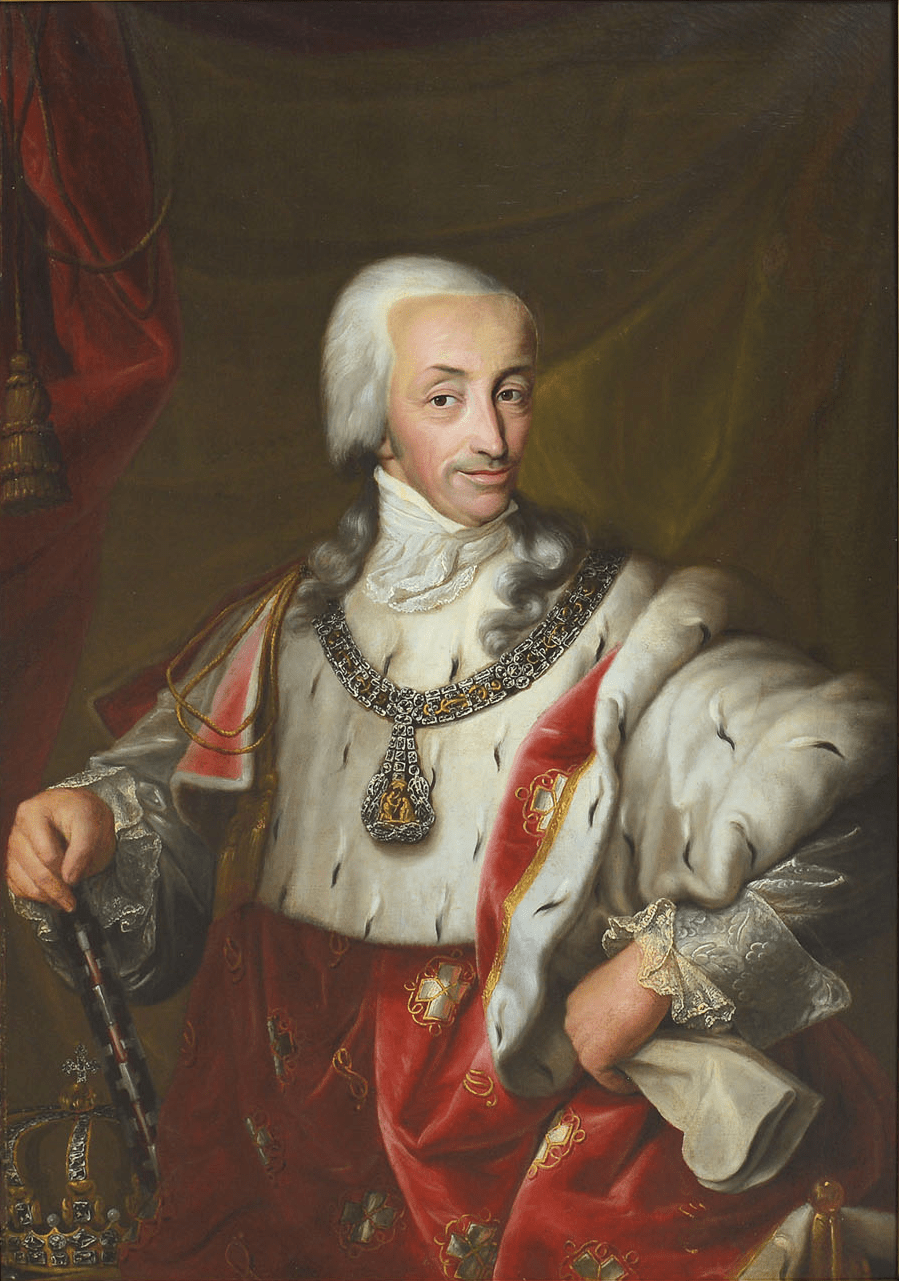
Vittorio Emanuele I di Savoia, born on July 24, 1759, in Turin, Italy, was a significant figure in the history of the Kingdom of Sardinia and the House of Savoy. His reign was marked by the challenges of the Napoleonic Wars, efforts to restore his kingdom after Napoleon’s fall, and his ultimate abdication in the face of rising revolutionary pressures. This article explores the life, reign, and legacy of Vittorio Emanuele I, providing a nuanced look at his impact on Italian and European history.
Early Life and Background
Vittorio Emanuele I was the second son of Vittorio Amedeo III, Duke of Aosta and King of Sardinia, and Maria Antonietta Ferdinanda of Bourbon, daughter of King Philip V of Spain. Born into one of the most powerful dynasties in Europe, Vittorio Emanuele was raised in a world of political intrigue and military tradition. The House of Savoy, which ruled the Kingdom of Sardinia, had a long history of involvement in European affairs, often navigating the complex relationships between France, Austria, and Spain.
Growing up, Vittorio Emanuele was groomed for leadership, although as the second son, he was not initially expected to ascend to the throne. His education was typical for a prince of his time, focusing on military training, statecraft, and the principles of absolutist monarchy. These formative years would shape his approach to governance, particularly his commitment to maintaining the traditional structures of power against the rising tide of revolutionary ideas sweeping Europe.
Marriage and Early Military Career
In 1789, as the Kingdom of Sardinia found itself increasingly entangled in the turbulent events of the French Revolution, Vittorio Emanuele married Maria Teresa of Austria-Este, daughter of Archduke Ferdinand of Austria. This marriage was not only a personal union but also a strategic alliance, strengthening ties between the House of Savoy and the Habsburgs, two of Europe’s most powerful dynasties.
The couple had six children, including Carlo Emanuele, who would later become King of Sardinia, and several daughters who married into other European royal families, further cementing the Savoyard influence across the continent.
Vittorio Emanuele’s early military career was shaped by the conflicts that arose from the French Revolution. As revolutionary France began to expand its influence through military conquest, the Kingdom of Sardinia found itself on the front lines. In 1793, Vittorio Emanuele was called upon to lead Sardinian forces against the French. Despite his efforts, the Sardinian army was no match for the superior numbers and revolutionary fervor of the French forces, and the kingdom suffered significant territorial losses.
Ascension to the Throne
The death of Vittorio Emanuele’s father in 1796 led to his elder brother, Carlo Emanuele IV, ascending to the throne. However, Carlo Emanuele’s reign was short-lived and fraught with difficulties, primarily due to the overwhelming pressure from Napoleon Bonaparte’s forces. By 1798, Napoleon had invaded Piedmont, the mainland part of the Kingdom of Sardinia, forcing the royal family to flee to the island of Sardinia.
In 1802, Carlo Emanuele IV, devastated by the loss of his wife and disillusioned by his inability to reclaim his kingdom, abdicated the throne in favor of his younger brother, Vittorio Emanuele, who became King Vittorio Emanuele I.
When Vittorio Emanuele I ascended to the throne, he inherited a kingdom that had been significantly diminished by French aggression. The mainland territories, including the important region of Piedmont, were under French control, leaving Vittorio Emanuele to rule only the island of Sardinia. Despite these challenges, he was determined to restore his kingdom and oppose Napoleon’s dominance in Europe.
Reign and Challenges
Vittorio Emanuele I’s reign was characterized by his efforts to resist Napoleonic control and later, to restore his kingdom after Napoleon’s downfall. During the height of Napoleon’s power, Vittorio Emanuele aligned himself with the Third Coalition, a military alliance that included Austria, Russia, and Great Britain, all of whom sought to curtail Napoleon’s expansion. However, the coalition’s defeat at the Battle of Austerlitz in 1805 marked a significant setback for Vittorio Emanuele’s ambitions, forcing him to retreat to Sardinia, where he ruled in exile for nearly a decade.
During his years in Sardinia, Vittorio Emanuele focused on improving the island’s defenses and addressing the social and economic challenges faced by the Sardinian population. His efforts included measures to alleviate poverty and combat the growing threat of piracy from North Africa, particularly the Tunisian corsairs who frequently raided Sardinian coastal settlements.
The collapse of Napoleon’s empire in 1814 marked a turning point in Vittorio Emanuele’s reign. With the fall of the French-controlled regimes across Europe, Vittorio Emanuele was able to reclaim his throne in Piedmont and the other mainland territories of the Kingdom of Sardinia. The Congress of Vienna, which sought to restore the balance of power in Europe after Napoleon’s defeat, returned these territories to Vittorio Emanuele and even added the region of Liguria to his kingdom, significantly enhancing his power and influence.
Restoration and Governance
Upon his return to power, Vittorio Emanuele I faced a kingdom that had been profoundly influenced by the ideas of the French Revolution. Although his territories had been restored, the political and social landscape had changed. Liberal ideas, such as constitutionalism and nationalism, were gaining traction among the population, leading to growing demands for political reform.
However, Vittorio Emanuele was a staunch absolutist who believed in the divine right of kings and the maintenance of traditional monarchical authority. He resisted any attempts to introduce constitutional reforms or to share power with elected bodies. His government was marked by a strict adherence to the old order, with little tolerance for liberal or nationalist sentiments.
This refusal to adapt to the changing political climate would ultimately prove to be a significant weakness in Vittorio Emanuele’s reign. The growing discontent among the population, particularly in the wake of economic difficulties and the influence of revolutionary movements in neighboring regions, led to increasing unrest.
The Revolutions of 1821 and Abdication
The early 1820s were a period of significant political upheaval across Europe, as revolutionary movements spread from Spain to the Italian Peninsula. In 1821, these revolutionary currents reached the Kingdom of Sardinia, where liberal factions, inspired by the recent uprisings in Naples and Spain, began to demand a constitution and greater political freedoms.
Vittorio Emanuele I, however, was deeply opposed to any form of constitutional government. He viewed the demands for a constitution as a direct threat to his authority and the stability of his kingdom. Despite attempts by his cousin, Carlo Alberto, to mediate between the king and the liberal factions, Vittorio Emanuele refused to compromise.
As the revolutionary movement gained momentum, Vittorio Emanuele found himself increasingly isolated. Facing widespread unrest and the possibility of violent insurrection, he realized that his position was untenable. On March 13, 1821, Vittorio Emanuele I made the difficult decision to abdicate the throne in favor of his younger brother, Carlo Felice. However, as Carlo Felice was not immediately available to assume the throne, Vittorio Emanuele appointed Carlo Alberto as regent in the interim.
Following his abdication, Vittorio Emanuele retired from public life. He initially moved to Nice and later settled in Modena before finally retreating to the Castle of Moncalieri near Turin. It was here, on January 10, 1824, that Vittorio Emanuele I passed away at the age of 65.
Legacy and Historical Impact
Vittorio Emanuele I’s reign is often viewed as a period of conservative retrenchment in the face of the revolutionary changes sweeping Europe. His commitment to absolutist principles and his refusal to embrace constitutional reforms placed him at odds with the growing liberal and nationalist movements of his time. As a result, his reign is often seen as a missed opportunity to modernize the Kingdom of Sardinia and align it with the broader currents of European political development.
However, Vittorio Emanuele I also played a crucial role in preserving the independence of the Kingdom of Sardinia during a time of great upheaval. His efforts to resist Napoleonic domination and his eventual restoration to power ensured that the House of Savoy remained a key player in Italian and European affairs. The territorial gains achieved at the Congress of Vienna, including the addition of Liguria, laid the groundwork for the future expansion of the Kingdom of Sardinia, which would eventually lead to the unification of Italy under the House of Savoy.
Vittorio Emanuele I’s legacy is thus a complex one. While his conservative policies and resistance to reform ultimately limited his effectiveness as a ruler, his efforts to restore and strengthen his kingdom in the aftermath of Napoleon’s fall were significant. His reign marked the end of an era in which the traditional monarchical order was challenged by new political ideas and movements, setting the stage for the broader transformations that would reshape Italy and Europe in the decades to come.
Conclusion
Vittorio Emanuele I di Savoia was a monarch whose life and reign were deeply intertwined with the turbulent events of his time. His efforts to restore his kingdom after the Napoleonic Wars and his staunch defense of absolutist principles define his legacy as a ruler committed to preserving the old order in the face of revolutionary change. Although his refusal to embrace reform limited his success, his impact on the history of the Kingdom of Sardinia and the House of Savoy is undeniable.
As we reflect on Vittorio Emanuele I’s life and reign, it is clear that his actions had lasting consequences for the future of Italy. His reign, though marked by conservatism, laid the foundation for the eventual unification of Italy and the emergence of the House of Savoy as the ruling dynasty of a unified Italian state. Vittorio Emanuele I remains a significant figure in the history of Italy, remembered both for his strengths and his limitations as a ruler during a critical period in European history.


