
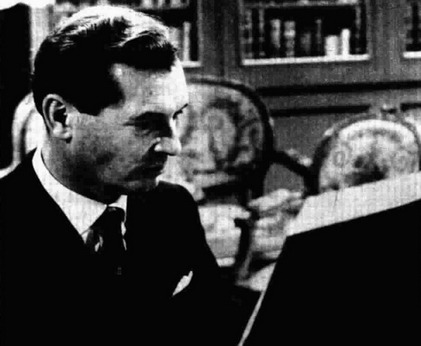
Roman Vlad was a towering figure in the world of music, whose life and career spanned nearly a century. Born on December 29, 1919, in Cernauti, Romania, Vlad’s journey through life was one marked by exceptional talent, profound intellect, and a relentless pursuit of artistic excellence. His contributions as a composer, pianist, and musicologist have left an indelible mark on the music world, not only in Italy, where he eventually settled, but also internationally.
Early Life and Education
Roman Vlad was born in what is now Chernivtsi, Ukraine, a city rich in cultural history and diversity. This multicultural environment likely played a role in shaping his broad and deep understanding of music and the arts. Vlad’s early education was marked by excellence; he completed his piano studies at the local conservatory before moving to Rome in 1938. This move was pivotal, as it positioned him at the heart of Italy’s vibrant cultural scene.
In Rome, Vlad furthered his education at the University of Rome and the Accademia Nazionale di Santa Cecilia, one of the most prestigious music academies in the world. Under the tutelage of Alfredo Casella, a prominent composer and pianist, Vlad honed his craft, graduating in 1942. His composition “Sinfonietta” earned him the prestigious ENESCU Prize that same year, marking the beginning of a distinguished career.
Career and Achievements
Vlad’s career after World War II was nothing short of remarkable. He balanced his work as a concert pianist with his growing reputation as a composer and musicologist. His intellectual curiosity and expertise in music made him a sought-after lecturer and essayist, not only in Italy but across Europe and the Americas.
One of Vlad’s significant roles was as the Artistic Director of the Accademia Filarmonica Romana, a position he held twice, from 1955 to 1958 and again from 1966 to 1969. During his tenure, he played a crucial role in shaping the organization’s artistic direction, fostering a vibrant and dynamic musical environment.
His influence extended beyond Italy. Vlad taught at the Dartington Hall Summer School of Music in the United Kingdom during the mid-1950s, further solidifying his international reputation. His work as co-director of the musical section of the “Enciclopedia dello Spettacolo” from 1958 to 1962 is a testament to his deep knowledge and passion for the performing arts.
In 1960, Vlad became the President of the Società Italiana di Musica Contemporanea, an organization dedicated to promoting contemporary music in Italy. His involvement with RAI, Italy’s national public broadcasting company, as a consultant and collaborator for the Third Program, further demonstrates his influence in the Italian cultural scene.
Perhaps one of Vlad’s most notable contributions was his role as Artistic Director of the Maggio Musicale Fiorentino in 1964 and later at the Teatro Comunale in Florence from 1968 to 1972. These institutions were key players in Italy’s operatic and symphonic traditions, and Vlad’s leadership helped to elevate their status on the international stage.
Awards and Recognition
Vlad’s achievements did not go unnoticed. In 1974, the National University of Ireland in Dublin awarded him an honorary Doctorate in Music, recognizing his contributions to the field. He also served as the President of the Società Aquilana dei Concerti from 1973 to 1992, and as Superintendent of the Rome Opera House, roles that allowed him to shape Italy’s musical landscape.
From 1980 to 1982, and then again from 1990 to 1994, Vlad was the President of the Confédération Internationale des Auteurs et Compositeurs (C.I.S.A.C.), an international organization dedicated to protecting the rights of creators. His leadership in these roles highlighted his commitment to the rights and recognition of artists worldwide.
Vlad’s scholarly contributions were equally impressive. His 1958 book “Storia della Dodecafonia” remains a seminal work in the study of twelve-tone music. He also wrote significant biographies of two giants of 20th-century music, Igor Stravinsky and Luigi Dallapiccola, further establishing himself as a leading authority on modern music.
In the 1980s, Vlad continued to produce important scholarly works, including “Capire la musica” and “Introduzione alla civiltà musicale,” both of which are still referenced by musicologists and students today.
Later Life and Legacy
Roman Vlad’s later years were marked by continued involvement in the arts. He was a member of the Koninlijke Academie voor Wetenschappen, Letteren en Schone Kunsten in Belgium and was awarded the rank of Commandeur des Art et des Lettres by the French Académie des Arts et des Lettres.
From 1987 to 1993, Vlad served as the President of the Italian Society of Authors and Publishers (S.I.A.E.), a role in which he championed the rights of authors and composers. Even after his presidency, he was appointed as Extraordinary Commissioner of S.I.A.E., a position he held until 1996.
Vlad’s contributions to film music were also notable. He composed scores for several films, including the soundtrack for René Clair’s “La beauté du diable,” which earned him the Nastro d’Argento award. His music for the film remains a significant achievement in cinematic composition.
Vlad passed away in Rome on September 21, 2013, at the age of 93. His death marked the end of a remarkable life, but his legacy continues through his music, his writings, and the countless musicians and scholars he influenced throughout his career.
Historical Context and Impact
Roman Vlad’s life and work cannot be fully appreciated without understanding the historical context in which he lived. Born at the end of World War I, Vlad’s early years were shaped by the political and cultural upheavals of the early 20th century. The move to Italy in 1938, on the eve of World War II, placed him in the midst of a country that would soon be engulfed in conflict. Yet, it was also a country with a rich cultural heritage that deeply influenced his artistic development.
The post-war period was a time of rebuilding and renewal, both for Italy and for Vlad. His involvement in various cultural institutions during this time helped to shape the direction of Italian music in the second half of the 20th century. His work as a composer, particularly in the realm of film music, contributed to the broader cultural conversation about the role of music in society.
Vlad’s work in promoting contemporary music and his scholarly contributions helped to ensure that the music of the 20th century would be understood and appreciated by future generations. His writings on dodecaphony, in particular, have been instrumental in shaping the way this complex and challenging music is understood.
SEO Insights and Conclusion
In crafting this article, it is essential to consider the keywords that will optimize its visibility in search engines. Terms such as “Roman Vlad,” “composer,” “pianist,” “musicologist,” “Italian music,” “film music,” and “dodecaphony” are critical to ensure that the article reaches those interested in music history, film scores, and 20th-century composers. The use of phrases like “life highlights,” “career achievements,” and “historical context” can also help to attract a broader audience interested in biographical content.
Roman Vlad’s life is a testament to the power of music to transcend cultural and political boundaries. His contributions to the world of music are vast and varied, encompassing everything from performance to composition to scholarship. As we reflect on his life, we are reminded of the enduring impact of his work and the ways in which he helped to shape the musical landscape of the 20th century and beyond.


