
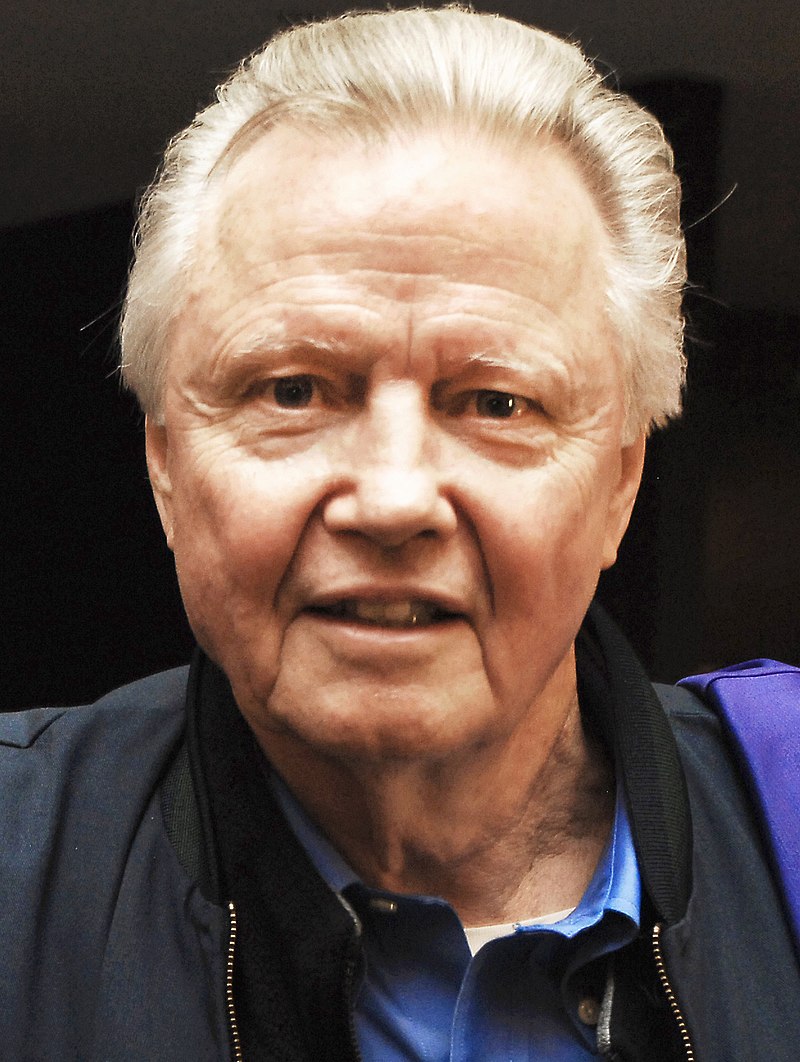
Jon Voight, born on December 29, 1938, in Yonkers, New York, is one of the most versatile and acclaimed actors of his generation. With a career spanning over six decades, Voight has earned his place among Hollywood’s elite through his powerful performances in both film and television. His journey from a promising young actor on Broadway to an Academy Award-winning star is marked by a series of iconic roles that have left a lasting impact on the history of cinema.
Early Life and Career Beginnings
Jon Voight was born into a family with a rich cultural heritage. His father was a professional golfer, and his mother was a homemaker of German and Slovak descent. Voight’s early interest in acting was evident during his high school years at Archbishop Stepinac High School in White Plains, New York. After graduating, he pursued his passion for acting at The Catholic University of America in Washington, D.C., where he earned a Bachelor of Fine Arts degree in 1960.
Voight’s early career was rooted in theater, with his first significant break coming on the Broadway stage. He gained recognition for his performances in plays such as “A View from the Bridge” and “That Summer – That Fall,” which showcased his raw talent and versatility. His success on Broadway opened doors for him in Hollywood, where he would soon make his mark on the silver screen.
Breakthrough Role: “Midnight Cowboy”
Jon Voight’s breakthrough role came in 1969 with the film “Midnight Cowboy,” directed by John Schlesinger. Voight portrayed Joe Buck, a naive Texan who moves to New York City with dreams of becoming a successful hustler. The film, which also starred Dustin Hoffman, was a critical and commercial success, and it remains one of the most influential films of the late 1960s.
Voight’s performance in “Midnight Cowboy” earned him his first Academy Award nomination for Best Actor, and he won several prestigious awards, including the New York Film Critics Circle Award and the BAFTA Award. The film itself won three Academy Awards, including Best Picture, and it solidified Voight’s status as a rising star in Hollywood.
Continued Success in the 1970s
Following the success of “Midnight Cowboy,” Jon Voight continued to build his reputation as a leading man in Hollywood. He appeared in a series of critically acclaimed films throughout the 1970s, showcasing his range as an actor. One of his most notable roles during this period was in the 1972 film “Deliverance,” directed by John Boorman. In “Deliverance,” Voight played Ed Gentry, one of four men on a harrowing canoe trip in the Georgia wilderness. The film was a box office hit and is now considered a classic, with Voight’s performance being a key factor in its success.
Voight’s ability to take on complex and challenging roles was further demonstrated in films like “Conrack” (1974) and “The Odessa File” (1974). In “Conrack,” directed by Martin Ritt, Voight portrayed a schoolteacher trying to improve the lives of impoverished African American children in the rural South. His performance was praised for its sensitivity and depth, further establishing him as an actor of great substance.
Academy Award Win for “Coming Home”
The pinnacle of Jon Voight’s career came in 1978 when he won the Academy Award for Best Actor for his role in “Coming Home.” Directed by Hal Ashby, the film tells the story of a paraplegic Vietnam War veteran, Luke Martin, who becomes romantically involved with a woman whose husband is still serving in Vietnam. Voight’s portrayal of Luke Martin was both powerful and poignant, capturing the emotional and physical struggles of a wounded soldier returning to a society that had changed in his absence.
In addition to the Academy Award, Voight’s performance in “Coming Home” earned him a Golden Globe Award and the Best Actor Award at the Cannes Film Festival. The film was also notable for its exploration of the psychological impact of the Vietnam War on veterans, a theme that resonated deeply with audiences at the time.
Diversification and Career Challenges in the 1980s and 1990s
After the success of “Coming Home,” Jon Voight’s career took a more diversified path. He continued to work in both film and television, taking on a variety of roles that showcased his versatility. In 1979, he starred in the film “The Champ,” a remake of the 1931 classic, in which he played a washed-up boxer trying to rebuild his life and relationship with his young son. Voight’s performance was well-received, and the film remains a sentimental favorite for many fans.
Throughout the 1980s and 1990s, Voight faced some career challenges, with a few of his films failing to achieve the critical and commercial success of his earlier work. However, he continued to take on roles that interested him, including parts in “Runaway Train” (1985), for which he received another Academy Award nomination, and “Heat” (1995), where he appeared alongside Al Pacino and Robert De Niro in Michael Mann’s crime epic.
During this period, Voight also ventured into directing and producing. His directorial debut came in 1987 with the television film “The Tin Soldier,” which received positive reviews and won several awards, including Best Children’s Film at the Berlin International Film Festival.
A Resurgence in the 2000s
The 2000s marked a resurgence in Jon Voight’s career, with several high-profile roles that introduced him to a new generation of viewers. In 2001, he played the role of Mr. Sir in the film adaptation of the popular novel “Holes,” and in 2004, he appeared in “National Treasure” as Patrick Gates, the father of Nicolas Cage’s character. These roles, while more commercial in nature, demonstrated Voight’s ability to adapt to different genres and remain relevant in the ever-changing landscape of Hollywood.
One of Voight’s most significant roles during this period was his portrayal of Pope John Paul II in the 2005 television miniseries “Pope John Paul II.” The role was a challenging one, as Voight had to capture the essence of one of the most beloved and influential figures of the 20th century. His performance was widely praised, earning him a Primetime Emmy Award nomination and further cementing his status as a versatile and respected actor.
Relationship with Angelina Jolie and Personal Life
Jon Voight’s personal life has also been a subject of public interest, particularly his relationship with his daughter, Angelina Jolie. Jolie, an Academy Award-winning actress herself, is one of the most famous faces in Hollywood, and her relationship with her father has been widely covered by the media.
Voight and Jolie had a strained relationship for many years, with the two becoming estranged in the early 2000s. The rift was reportedly due to Voight’s comments about Jolie’s personal life and his own struggles with infidelity during his marriage to Jolie’s mother, Marcheline Bertrand. However, in recent years, Voight and Jolie have reconciled, and they have been seen together at various public events.
Despite the ups and downs in his personal life, Voight has always been known for his dedication to his craft and his willingness to take on challenging roles. He has also been involved in various charitable activities, particularly those related to veterans’ causes and humanitarian efforts.
Political Involvement and Public Statements
In addition to his work in film and television, Jon Voight has been an outspoken figure in American politics. He is known for his conservative views and has been a vocal supporter of the Republican Party. Voight has publicly supported several Republican candidates over the years, including George W. Bush, Mitt Romney, and Donald Trump. His political statements have sometimes been controversial, but they have also resonated with a significant portion of the American public.
Voight’s involvement in politics has not detracted from his acting career, but it has added another dimension to his public persona. He has used his platform to advocate for issues he believes in, and his political activism has made him a prominent figure beyond the entertainment industry.
Legacy and Impact on Hollywood
Jon Voight’s legacy in Hollywood is one of perseverance, talent, and versatility. Over the course of his long career, he has taken on a wide range of roles that have challenged him as an actor and captivated audiences around the world. From his early success in “Midnight Cowboy” to his award-winning performance in “Coming Home,” Voight has consistently demonstrated his ability to bring depth and complexity to his characters.
His contributions to film and television have been recognized with numerous awards and honors, including an Academy Award, four Golden Globe Awards, and a Primetime Emmy Award nomination. Voight’s work has also had a lasting impact on the film industry, inspiring generations of actors who have followed in his footsteps.
As Voight continues to work in the industry, his influence shows no signs of waning. He remains a respected figure in Hollywood, known for his dedication to his craft and his willingness to tackle difficult and diverse roles. His career is a testament to the power of perseverance and the importance of staying true to one’s passion.
Conclusion
Jon Voight is a towering figure in the world of film and television, with a career that has spanned over six decades. His journey from a Broadway actor to an Academy Award-winning star is a story of talent, hard work, and an unwavering commitment to his craft. Voight’s performances in films like “Midnight Cowboy,” “Deliverance,” and “Coming Home” have left an indelible mark on the history of cinema, and his influence continues to be felt in Hollywood today.
In addition to his acting achievements, Voight’s personal life, political involvement, and philanthropic efforts have made him a multifaceted figure who has left a lasting impact on the world both on and off the screen. As he continues to take on new challenges in his career, Jon Voight remains an enduring icon of American cinema, admired for his talent, versatility, and dedication to his craft.


