
Introduction
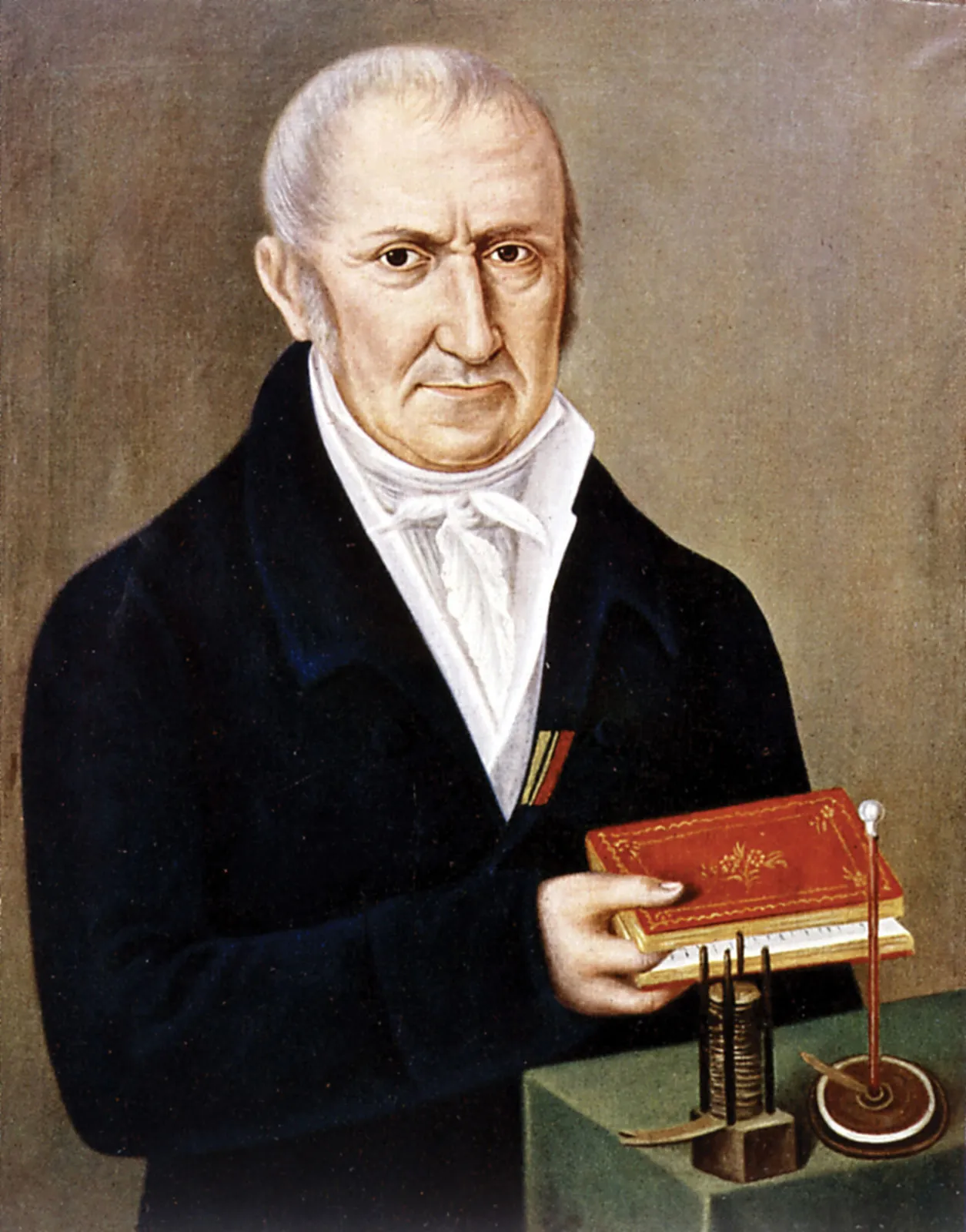
Alessandro Volta, a name that echoes through the annals of scientific history, was a pioneering Italian physicist whose contributions laid the groundwork for modern electrical science. Born on February 18, 1745, in Camnago, near Como, Italy, Volta’s inventive genius and groundbreaking discoveries not only revolutionized our understanding of electricity but also provided the foundation for the technological advancements that power our world today. This article delves into the life, achievements, and enduring legacy of Alessandro Volta, offering a comprehensive exploration of his age, fame, and life highlights.
Early Life and Education
Alessandro Volta was born into a noble but financially strained family. Despite these challenges, Volta showed an early interest in science and, remarkably, was largely self-taught. His early education took place at the Jesuit school in Como, where he demonstrated a keen intellect and an insatiable curiosity about the natural world. Unlike many of his contemporaries who pursued careers in law or theology, Volta was drawn to the emerging field of natural philosophy, particularly the study of electricity, which was then a mysterious and largely unexplored phenomenon.
Volta’s self-directed studies led him to correspond with prominent scientists of the time, including Giambatista Beccaria, a leading figure in the study of electricity, and Jean-Antoine Nollet, a French physicist. These exchanges were instrumental in shaping Volta’s early scientific ideas and provided him with a platform to share his own interpretations of electrical phenomena.
The Birth of Electrophorus and Early Discoveries
Volta’s first significant contribution to science came in 1775 with the invention of the electrophorus, a device capable of generating static electricity. The electrophorus was a simple yet ingenious device that could repeatedly produce electric charges through the process of electrostatic induction. This invention not only brought Volta recognition in scientific circles but also marked the beginning of his lifelong fascination with electricity.
In 1778, Volta was appointed as a professor of physics at the University of Pavia, a position he held for nearly four decades. During this time, he made several key contributions to the field of electricity, including the introduction of concepts such as electrical potential (voltage), charge, and capacitance. Volta’s work in these areas helped to formalize the study of electrology and laid the groundwork for many of the principles that underpin modern electrical engineering.
The Voltaic Pile: A Revolutionary Invention
One of Volta’s most famous and impactful inventions was the Voltaic Pile, the first true battery, which he developed in 1800. This invention was a direct result of his experiments with Luigi Galvani’s theory of animal electricity. Galvani had observed that frog legs twitched when exposed to electrical stimuli and hypothesized that this was due to a form of electricity inherent in the animal. Volta, however, was skeptical of this explanation and believed that the electricity observed by Galvani was generated by the metals used in his experiments rather than the animal tissue itself.
To test his hypothesis, Volta conducted a series of experiments with different metals and discovered that when two dissimilar metals were connected by a conductive material (such as a saltwater-soaked cloth), they produced a continuous electric current. This led to the creation of the Voltaic Pile, a stack of alternating copper and zinc discs separated by pieces of cardboard soaked in saltwater. The Voltaic Pile was a groundbreaking invention because it provided the first steady and continuous source of electricity, unlike the static electricity generated by earlier devices.
The Voltaic Pile had profound implications for science and technology. It enabled experiments that were previously impossible and opened the door to new fields of research, including electrochemistry and electromagnetism. Volta’s invention was also a precursor to the development of more advanced batteries, which have since become essential components of modern technology, powering everything from smartphones to electric cars.
Fame and Recognition
Alessandro Volta’s invention of the Voltaic Pile earned him widespread acclaim and solidified his reputation as one of the leading scientists of his time. In recognition of his contributions to science, Volta was awarded numerous honors and accolades. In 1801, he was invited to Paris by Napoleon Bonaparte, who was eager to see a demonstration of the Voltaic Pile. Napoleon was so impressed by Volta’s invention that he bestowed upon him the title of Count and awarded him a gold medal.
Volta’s fame extended beyond Europe, and his work was celebrated by scientific communities around the world. In 1815, he was appointed to the prestigious position of Director of the Philosophy Faculty at the University of Padua, one of the oldest and most respected universities in Europe. His contributions to science were also recognized by the British Royal Society, which awarded him the Copley Medal, one of the highest honors in the scientific community.
Later Life and Legacy
Despite his fame and success, Volta remained a humble and dedicated scientist throughout his life. He continued to conduct experiments and make new discoveries well into his later years. One of his notable achievements during this period was the discovery of methane gas in 1776, which he referred to as “inflammable air of marshlands.” Volta’s work on gases also led to the formulation of the law of gas expansion, a principle that would later be expanded upon by other scientists.
Volta retired from his academic position in 1819 and spent the remaining years of his life in his hometown of Camnago, where he continued to engage in scientific research and experimentation. He passed away on March 5, 1827, at the age of 82, leaving behind a legacy that would inspire generations of scientists and inventors.
Volta’s impact on the world of science is immeasurable. His invention of the Voltaic Pile was a turning point in the study of electricity and paved the way for countless technological advancements. In recognition of his contributions, the unit of electric potential, the volt, was named in his honor. Today, Volta’s name is synonymous with the study of electricity, and his legacy lives on in the countless devices and technologies that rely on the principles he discovered.
The Scientific Legacy of Alessandro Volta
Alessandro Volta’s contributions to science extend far beyond his invention of the Voltaic Pile. He was a pioneer in the field of electrochemistry, and his work laid the foundation for many of the advancements that followed. Volta’s meticulous experimentation and rigorous approach to scientific inquiry set a standard for future generations of scientists.
One of Volta’s most significant contributions was his demonstration that electricity could be generated chemically rather than through friction, as was commonly believed at the time. This insight opened up new avenues of research and led to the development of electrochemical cells, which are the basis for modern batteries.
Volta’s work also had a profound impact on the field of electromagnetism. His discovery of the relationship between electricity and chemical reactions provided the first experimental evidence for the connection between electricity and magnetism, a concept that would later be fully developed by scientists such as Michael Faraday and James Clerk Maxwell.
In addition to his contributions to electrochemistry and electromagnetism, Volta was also a pioneer in the study of gases. His discovery of methane and his work on the properties of gases laid the groundwork for the development of modern thermodynamics and physical chemistry.
The Enduring Influence of Alessandro Volta
The influence of Alessandro Volta’s work is still felt today in many aspects of modern science and technology. The principles he discovered continue to be fundamental to our understanding of electricity and have been applied in a wide range of fields, from physics and chemistry to engineering and materials science.
Volta’s invention of the battery was a key development in the history of technology, and its impact can be seen in the countless devices that rely on battery power today. From smartphones and laptops to electric vehicles and renewable energy storage systems, the technology that Volta helped to pioneer is an essential part of modern life.
In recognition of his contributions, Volta’s name has been immortalized in the scientific community. The volt, the unit of electric potential, is a constant reminder of Volta’s legacy. His work has also inspired numerous awards and honors, including the Alessandro Volta Medal, which is awarded for outstanding contributions to the field of electrical science.
Conclusion
Alessandro Volta was more than just a scientist; he was a visionary whose work transformed our understanding of electricity and laid the foundation for many of the technological advancements that define the modern world. His invention of the Voltaic Pile was a turning point in the study of electricity and had a profound impact on the development of science and technology.
Volta’s legacy is not just limited to his contributions to science; it also extends to his approach to scientific inquiry. His meticulous experimentation, rigorous methodology, and commitment to understanding the natural world continue to inspire scientists and researchers today.
As we look back on the life and achievements of Alessandro Volta, we are reminded of the power of human ingenuity and the importance of curiosity and perseverance in the pursuit of knowledge. Volta’s work continues to be a source of inspiration and a testament to the enduring impact of scientific discovery.


