
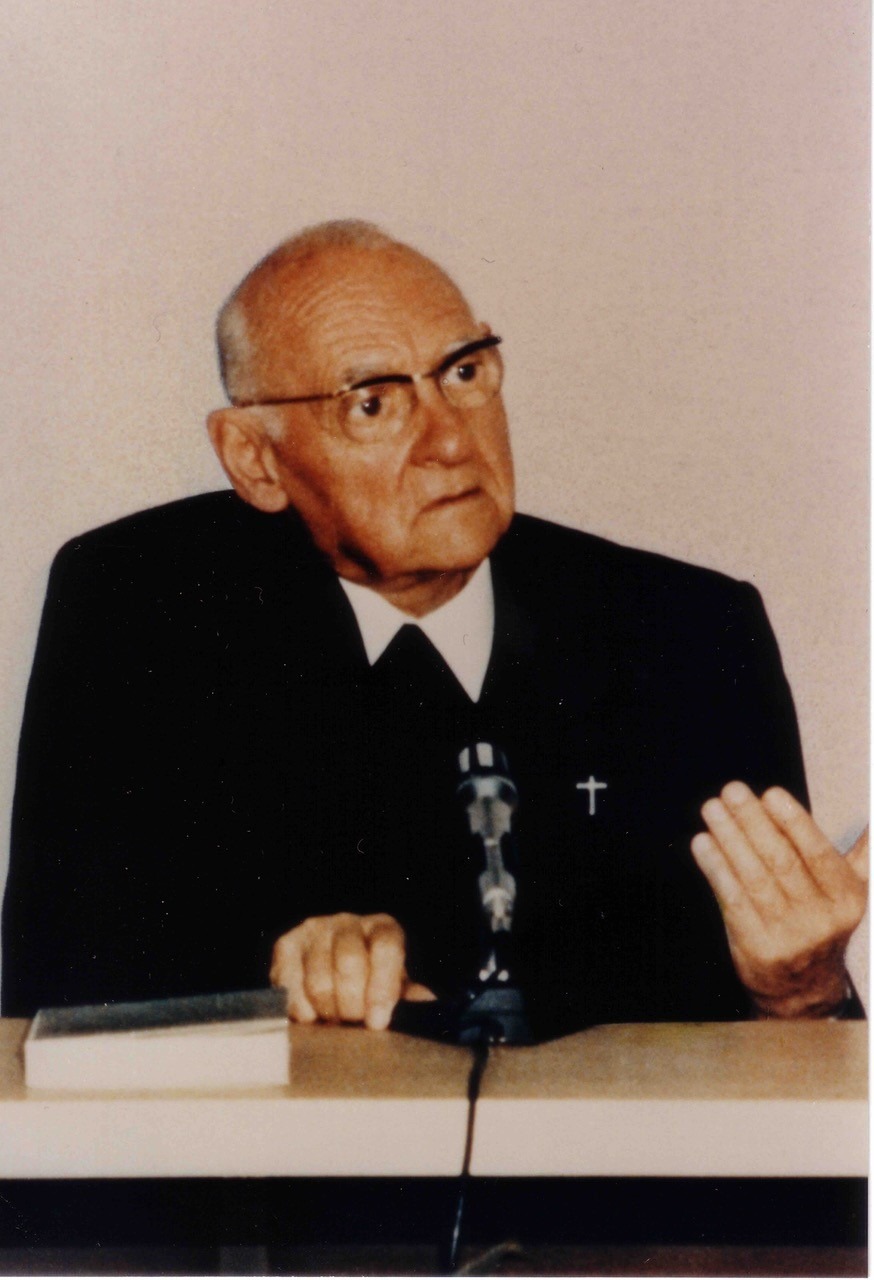
Hans Urs von Balthasar (1905-1988) is a name that resonates deeply within the realms of theology and philosophy, recognized as one of the most influential Catholic theologians of the 20th century. Born on August 12, 1905, in Lucerne, Switzerland, Balthasar’s life was marked by a profound dedication to exploring the intersection of faith, beauty, and human existence. His work has been pivotal in shaping contemporary Christian thought, particularly through his innovative and often controversial ideas. This article delves into the life, achievements, and lasting legacy of Hans Urs von Balthasar, offering detailed insights into his contributions to theology, his historical context, and his enduring fame.
Early Life and Education
Hans Urs von Balthasar was born into a devout Catholic family in Lucerne, Switzerland. His early education was shaped by the Jesuits and Benedictines, which laid a strong foundation for his later theological pursuits. From 1923, Balthasar studied philosophy and German literature, beginning his academic journey at the University of Zurich and later continuing in Berlin and Vienna. His academic endeavors culminated in 1928 with a doctorate from Zurich, where he presented a thesis on eschatological themes in modern German literature. These formative years were crucial in shaping Balthasar’s intellectual trajectory, as he began to integrate literary and philosophical inquiries with his deepening theological interests.
Entrance into the Jesuit Order
In 1929, after a period of spiritual retreat in Basel, Balthasar made a significant decision that would define much of his life’s work: he entered the Society of Jesus (the Jesuits) on October 31. His time as a Jesuit was marked by intense study and spiritual formation. Between 1932 and 1936, he studied theology in Lyon and was ordained as a priest in Munich in 1936. This period also saw Balthasar working as an editor for the Jesuit journal Stimmen der Zeit, where he began to articulate his theological vision more clearly.
Founding of the Community of St. John
The 1940s were a turbulent yet productive period for Balthasar. After declining a prestigious position at the Pontifical Gregorian University in Rome, he focused on pastoral and academic work in Basel. It was here that he developed a close friendship with the Protestant theologian Karl Barth, a relationship that profoundly influenced his thought, particularly his appreciation for the works of Mozart and the integration of beauty in theology.
In 1944, together with Adrienne von Speyr, a mystic and physician, Balthasar founded the Secular Institute of the Community of St. John. This institute was intended to bridge the gap between lay spirituality and the clerical life, emphasizing a new form of Christian community life that combined contemplative and active aspects of faith. However, this move led to significant challenges. In 1950, due to conflicts with Jesuit authorities over his involvement with the institute, Balthasar left the Jesuit Order. This decision had far-reaching consequences, as it effectively barred him from holding academic positions within Catholic institutions, leaving him reliant on his writings and lectures for sustenance.
Theological Contributions and Controversies
Despite these setbacks, Balthasar’s theological work flourished, gaining a significant following and eventually leading to his rehabilitation within the Catholic Church. His writings during this period began to attract attention for their depth and originality, even as they sparked considerable debate. Balthasar is often associated with the theological movement known as “ressourcement,” which sought to return to the sources of Christian theology, particularly the Church Fathers, in order to renew contemporary theology.
Balthasar’s magnum opus is often considered to be his multi-volume work Gloria (The Glory of the Lord), where he explores the concept of divine beauty as a central category in theology. In this work, Balthasar argues that beauty is not merely an aesthetic quality but is intrinsically linked to the revelation of God in the world. He posits that the divine manifests itself through beauty, which in turn draws humanity toward the divine. This work represents a radical shift from the prevailing theological emphasis on truth and goodness, suggesting that beauty is an equally fundamental aspect of the divine nature.
Another significant contribution is his Theo-Drama series, where Balthasar examines the dramatic nature of God’s engagement with the world. In these volumes, he delves into the tension between divine freedom and human freedom, portraying the history of salvation as a cosmic drama in which God and humanity are the principal actors. This work has been particularly influential in developing a theological understanding of the relationship between human history and divine action.
Balthasar’s theological vision was not without controversy. His criticisms of the anthropocentric tendencies in the theology of Karl Rahner, another prominent Catholic theologian, sparked significant debate. Balthasar was concerned that Rahner’s emphasis on human experience as the starting point for theology risked marginalizing the centrality of Christ’s sacrifice and the transcendence of God. This critique reflects Balthasar’s broader concern that modern theology was in danger of losing its rootedness in the divine mystery, particularly as articulated through the classical traditions of Christian thought.
Legacy and Recognition
Hans Urs von Balthasar’s work has had a lasting impact on both Catholic and Protestant theology. His ideas were particularly influential during the Second Vatican Council, even though he was not officially invited to participate. Over time, his theological insights have been increasingly recognized within the Catholic Church. In 1988, just two days before his death, Pope John Paul II announced that Balthasar would be made a cardinal, a significant recognition of his contributions to the Church. However, Balthasar passed away before he could be formally elevated to the College of Cardinals.
Balthasar’s legacy is also evident in the numerous theological schools and institutes that have been established in his name, which continue to study and disseminate his ideas. His work has inspired a new generation of theologians who seek to integrate beauty, drama, and mystery into their understanding of the Christian faith. Moreover, his writings have been instrumental in the revival of interest in patristic theology, bringing the wisdom of the early Church Fathers back into contemporary theological discourse.
Conclusion
Hans Urs von Balthasar’s life and work represent a profound engagement with the mysteries of faith, beauty, and human existence. His theological contributions have left an indelible mark on Christian thought, challenging both his contemporaries and future generations to reconsider the ways in which they approach the divine. Balthasar’s emphasis on beauty as a path to understanding God, his dramatic interpretation of salvation history, and his critique of modern theological trends have ensured that his ideas remain relevant and thought-provoking. As we continue to explore the depths of his writings, Balthasar invites us to see the world through the lens of divine beauty, where every aspect of creation reflects the glory of God.


