
Introduction
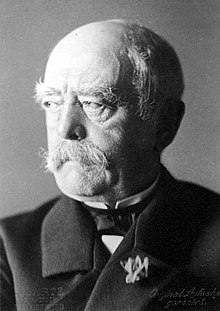
Otto von Bismarck, a name synonymous with strategic brilliance and statecraft, was a towering figure in 19th-century European history. Born on April 1, 1815, in Schönhausen, Germany, Bismarck was the architect behind the unification of Germany and a key player in reshaping the geopolitical landscape of Europe. His legacy is not just confined to his political and military achievements but extends to his influence on modern statecraft, diplomacy, and social policy.
Early Life and Background
Otto von Bismarck was born into a noble family of the Prussian landed gentry. His upbringing in the rural estate of Schönhausen instilled in him a deep connection to the Prussian values of discipline, duty, and loyalty. Bismarck’s education was rooted in the classical and legal traditions of the time, and he attended universities in Göttingen and Berlin, where he studied law. However, it wasn’t the legal profession that captivated Bismarck; rather, it was the rough and tumble world of politics.
Rise to Power
Bismarck’s political career began in earnest in 1848 when he was elected as a representative to the Prussian Diet. This was a time of great upheaval in Europe, with revolutionary movements sweeping across the continent. Bismarck, however, stood firmly against these liberal uprisings, advocating for the preservation of the traditional monarchical order. His conservative stance and his ability to navigate the turbulent political waters of the time earned him the favor of King Frederick William IV of Prussia.
In 1851, Bismarck was appointed as Prussia’s envoy to the German Confederation in Frankfurt. This role was pivotal in shaping his views on German unification. Bismarck became convinced that Prussia, not Austria, should lead the German states, and that unification could only be achieved through “blood and iron” – a phrase he famously coined.
The Architect of German Unification
Bismarck’s vision for Germany was not just about unifying the German-speaking states under Prussian leadership but also about establishing Prussia as the dominant power in Central Europe. His strategy involved a series of carefully calculated wars that would weaken Austria and other rivals while strengthening Prussia’s position.
The first of these conflicts was the Second Schleswig War in 1864, where Prussia, allied with Austria, defeated Denmark and gained control of the duchies of Schleswig and Holstein. However, the partnership with Austria was short-lived. Bismarck was determined to eliminate Austrian influence over the German states, leading to the Austro-Prussian War of 1866. The war ended in a decisive Prussian victory at the Battle of Sadowa, and Austria was effectively excluded from German affairs.
The final step in Bismarck’s unification plan was the Franco-Prussian War of 1870-71. By manipulating diplomatic tensions between France and Prussia, Bismarck provoked France into declaring war. The swift and overwhelming Prussian victory not only crushed France but also rallied the German states around Prussia. On January 18, 1871, in the Hall of Mirrors at the Palace of Versailles, King Wilhelm I of Prussia was proclaimed the German Emperor, and the German Empire was born, with Bismarck as its first Chancellor.
Bismarck as Chancellor: Domestic Policies
As the first Chancellor of the German Empire, Bismarck’s primary concern was the stability and security of the newly unified state. He pursued a policy of “Realpolitik,” focusing on practical and pragmatic solutions rather than ideological ones. Domestically, Bismarck implemented a series of social reforms that were revolutionary for their time. He introduced the first welfare state in the world, with policies that included health insurance, accident insurance, and old age pensions. These measures were designed to appease the working class and undermine the appeal of socialism, which Bismarck saw as a threat to the stability of the Empire.
However, Bismarck’s domestic policies were not without their controversies. His Kulturkampf, or “struggle for culture,” was an attempt to reduce the influence of the Catholic Church in German public life. This campaign, which included laws that restricted the activities of the clergy and placed education under state control, was deeply divisive and ultimately unsuccessful. Bismarck eventually had to make concessions to the Catholic Church, and the Kulturkampf was quietly abandoned.
Foreign Policy and the Balance of Power
On the international stage, Bismarck’s primary goal was to maintain the balance of power in Europe and prevent any alliances that could threaten Germany. He achieved this through a complex system of alliances and treaties, often referred to as the “Bismarckian System.” This included the Triple Alliance with Austria-Hungary and Italy, which was designed to counterbalance the growing influence of France and Russia.
Bismarck’s diplomatic genius was also evident in the Congress of Berlin in 1878, where he acted as an “honest broker” in resolving the crisis in the Balkans. The congress was a testament to Bismarck’s ability to manage the competing interests of the European powers and maintain peace on the continent.
The Fall of Bismarck
Despite his many successes, Bismarck’s relationship with the new German Emperor, Wilhelm II, was fraught with tension. Wilhelm II, who ascended to the throne in 1888, was determined to assert his authority and pursue a more aggressive foreign policy. Bismarck, on the other hand, favored a cautious approach and believed that Germany’s interests were best served by maintaining the status quo.
The conflict between the two men came to a head in 1890 when Wilhelm II forced Bismarck to resign. Bismarck’s dismissal marked the end of an era in German and European history. His departure paved the way for a new and more confrontational phase in German foreign policy, which would eventually contribute to the outbreak of World War I.
Legacy
Otto von Bismarck’s legacy is profound and far-reaching. He was a master of Realpolitik, a statesman who understood the importance of power and pragmatism in politics. His achievements in unifying Germany and establishing it as a major European power are unparalleled. However, Bismarck’s legacy is also a cautionary tale about the dangers of nationalism and militarism. His methods, while effective in the short term, sowed the seeds of future conflicts, not least the two World Wars that would devastate Europe in the 20th century.
Bismarck’s influence extends beyond Germany. His social policies laid the groundwork for the modern welfare state, and his diplomatic strategies continue to be studied by scholars and policymakers alike. The battleship named after him, the Bismarck, which played a significant role in World War II, is a testament to the enduring impact of his name and legacy.
Conclusion
Otto von Bismarck was a complex and multifaceted figure whose life and career offer invaluable insights into the art of statecraft. From his early days as a Prussian diplomat to his role as the Iron Chancellor of the German Empire, Bismarck’s actions shaped the course of history in ways that are still felt today. His legacy, marked by both triumphs and controversies, is a reminder of the power of vision, determination, and strategic thinking in the realm of politics.


