
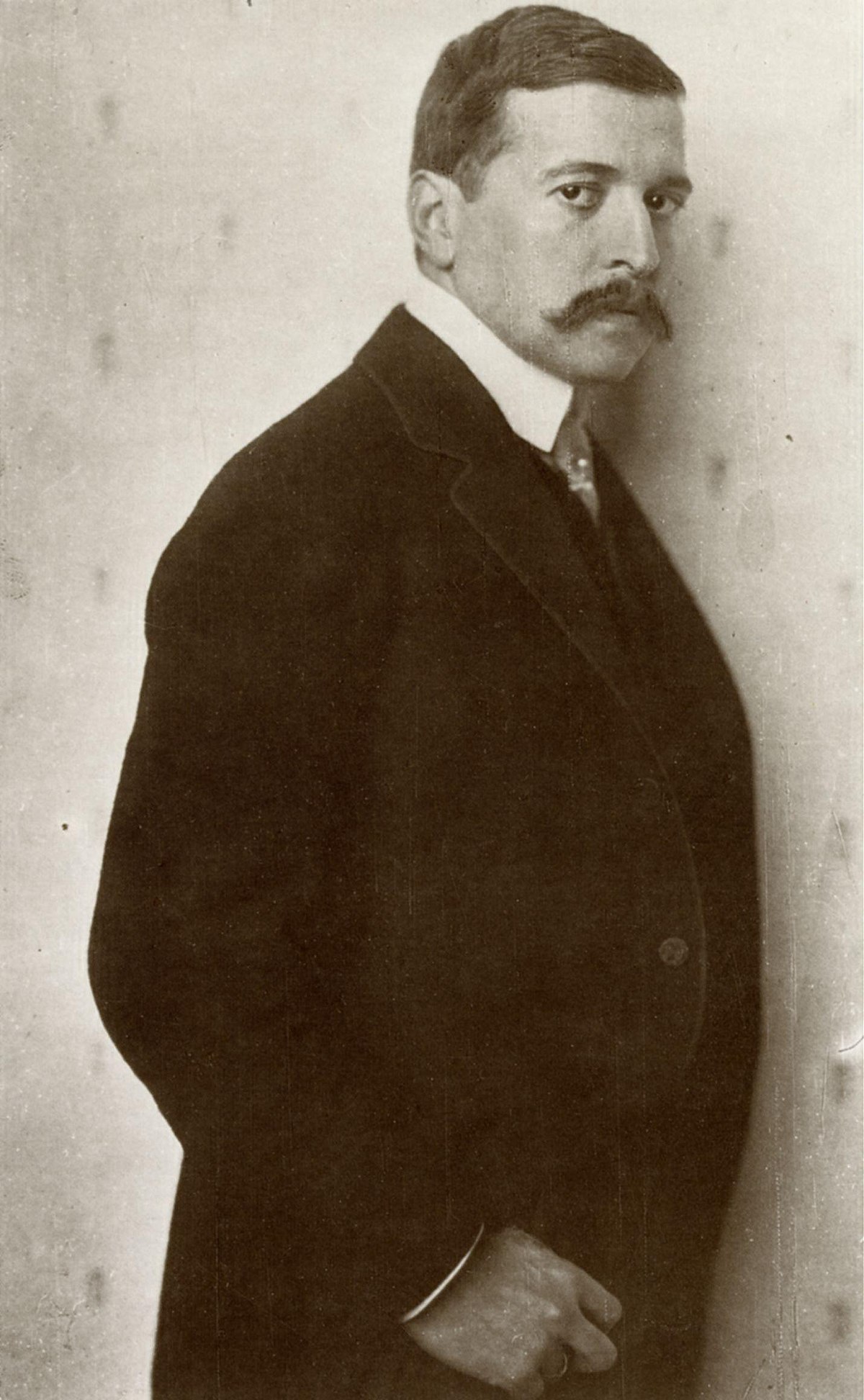
Hugo von Hofmannsthal, born on February 1, 1874, in Vienna, Austria-Hungary, remains one of the most significant figures in European literature, particularly in the context of the Viennese fin de siècle (the end of the 19th century). A prodigious talent from a young age, Hofmannsthal’s literary contributions spanned poetry, drama, and opera libretti. His works are not only marked by their lyrical beauty but also by a deep engagement with the philosophical and cultural questions of his time. This article explores the life, achievements, and lasting legacy of Hugo von Hofmannsthal, offering detailed insights into his personal and professional journey.
Early Life and Education
Hofmannsthal was born into a wealthy and culturally inclined family. His father, Hugo August Peter von Hofmannsthal, was a bank director, while his mother, Anna Maria Föppl, came from a family with a strong intellectual tradition. Growing up in Vienna, a city known for its rich cultural life and intellectual vibrancy, Hofmannsthal was exposed to literature, music, and the arts from a young age. This environment fostered his early interest in literature and led to his precocious entry into the world of letters.
Hofmannsthal began writing poetry at the tender age of 16 under the pseudonym “Loris.” His early poems, characterized by their symbolic and almost mystical quality, garnered attention from the literary circles in Vienna. By the time he was 18, he was already being hailed as a literary prodigy, attracting the admiration of established writers like Stefan George. His early success as a poet was remarkable, but it was just the beginning of a lifelong journey into the depths of the human experience.
The Fin de Siècle Vienna and Cultural Context
To understand Hofmannsthal’s work, it is crucial to place him within the broader cultural context of Vienna at the turn of the century. Fin de siècle Vienna was a period of great intellectual ferment, marked by a sense of both cultural decadence and renewal. It was a time when the old certainties of the 19th century were being questioned, and new ideas in art, psychology, and philosophy were emerging.
Vienna was home to some of the most influential thinkers and artists of the time, including Sigmund Freud, Gustav Klimt, and Arnold Schoenberg. This cultural milieu, with its emphasis on exploring the unconscious, the irrational, and the symbolic, deeply influenced Hofmannsthal’s writing. His works often reflect the tensions and ambiguities of this period, blending a deep sense of tradition with a keen awareness of the uncertainties of the modern world.
Literary Career and Major Works
Hofmannsthal’s literary career is marked by a remarkable versatility. He was not only a poet but also a playwright, essayist, and librettist. Each of these roles allowed him to explore different facets of the human experience and to experiment with various literary forms.
Poetry
Hofmannsthal’s early poetry, which he began writing in his teenage years, is characterized by its lyrical intensity and its exploration of themes such as love, beauty, and the passage of time. His poems often have a dreamlike quality, reflecting his interest in symbolism and his fascination with the mysterious and the ineffable. Some of his most famous early poems include “Der Tod des Tizian” (“The Death of Titian”) and “Die Beiden” (“The Two”).
As he matured as a poet, Hofmannsthal’s work began to reflect a deeper engagement with philosophical questions. His later poetry often grapples with themes such as the nature of language, the limits of human understanding, and the relationship between the individual and society.
Plays and Drama
Hofmannsthal is perhaps best known for his contributions to the theater. His plays, like his poetry, are marked by their lyrical beauty and their exploration of complex psychological and philosophical themes. One of his most famous plays is Elektra (1903), a reimagining of the ancient Greek myth. In this work, Hofmannsthal delves into the themes of revenge, guilt, and the power of the past to shape the present.
Another significant work is Jedermann (1911), a morality play that has become a staple of the Salzburg Festival. Jedermann is a modern adaptation of a medieval mystery play, and it reflects Hofmannsthal’s deep interest in the spiritual and moral questions that lie at the heart of human existence. The play’s exploration of themes such as mortality, redemption, and the search for meaning resonates with audiences to this day.
Opera Librettos
In addition to his work as a poet and playwright, Hofmannsthal is also renowned for his contributions to opera. He collaborated with the composer Richard Strauss on several operas, most notably Der Rosenkavalier (1911), Ariadne auf Naxos (1912), and Die Frau ohne Schatten (1919). These operas are notable not only for their musical brilliance but also for the richness and depth of Hofmannsthal’s libretti.
Der Rosenkavalier, in particular, is a masterpiece of operatic literature. The opera is set in 18th-century Vienna and explores themes of love, time, and the inevitability of change. Hofmannsthal’s libretto is infused with a deep sense of nostalgia for a bygone era, as well as a keen awareness of the transience of human happiness.
Personal Life and Influences
Hofmannsthal’s personal life was as complex and multifaceted as his literary career. He married Gertrud “Gerty” Schlesinger in 1901, and the couple had three children. His family life, however, was marked by tragedy. His son Franz committed suicide in 1929, an event that deeply affected Hofmannsthal and led to his own untimely death just two days later, on July 15, 1929, at the age of 55.
Hofmannsthal was deeply influenced by the intellectual and cultural currents of his time. He was an avid reader of philosophy, and his work reflects the influence of thinkers such as Friedrich Nietzsche, Sigmund Freud, and Arthur Schopenhauer. He was also deeply engaged with the literary traditions of Europe, drawing inspiration from the works of Goethe, Dante, and Shakespeare.
Despite his deep engagement with the intellectual currents of his time, Hofmannsthal was also acutely aware of the limitations of language and the difficulties of communication. This awareness is evident in his famous “Chandos Letter” (1902), a fictional letter in which a Renaissance nobleman expresses his despair at the inadequacy of language to capture the complexity of human experience. The “Chandos Letter” is often seen as a key text in the development of modernist literature, and it reflects Hofmannsthal’s ongoing struggle to reconcile the richness of the world with the limitations of artistic expression.
Legacy and Influence
Hofmannsthal’s influence on European literature and culture is profound and enduring. His works continue to be studied and performed around the world, and his ideas have left a lasting mark on the fields of literature, philosophy, and the arts.
One of Hofmannsthal’s most significant contributions to European culture was his role in the founding of the Salzburg Festival in 1920. The festival, which began as a celebration of Austrian culture and has since become one of the most prestigious arts festivals in the world, reflects Hofmannsthal’s deep belief in the power of art to bring people together and to transcend the boundaries of language, nationality, and time.
Hofmannsthal’s work also had a significant impact on the development of modernist literature. His exploration of the limits of language and the complexities of human consciousness anticipated many of the concerns of later modernist writers such as James Joyce, T.S. Eliot, and Virginia Woolf. His works, with their rich symbolism, intricate structures, and deep philosophical engagement, continue to resonate with readers and scholars alike.
In addition to his literary legacy, Hofmannsthal’s ideas about culture, tradition, and the role of the artist in society have had a lasting impact on European thought. He believed in the importance of maintaining a connection with the cultural traditions of the past, while also being open to the new and the innovative. This balance between tradition and innovation is a hallmark of Hofmannsthal’s work and continues to be a source of inspiration for artists and thinkers today.
Conclusion
Hugo von Hofmannsthal was a towering figure in European literature, whose works continue to captivate and inspire audiences nearly a century after his death. From his early success as a poet to his later achievements as a playwright and librettist, Hofmannsthal’s career is marked by a deep engagement with the most pressing questions of his time. His works reflect the tensions and ambiguities of fin de siècle Vienna, while also addressing timeless themes such as love, mortality, and the search for meaning.
Hofmannsthal’s legacy is not only evident in his own writings but also in the broader cultural and intellectual currents he helped to shape. His contributions to the Salzburg Festival, his influence on modernist literature, and his ideas about the role of the artist in society continue to resonate today. As we look back on his life and work, it is clear that Hugo von Hofmannsthal remains a key figure in the history of European literature and culture, whose insights and ideas continue to offer valuable perspectives on the complexities of the human experience.


