
Introduction
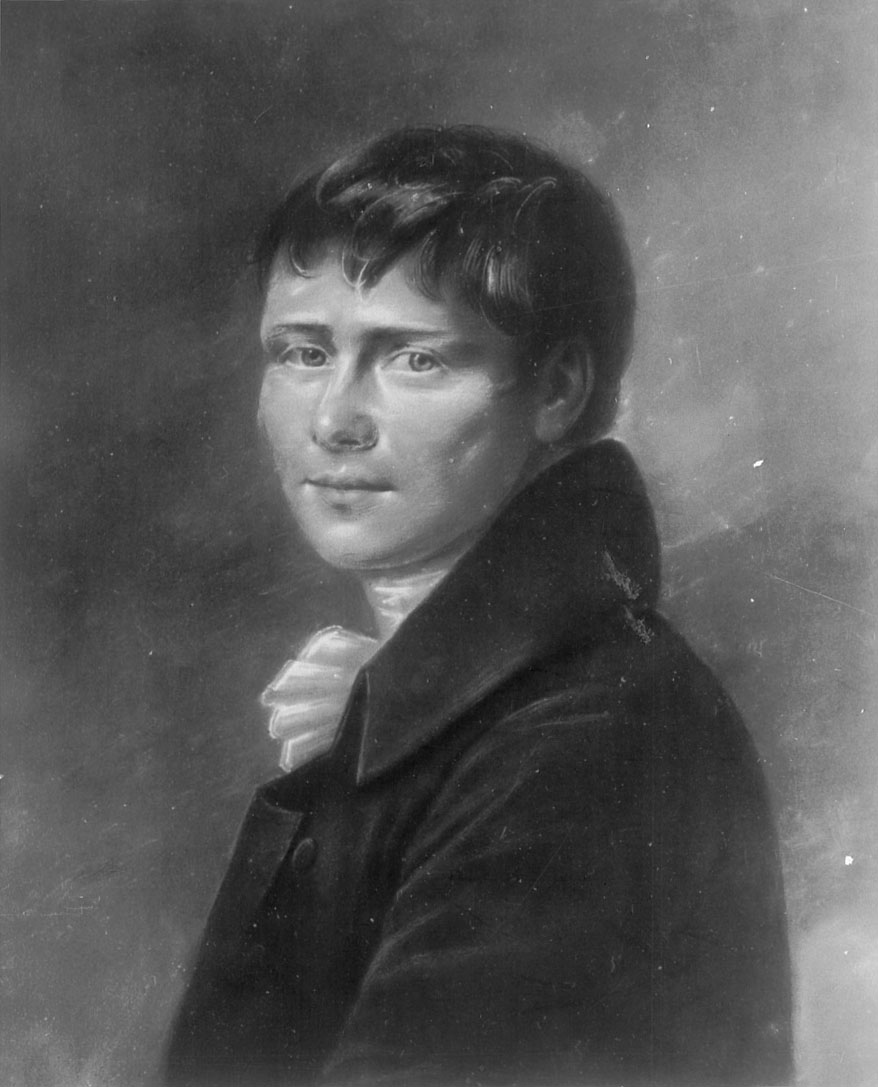
Heinrich von Kleist, born on October 18, 1777, in Frankfurt an der Oder, in the Brandenburg region of Prussia, is one of the most enigmatic and influential figures in German literature. His work, which spans drama, poetry, and prose, is characterized by its intense emotional depth, philosophical inquiry, and exploration of existential despair. Despite a life marked by personal turmoil and tragedy, Kleist’s literary output has left a lasting legacy, and he is celebrated today as a pioneer of modern drama and narrative fiction.
Early Life and Family Background
Heinrich von Kleist was born into a distinguished Prussian military family. His father, Joachim Friedrich von Kleist, was an officer in the Prussian army, and his mother, Juliane Ulrike von Kleist, came from a similarly prestigious background. Heinrich was the eldest of eight children, and his early life was shaped by the strict, disciplined environment typical of a military family.
Tragically, Kleist was orphaned at the age of 16 when both of his parents died. This loss had a profound impact on him, and it set the stage for the restlessness and existential anxiety that would characterize much of his life and work. Following his parents’ deaths, Kleist was sent to Berlin, where he continued his education and eventually joined the Prussian army in 1792. However, despite initial success, Kleist quickly grew disillusioned with military life, finding it stifling and at odds with his burgeoning intellectual and artistic ambitions.
Academic Pursuits and Early Disillusionment
In 1799, Kleist left the army and enrolled at the University of Frankfurt an der Oder, where he studied mathematics, philosophy, and the so-called “cameral sciences,” which were focused on state administration. However, his academic pursuits were short-lived. Kleist found himself increasingly frustrated by the limitations of formal education, particularly by the rigid structures and lack of existential engagement he perceived in his studies.
During this period, Kleist also became engaged to Wilhelmine von Zenge, a young woman from a respected Prussian family. However, Kleist’s deepening existential crisis led him to break off the engagement, a decision that further fueled his sense of isolation and despair. In search of meaning and purpose, Kleist embarked on a period of extensive travel across Europe, a journey that would significantly influence his later writing.
Wanderings and Literary Beginnings
Kleist’s travels took him to various cultural centers across Europe, including Paris, Dresden, and Weimar. It was during this period of wandering that he began to seriously pursue his literary ambitions. In 1802, while staying on a small island in the Aar River in the Swiss Alps, Kleist wrote his first major work, Die Familie Schroffenstein (The Schroffenstein Family). This tragedy, published anonymously in 1803, reflects the themes of family conflict, fatalism, and the destructive power of misunderstandings that would recur throughout Kleist’s oeuvre.
Kleist’s time in Paris in 1803 was particularly significant. The city was a hub of intellectual and artistic activity, and it was here that Kleist began work on Robert Guiscard, a historical tragedy based on the life of the Norman adventurer. However, Kleist never completed the play, abandoning it in a state of profound despair that foreshadowed the intense psychological struggles he would face throughout his life.
Return to Prussia and Literary Output
In 1804, Kleist returned to Prussia, settling in Königsberg (now Kaliningrad, Russia). Here, he found some stability and began to produce a series of important literary works. Among these were Das Erdbeben in Chili (The Earthquake in Chile), a novella that examines the catastrophic consequences of natural disasters and human cruelty, and Der zerbrochne Krug (The Broken Jug), a comedy that satirizes judicial corruption. The latter, completed in 1806, would become one of Kleist’s most famous works, celebrated for its sharp wit and incisive social commentary.
However, Kleist’s return to Prussia coincided with the turmoil of the Napoleonic Wars. In 1807, after the French occupation of Prussia, Kleist was arrested in Berlin on charges of espionage and imprisoned at Fort de Joux in France. Despite the harsh conditions, Kleist remained productive during his imprisonment, revising his adaptation of Molière’s Amphitryon and working on other literary projects.
Tragedy and Further Literary Success
Following his release from prison, Kleist moved to Dresden in 1808, where he became involved in several ill-fated publishing ventures with his friend Adam Müller. Together, they launched the literary journal Phöbus and later the newspaper Berliner Abendblätter, both of which were short-lived due to financial difficulties and political opposition. Despite these setbacks, Kleist continued to write prolifically.
In Dresden, Kleist completed several of his most significant works, including Penthesilea, a tragedy that explores the destructive power of love and passion, and Die Marquise von O (The Marquise of O), a novella that delves into themes of honor, social norms, and the complexities of human relationships. These works reflect Kleist’s deepening engagement with the Romantic ideals of individualism, emotional intensity, and the sublime, while also revealing his growing disillusionment with the ideals of the Enlightenment.
Kleist’s most politically charged work from this period is Die Hermannsschlacht (The Battle of Hermann), written in 1809 but published posthumously in 1821. The play is a nationalist drama that portrays the historic defeat of the Romans by the Germanic tribes under Arminius (Hermann). It is a passionate call to arms against Napoleon, reflecting Kleist’s fervent anti-French sentiments during the period of Prussian subjugation. However, the play’s militant tone and Kleist’s increasingly radical views alienated many of his contemporaries, contributing to his growing sense of isolation.
The Final Years and Tragic End
By 1810, Kleist’s personal and financial difficulties had reached a crisis point. Despite his literary achievements, he struggled to find stable employment and faced mounting debt. His physical health also began to deteriorate, exacerbating his psychological distress. During this time, Kleist wrote Prinz Friedrich von Homburg (Prince Friedrich of Homburg), another of his most celebrated plays. The work, completed in 1810 but published posthumously in 1821, is a complex exploration of duty, authority, and the conflict between individual desires and social obligations. The play’s ambiguous ending has sparked extensive critical debate and is often seen as a reflection of Kleist’s own unresolved inner conflicts.
In the autumn of 1811, Kleist formed a close relationship with Henriette Vogel, a married woman who was suffering from what she believed to be a terminal illness. The two shared a deep bond, united by their shared sense of despair and disillusionment. On November 21, 1811, Heinrich von Kleist and Henriette Vogel committed suicide together on the shores of the Wannsee near Potsdam. Kleist first shot Vogel and then himself, ending his life at the age of 34.
Legacy and Posthumous Recognition
Heinrich von Kleist’s death marked the end of a tumultuous and deeply troubled life, but it also cemented his status as one of the most significant literary figures of his time. In the years following his death, Kleist’s work gradually gained recognition, particularly for its innovative narrative techniques, psychological depth, and its exploration of themes such as existential angst, the fragility of human relationships, and the conflict between personal desires and societal expectations.
Kleist’s influence extends far beyond his immediate historical context. His work has been the subject of extensive scholarly study and has inspired countless adaptations in theater, film, and literature. His exploration of the darker aspects of the human psyche, his use of irony and ambiguity, and his subversion of traditional narrative forms have earned him a place among the pioneers of modern literature.
In recognition of his contributions to German literature, the Kleist Prize was established in 1912. This prestigious award, named in his honor, has been awarded to some of the most important writers in German literature, including Bertolt Brecht, Anna Seghers, and Heinrich Böll. The enduring relevance of Kleist’s work is a testament to his genius and the profound impact he has had on the literary world.
Conclusion
Heinrich von Kleist’s life was marked by profound inner turmoil, personal tragedy, and a relentless search for meaning in a world that often seemed indifferent to his struggles. Yet, out of this turmoil emerged a body of work that continues to resonate with readers and scholars today. Kleist’s exploration of the complexities of the human condition, his innovative use of narrative structure, and his unflinching portrayal of existential despair have secured his place as one of the great literary figures of the 19th century.
As we reflect on Heinrich von Kleist’s life and work, it becomes clear that his contributions to literature are not just of historical significance, but continue to offer valuable insights into the human experience. His legacy is one of innovation, emotional depth, and a willingness to confront the most difficult questions of existence—a legacy that will undoubtedly continue to inspire and challenge readers for generations to come.


