
Introduction
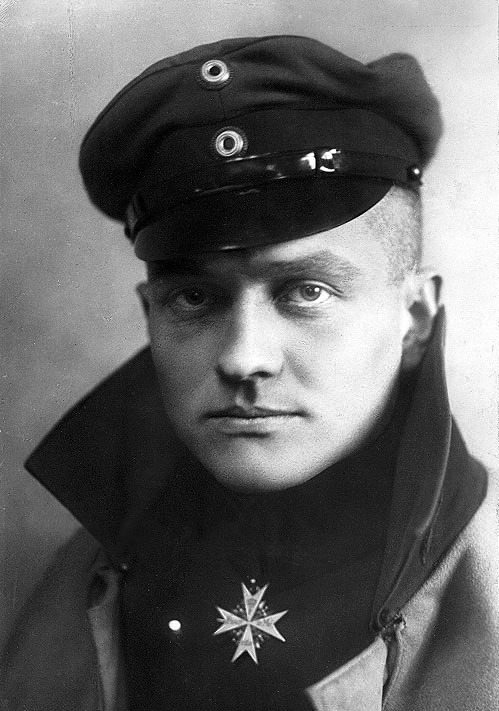
Manfred von Richthofen, famously known as the “Red Baron,” is one of the most legendary figures in military history. Born on May 2, 1892, in Breslau, Prussia (now Wrocław, Poland), Richthofen became the most successful fighter pilot of World War I, earning a reputation that has endured for over a century. His striking red aircraft, his fearsome combat skills, and his noble lineage made him an icon both in his time and in the years that followed. This article explores the life, career, and lasting legacy of Manfred von Richthofen, providing detailed insights into his achievements and the historical context that shaped his remarkable journey.
Early Life and Background
Manfred Albrecht Freiherr von Richthofen was born into an aristocratic Prussian family. As the eldest son, he inherited the title of “Freiherr,” or Baron, which reflected his noble heritage. Richthofen’s father, Major Albrecht von Richthofen, was a career military officer, and his mother, Kunigunde von Schickfus und Neudorff, came from a family of Silesian nobility.
Growing up, Richthofen displayed a keen interest in outdoor activities, particularly hunting, which became a lifelong passion. The young baron was known for his adventurous spirit, often spending hours in the forests near his family’s estate, honing his skills in marksmanship and riding. This early exposure to hunting and nature would later influence his approach to aerial combat, where he applied the same instincts and precision he had developed as a boy.
At the age of 11, Richthofen was enrolled in the Wahlstatt military school, a traditional path for young men of his social standing. Although he excelled in physical activities, he found the academic and disciplinary aspects of military education stifling. Nevertheless, he persevered, driven by the promise of a future military career. After completing his studies, he attended the Royal Military Academy, where he earned the rank of lieutenant in the Prussian Cavalry in 1912.
The Advent of War and Transition to Aviation
With the outbreak of World War I in 1914, Richthofen eagerly joined the war effort, initially serving in the cavalry. However, the nature of warfare had changed dramatically, and traditional cavalry units were increasingly rendered obsolete by modern technologies such as machine guns and airplanes. Richthofen soon realized that the future of warfare lay in the skies.
In 1915, after a brief and frustrating stint in the trenches, Richthofen requested a transfer to the Imperial German Air Service (Fliegertruppe). He was accepted as an observer, where he flew in two-seater reconnaissance planes, but his ambition quickly led him to pursue pilot training. By the end of 1915, he had completed his training and was assigned to the Second Fighter Squadron, where he flew a Fokker Eindecker, the first fighter plane equipped with a synchronized machine gun.
Rise to Fame: The Birth of the Red Baron
Richthofen’s career as a fighter pilot truly began when he was noticed by Oswald Boelcke, a pioneering German fighter ace who is often regarded as the father of air combat tactics. Boelcke recognized Richthofen’s potential and invited him to join his elite fighter squadron, Jasta 2. Under Boelcke’s mentorship, Richthofen quickly developed into a formidable pilot, learning the art of aerial combat and the strategic principles that would define his flying style.
Richthofen’s first confirmed aerial victory came on September 17, 1916, when he shot down a British aircraft. This initial success was followed by a rapid string of victories, as Richthofen’s natural hunting instincts and precision translated into deadly efficiency in the skies. He soon became known for his cool demeanor, sharp reflexes, and uncanny ability to outmaneuver and outgun his opponents.
In January 1917, after downing his 16th enemy aircraft, Richthofen was promoted to the rank of captain and given command of his own squadron, Jasta 11. Around this time, he made the decision to paint his Albatros D.III aircraft bright red, a bold choice that was both a personal trademark and a psychological tactic designed to intimidate his enemies. The striking red aircraft became synonymous with Richthofen himself, earning him the nickname “Der Rote Baron” or “The Red Baron.”
The Flying Circus and Legendary Status
Under Richthofen’s leadership, Jasta 11 quickly became the most feared fighter squadron on the Western Front. The squadron was later expanded into a full fighter wing, known as Jagdgeschwader 1, or the “Flying Circus,” a nickname derived from the colorful aircraft flown by its pilots and the unit’s mobility, as it frequently relocated along the front to provide support wherever needed.
Richthofen’s success in aerial combat was unparalleled. By April 1917, he had downed 21 enemy planes in a single month, a feat that contributed to what became known as “Bloody April” for the Royal Flying Corps. His tally of victories continued to climb, and by June 1917, he had achieved 57 confirmed kills, making him the most successful fighter pilot of the war.
The Red Baron’s exploits made him a national hero in Germany and a respected, albeit feared, adversary among the Allies. His fame extended beyond military circles, as newspapers and magazines chronicled his victories, turning him into a symbol of the German war effort. Richthofen was awarded numerous military honors, including the Pour le Mérite, also known as the “Blue Max,” Germany’s highest military award at the time.
Challenges and the Final Flight
Despite his extraordinary success, Richthofen’s career was not without challenges. In July 1917, he was seriously wounded during a dogfight with British aircraft. A bullet struck him in the head, causing a severe injury that left him temporarily grounded. Although he returned to active duty after a few weeks, it is widely believed that the injury affected his health and possibly his mental state, as he appeared more subdued and reflective in the months that followed.
By early 1918, the war was taking a heavy toll on both sides, and the technological gap between the German and Allied air forces was narrowing. The British and French had developed new, more advanced aircraft that challenged the dominance of the German aces. Despite this, Richthofen continued to fly and command his squadron, driven by a sense of duty and a desire to protect his men.
On April 21, 1918, Richthofen embarked on what would be his final flight. While pursuing a Canadian pilot, Wilfrid “Wop” May, over the Somme River in France, the Red Baron was struck by a bullet that fatally wounded him. The exact circumstances of his death remain a subject of debate; while Australian ground troops are often credited with the fatal shot, some historians believe that Richthofen was killed by a fellow aviator during the aerial engagement. Regardless of who fired the fatal bullet, Richthofen’s red triplane crashed behind Allied lines, where his body was recovered.
Manfred von Richthofen was just 25 years old at the time of his death. His final tally stood at 80 confirmed aerial victories, making him the highest-scoring ace of World War I. His death was met with respect by both his comrades and his enemies, who honored him with a full military funeral conducted by the Allies.
Legacy of the Red Baron
Manfred von Richthofen’s legacy extends far beyond the 80 victories he achieved during his short but extraordinary career. He became an enduring symbol of aerial combat, embodying the chivalric and often romanticized image of the fighter pilot as a modern-day knight. His story has been immortalized in countless books, films, and other media, cementing his place in popular culture as one of the most iconic figures of the First World War.
The Red Baron’s influence on military aviation is profound. He helped to shape the tactics and strategies of aerial warfare that would be studied and employed by subsequent generations of fighter pilots. His emphasis on precision, discipline, and the psychological aspects of combat were groundbreaking at the time and remain relevant in modern air force training.
Richthofen’s death also marked a turning point in the war. His loss was a significant blow to German morale, and his absence left a void in the leadership of the Luftstreitkräfte, the Imperial German Air Service. In the broader context of the war, Richthofen’s death underscored the brutal and unforgiving nature of aerial combat, where even the most skilled and celebrated pilots were vulnerable.
Cultural Impact and Continuing Fascination
The fascination with Manfred von Richthofen has endured for over a century, reflecting the enduring appeal of his story and the mystique surrounding his persona. The Red Baron has been the subject of numerous biographies, documentaries, and fictionalized accounts, each adding to the legend that surrounds his name.
In popular culture, Richthofen is often portrayed as the quintessential fighter ace—a daring, skilled, and honorable warrior who adhered to a code of conduct that set him apart from the more brutal aspects of the war. This image has been reinforced by portrayals in films, comics, and even video games, where the Red Baron is frequently depicted as an archetype of the noble aviator.
The Red Baron has also become a cultural icon beyond the realm of history and military studies. His name and image have been used in various commercial contexts, most notably by the Red Baron frozen pizza brand, which capitalized on the recognition of his name and the connotations of skill and precision associated with his legacy.
Conclusion
Manfred von Richthofen, the Red Baron, remains one of the most celebrated and enigmatic figures of the First World War. His extraordinary achievements as a fighter pilot, combined with his noble lineage and charismatic persona, have made him a symbol of aerial combat and a lasting icon in both military history and popular culture.
Richthofen’s life was tragically cut short at the age of 25, but in that brief span, he left an indelible mark on the world. His story is not just one of military prowess, but also of the complexities and contradictions of war, where heroism and tragedy are often intertwined. As we reflect on his legacy, we are reminded of the enduring power of the human spirit, the relentless pursuit of excellence, and the profound impact that one individual can have on history.


