
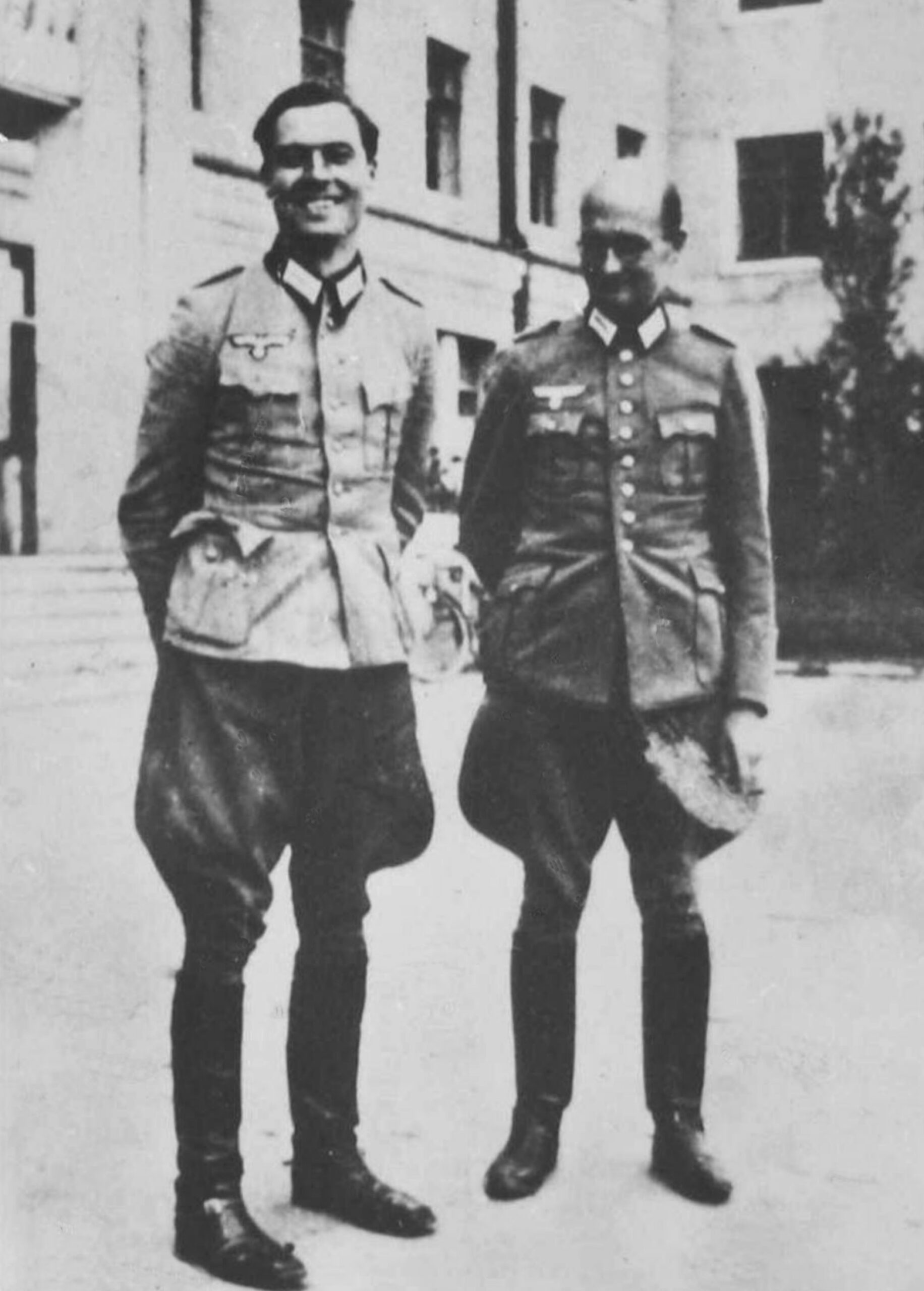
Claus von Stauffenberg is a name that resonates deeply within the annals of World War II history. Known primarily for his central role in the failed assassination attempt on Adolf Hitler on July 20, 1944—an event that has come to be known as Operation Valkyrie—Stauffenberg’s life and actions have been the subject of extensive historical analysis, as well as popular culture portrayals. Born into an aristocratic family, Stauffenberg’s journey from a devoted officer of the Wehrmacht to a key figure in the German resistance against the Nazi regime highlights the complexities of personal conviction, moral courage, and the tragic consequences of failed rebellion.
Early Life and Military Career
Claus Philipp Maria Schenk Graf von Stauffenberg was born on November 15, 1907, in Jettingen-Scheppach, a town in the region of Baden-Württemberg, Germany. His family belonged to the Swabian aristocracy, a lineage steeped in tradition, conservative values, and military service. Raised in an environment that emphasized duty, honor, and loyalty to the state, Stauffenberg was initially supportive of the nationalist ideologies that would later underpin the Nazi regime.
Stauffenberg received a classical education, excelling in his studies and showing a particular affinity for literature and the arts. However, his path was set on a military career, a choice influenced by the strong family tradition of serving the German state. He joined the German army, the Reichswehr, in 1926, and quickly rose through the ranks, gaining a reputation as an intelligent, capable, and dedicated officer.
The early 1930s were a tumultuous period in German history, marked by the rise of Adolf Hitler and the Nazi Party. Like many of his peers, Stauffenberg was initially attracted to some of the ideas espoused by the Nazis, particularly those related to the restoration of German national pride and the military. However, as Hitler’s policies became increasingly radical and brutal, particularly towards Jews and other marginalized groups, Stauffenberg began to distance himself from the regime.
World War II and the Path to Resistance
When World War II broke out in 1939, Stauffenberg was a seasoned officer, serving in various capacities across the German military. He participated in the invasions of Poland and France, where he distinguished himself as a competent and courageous leader. However, the realities of the war, particularly the atrocities committed by the SS and the Gestapo, began to weigh heavily on him. Stauffenberg’s disillusionment with the Nazi regime grew, fueled by his strong Catholic faith and a deepening moral conviction that Hitler’s leadership was leading Germany to ruin.
In 1942, Stauffenberg was transferred to North Africa, where he served under General Erwin Rommel as part of the Afrika Korps. It was here, in March 1943, that he was severely injured during a British air raid. Stauffenberg lost his right hand, two fingers on his left hand, and his left eye. Despite these debilitating injuries, he was determined to continue serving in the military, driven by a sense of duty and a growing resolve to take direct action against Hitler.
After recovering from his injuries, Stauffenberg was assigned to the General Staff in Berlin, where he came into contact with a group of officers who were secretly planning to overthrow Hitler. These men, including General Ludwig Beck, Colonel General Friedrich Olbricht, and Major General Henning von Tresckow, had become increasingly convinced that the only way to save Germany from total destruction was to eliminate Hitler and negotiate a peace settlement with the Allies. Stauffenberg quickly became a key member of this resistance group, bringing with him not only his military expertise but also his moral authority and determination.
Operation Valkyrie: The Assassination Attempt
Operation Valkyrie was initially a contingency plan developed by the German military to maintain order in the event of a breakdown in civil authority. Stauffenberg and his fellow conspirators repurposed this plan as the framework for a coup d’état against Hitler. The idea was simple but dangerous: assassinate Hitler, seize control of key government and military institutions, and negotiate an end to the war with the Allies.
Stauffenberg’s role in the plot was crucial. As Chief of Staff to General Friedrich Fromm, the commander of the Replacement Army, Stauffenberg had access to Hitler’s inner circle and regularly attended briefings at the Führer’s headquarters, the Wolf’s Lair, in Rastenburg, East Prussia. On July 20, 1944, Stauffenberg carried a briefcase containing a bomb into a meeting with Hitler and other high-ranking Nazi officials.
The bomb exploded as planned, but Hitler survived, shielded by a heavy oak table that absorbed much of the blast. The failure of the assassination attempt was catastrophic. Stauffenberg, believing Hitler to be dead, returned to Berlin to oversee the coup, but the news of Hitler’s survival quickly spread. The plot unraveled within hours, and the Gestapo swiftly arrested the conspirators.
That same night, Stauffenberg, along with other key members of the resistance, was executed by firing squad in the courtyard of the Bendlerblock, the military headquarters in Berlin. His last words were reportedly, “Long live our sacred Germany!”
Legacy and Historical Significance
Claus von Stauffenberg’s legacy is a complex one, shaped by the moral ambiguities of his actions and the broader context of World War II. For many, he is a symbol of the “good German,” a man who, despite his early support for the Nazi regime, ultimately chose to risk his life to stop Hitler’s madness. His involvement in the July 20 plot is often portrayed as an act of heroic resistance, a final, desperate attempt to save Germany from total annihilation.
However, historians have also pointed out that Stauffenberg’s motivations were not entirely altruistic. While he was undoubtedly horrified by the Holocaust and other crimes committed by the Nazis, his primary concern was the survival of Germany as a nation. Stauffenberg believed that by removing Hitler and negotiating peace with the Allies, Germany could avoid total defeat and preserve some of its territorial gains, particularly in Eastern Europe.
Moreover, Stauffenberg’s vision for post-Hitler Germany was not necessarily democratic. He and his fellow conspirators planned to establish a conservative, authoritarian government that would have maintained many of the traditional power structures of the German state. They also intended to resist Allied demands for unconditional surrender and the prosecution of war criminals, a stance that has led some historians to question the true nature of their resistance.
Despite these complexities, Stauffenberg remains a powerful symbol of resistance against tyranny. His story has been the subject of numerous books, documentaries, and films, most notably the 2008 film Valkyrie, in which he was portrayed by Tom Cruise. The film brought renewed attention to Stauffenberg’s life and the July 20 plot, highlighting the moral dilemmas faced by those who opposed Hitler from within the German military.
Personal Life and Family
Claus von Stauffenberg was married to Nina von Lerchenfeld, a woman of equally noble lineage, in 1933. The couple had five children: Berthold, Heimeran, Franz-Ludwig, Valerie, and Konstanze. After Stauffenberg’s execution, his family was subjected to severe reprisals by the Nazi regime under the concept of Sippenhaft, or kin liability, which held that family members of traitors could be punished for the crimes of their relatives. Nina and the children were arrested and sent to concentration camps, but they were eventually liberated by Allied forces in 1945.
After the war, Nina von Stauffenberg dedicated herself to preserving her husband’s memory and ensuring that his role in the German resistance was not forgotten. She lived until 2006, passing away at the age of 92.
Stauffenberg’s Impact on Post-War Germany
In post-war Germany, Claus von Stauffenberg has been both venerated and debated. His role in the resistance has been celebrated as a symbol of moral courage, especially in the context of Germany’s struggle to come to terms with its Nazi past. July 20 is now commemorated in Germany as a day of remembrance for the resistance against Hitler, with ceremonies held at the Bendlerblock, where Stauffenberg and his fellow conspirators were executed.
However, the discussion around Stauffenberg’s legacy is not without controversy. Some critics argue that the July 20 plot was too little, too late, coming only after it had become clear that Germany was losing the war. Others contend that the conspirators’ plans for Germany were undemocratic and failed to address the fundamental issues of Nazi ideology and militarism.
Despite these debates, Claus von Stauffenberg’s actions on July 20, 1944, stand as a testament to the difficult choices faced by those who live under tyranny. His story is a reminder of the complexities of resistance, the moral ambiguities of wartime decisions, and the enduring struggle for justice and humanity in the face of overwhelming evil.
Conclusion
Claus von Stauffenberg’s life is a compelling narrative of courage, conviction, and tragedy. His transformation from a loyal officer of the Wehrmacht to a leader of the German resistance reflects the moral dilemmas faced by many during one of history’s darkest periods. While the failure of Operation Valkyrie ensured that Hitler’s reign of terror would continue for several more months, the attempt itself has become a powerful symbol of the potential for resistance even within the heart of a totalitarian regime.
Stauffenberg’s legacy, though complex and sometimes contentious, continues to inspire those who value freedom, justice, and the courage to stand against oppression, no matter the cost.


