
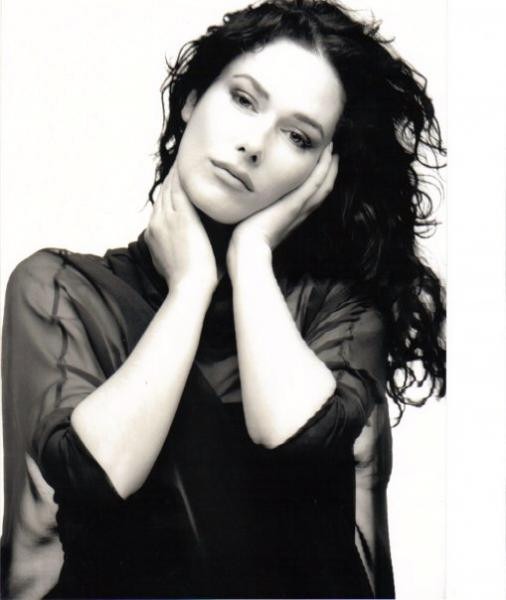
Scarlett Von Wollenmann, born on February 27, 1962, in Lucerne, Switzerland, is a former British singer whose life and career have been marked by both extraordinary talent and profound tragedy. Known for her powerful and spiritual voice, she rose to prominence in the 1980s and 1990s, only to have her career abruptly altered by a life-changing accident. Despite this, her legacy endures, both in her music and in her inspiring personal story.
Early Life and Musical Beginnings
Scarlett Von Wollenmann was born into a distinguished family. Her father, Eduard Von Wollenmann, was a Swiss diplomat and university professor, while her mother, Maxine, was an English journalist, writer, and painter. Growing up in an intellectually and artistically rich environment, Scarlett developed a deep love for the arts from an early age. By the age of fourteen, she was already performing in London clubs, showcasing a voice that was both intense and spiritually evocative.
Her early career was marked by a series of musical explorations that quickly established her as a versatile and talented singer. In 1982, she released her first album, Wild Obsessions, under Jet Records. This album included tracks like “Warm Love,” “Hypnotised,” and “Un Coeur Perdue,” which highlighted her range and ability to convey deep emotion through her music. By 1984, she had released more music, including the singles “Sad Songs On The Radio” and “Ventilation,” under Lamborghini and RCA labels, respectively.
Rise to Fame: Collaborations and Success
During the early to mid-1980s, Scarlett Von Wollenmann’s career began to flourish as she balanced her work as a solo artist with collaborations with some of the most prominent figures in the British music scene. She became a sought-after vocalist, lending her voice to a variety of projects and bands. Among her notable collaborations were her contributions to Living In A Box and Kissing The Pink, two groups that enjoyed considerable success during this period. Her voice was featured in the hit single “One Step,” further solidifying her reputation as a talented and versatile artist.
One of Scarlett’s most enduring partnerships was with Boy George and Sal Paradise, where she served as a backing vocalist. Her work with these artists helped her gain recognition beyond the UK, making her a well-known figure in the European music scene. Additionally, Scarlett was also a prolific songwriter, collaborating with her friend Martin Red Broad, the drummer of Sector 27. Together, they penned several tracks, though many remained unreleased. One of their notable compositions was “Let the Day,” a song that would later be reimagined in Italian as “Pregherei.”
Success in Italy and Major Achievements
Scarlett Von Wollenmann’s career took a significant turn in 1986 when she moved to Italy. This move came after meeting Italian singer Giovanni Scialpi, who encouraged her to stay and work with him. The collaboration between Scarlett, Scialpi, Franco Migliacci, and Martin Red Broad led to the rewriting of “Let the Day” as “Pregherei,” which became a massive hit in Italy.
In 1988, Scarlett and Scialpi performed “Pregherei” at Festivalbar, one of Italy’s most popular music festivals. Their performance was a resounding success, winning the competition and making “Pregherei” one of the most recognized songs in Italy. This achievement marked the peak of Scarlett’s career in Italy and established her as a significant figure in the Italian music industry.
Following the success of “Pregherei,” Scarlett continued to collaborate with prominent Italian artists. She contributed her vocals to Scialpi’s album Un Morso e Via, where she featured on tracks like “Dal Cielo In Giù,” “Da Bambino,” “Tutti Trucchi,” “Porca La Miseria,” and “Uno Di Noi.” These collaborations were followed by a successful tour across Italy, further cementing her status in the country.
Scarlett’s work in Italy also led to collaborations with legendary artists such as Gianni Morandi and Riccardo Cocciante, two of the most celebrated names in Italian music. Her duets and songwriting contributions during this period demonstrated her ability to seamlessly blend into different musical styles, from pop to more classical influences.
Diversification and Contributions to Film
As the 1990s began, Scarlett Von Wollenmann continued to diversify her musical career. She ventured into the dance music scene, both as a performer and a songwriter. Some of her notable works in this genre include collaborations with Billy Preston on “Heroes,” with Dance Or Die on “The Galaxy of Love,” with Dilemma on “In Spirit,” and with Elvio Moratto on “Radar System.”
Her talents also extended to the world of film. In 1991, Scarlett co-wrote two songs, “This Love Of Mine” and “Cin Cin,” in collaboration with Pino Donaggio, Vito Pallavicino, and Bruno Ventura. These tracks were included in the soundtrack of the film Tchin Tchin (released in the United States as A Fine Romance), which starred Marcello Mastroianni and Julie Andrews. This foray into film music added another dimension to Scarlett’s artistic achievements and showcased her ability to contribute to different entertainment mediums.
In 1992, Scarlett returned to the Festivalbar stage with the song “Coprimi,” which she had written herself. The song was later released in English as “Cover Me.” She continued to work with various Italian artists, including writing the song “Cambia Pelle” for Mietta, a popular Italian singer. The track became the title song for Mietta’s 1994 album, further showcasing Scarlett’s influence on Italian pop music.
Tragedy and Transformation
Scarlett Von Wollenmann’s life took a dramatic turn in November 1995 when she was involved in a severe car accident in Rome. The accident resulted in multiple injuries, including the fracture of three cervical vertebrae, which left her with spinal cord damage and confined to a wheelchair. This tragic event abruptly ended her singing career and marked the beginning of a new, challenging chapter in her life.
After the accident, Scarlett underwent extensive rehabilitation at a Swiss clinic in Nottwill. Despite the physical and emotional challenges she faced, Scarlett demonstrated remarkable resilience. She was encouraged by her friend, Riccardo Cocciante, and with the support of the Unitalsi (Unione Nazionale Italiana Trasporto Ammalati a Lourdes e Santuari Internazionali), she made a pilgrimage to Lourdes. It was there that Scarlett found a renewed sense of purpose and strength, which she would later refer to as her “second life.”
In reflecting on her life after the accident, Scarlett expressed profound insights into the human spirit’s capacity for resilience and hope. She once remarked:
“If a year ago someone had told me that I would face even a quarter of the problems I endure today, I would have said: better to die. But at some point, something happens inside you. I don’t know what it is: faith, love, hope, God. An extraordinary strength comes directly from your soul. And you realize that this is life too, that you have to go on. Because if I stayed alive, there must be a reason.”
Scarlett’s determination to find meaning and purpose in her new reality was evident in her continued involvement with Unitalsi. She participated in various charitable projects and, as long as her health allowed, remained active in supporting those facing similar challenges.
Legacy and Later Years
In the late 1990s, Scarlett Von Wollenmann continued to contribute to music, even as her health challenges persisted. She recorded the Unitalsi anthem, “Corri Treno,” composed by Maestro Leonardo De Amicis, and performed it at the Jubilee Concert for the Sick in 2000, where she sang in front of Pope John Paul II. This performance was a poignant moment in Scarlett’s life, symbolizing her unbreakable spirit and her enduring commitment to using her talents to inspire others.
Scarlett’s last appearance on Italian television was in the late 1990s on the program “I Fatti Vostri.” After this, she returned to London, where she has lived since, continuing to face her daily struggles with courage and grace.
Scarlett Von Wollenmann’s story is one of extraordinary talent, resilience, and the power of the human spirit. Her contributions to music, both in the UK and Italy, are significant, but it is her personal journey that leaves an indelible mark. Her ability to find hope and meaning in the face of profound adversity continues to inspire many, making her a figure of immense respect and admiration.


