
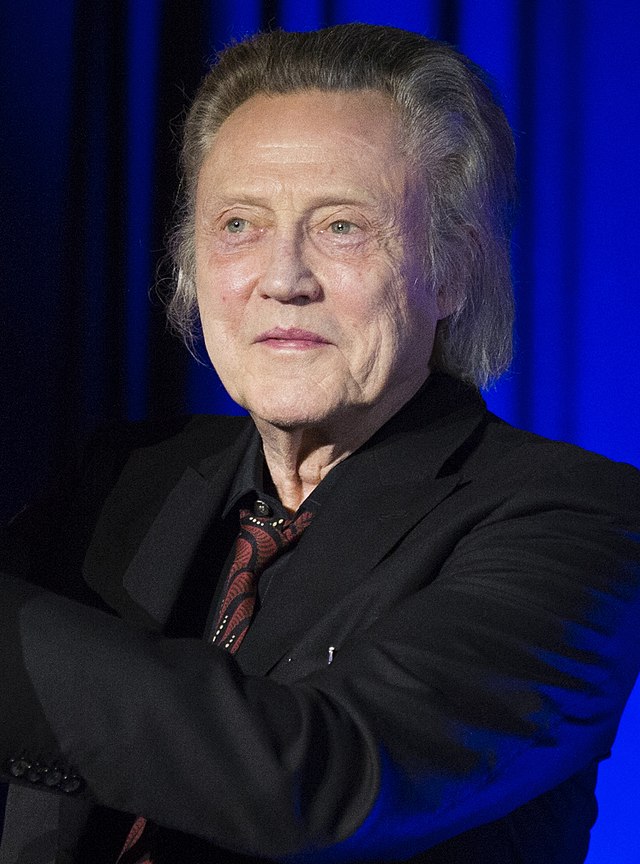
Christopher Walken, born Ronald Walken on March 31, 1943, in New York City, is a distinguished American actor known for his unique style, often described as dark, eccentric, and captivating. His career, spanning over six decades, has seen him portray a wide range of characters, from psychotic villains to comedic roles, all delivered with his signature deadpan delivery and unmistakable voice. Walken’s journey to fame and his subsequent career are marked by versatility, a deep commitment to his craft, and an unwavering presence in Hollywood.
Early Life and Beginnings in Showbiz
Christopher Walken was born into a working-class family in Astoria, Queens, New York. His father, Paul Walken, was a German immigrant who owned a bakery, and his mother, Rosalie, was of Scottish descent and had a deep interest in the performing arts. Rosalie’s passion for entertainment influenced her three sons, with Christopher being the one who fully embraced the world of performance.
From a young age, Walken was exposed to the performing arts. He and his brothers, Kenneth and Glenn, took dance lessons, and Christopher showed a natural talent for tap dancing. This early training in dance would later play a significant role in his acting career, particularly in roles that required a combination of physicality and performance. Walken attended the Professional Children’s School in Manhattan, where he received formal training in dance, acting, and music, further honing his talents.
Walken’s first foray into show business came at the tender age of 10 when he began appearing on television as a child actor. He made his TV debut in the 1950s, and by the time he was a teenager, he was a seasoned performer. During this period, he went by the name “Ronnie Walken” and appeared in various television shows, including the popular series The Wonderful John Action in 1953.
Transition to Theater and Adoption of a New Persona
As Walken grew older, his interests shifted towards theater, and he became enamored with the stage. He made his stage debut at 14 in an off-Broadway production titled J.B., directed by Archibald MacLeish. This early experience in theater solidified Walken’s love for acting and set the stage for his future career.
In the 1960s, Walken made a crucial decision that would shape his career—he changed his name from Ronald to Christopher. This change was suggested by a friend and fellow actor who believed that “Christopher” had a more sophisticated and memorable ring to it. Around the same time, Walken left Hofstra University, where he had been studying dance, to pursue acting full-time. His decision to leave academia paid off when he was cast in the musical Best Foot Forward in 1963, which marked the beginning of his professional acting career.
The Rise to Fame: 1970s and Oscar-Winning Performance
Walken’s big break in film came in 1969 with Me and My Brother, directed by Robert Frank. This film debut was followed by several television appearances, including a notable role in The Three Musketeers. However, it was his work in the 1970s that truly set him on the path to stardom.
In 1972, Walken starred in The Anderson Tapes, directed by Sidney Lumet, alongside Sean Connery. This film showcased Walken’s ability to play complex characters, a skill that would become his hallmark. The same year, he appeared in The Mind Snatchers, further establishing himself as a versatile actor capable of handling a wide range of roles.
However, it was his role in Michael Cimino’s The Deer Hunter (1978) that catapulted Walken to international fame. Starring alongside Robert De Niro, Walken delivered a haunting performance as Nick, a Vietnam War soldier whose experiences lead him to a tragic end. His portrayal of Nick’s descent into madness earned Walken the Academy Award for Best Supporting Actor, solidifying his status as one of Hollywood’s most talented actors. The Deer Hunter remains one of Walken’s most iconic roles, and his performance is still regarded as one of the finest in cinematic history.
Diversifying Roles: The 1980s and Beyond
The success of The Deer Hunter opened the doors to a variety of roles for Walken. Throughout the 1980s, he appeared in films across different genres, showcasing his ability to adapt to any character. In 1981, he starred in the controversial film Heaven’s Gate, directed by Michael Cimino. Although the film was a commercial failure, Walken’s performance was widely praised.
In 1983, Walken starred in David Cronenberg’s The Dead Zone, an adaptation of Stephen King’s novel. In this film, Walken played Johnny Smith, a man who awakens from a coma with psychic abilities. His portrayal of a man burdened by his newfound powers was both compelling and empathetic, further cementing Walken’s reputation as an actor who could bring depth to any role.
Walken continued to diversify his roles throughout the 1980s and 1990s. He took on the role of the villain Max Zorin in the James Bond film A View to a Kill (1985), becoming one of the most memorable antagonists in the Bond series. His work with Tim Burton in Batman Returns (1992), where he played the corrupt businessman Max Shreck, demonstrated his ability to excel in both dramatic and fantastical roles.
In 1993, Walken delivered a memorable cameo in Quentin Tarantino’s True Romance, where he portrayed Vincenzo Coccotti, a Sicilian mobster. This scene, opposite Dennis Hopper, is one of the most celebrated in the film, showcasing Walken’s ability to dominate the screen even in a brief appearance.
Continued Success and Evolution as an Actor
The 2000s saw Walken continue his prolific career with roles in both independent films and big-budget productions. He worked with Steven Spielberg in Catch Me If You Can (2002), playing Frank Abagnale Sr., the father of Leonardo DiCaprio’s character. His performance earned him another Academy Award nomination, this time for Best Supporting Actor.
Walken also explored his comedic side in films like Wedding Crashers (2005), where he played the eccentric Secretary of the Treasury, William Cleary. His ability to seamlessly transition between dark, dramatic roles and light-hearted comedies made him a favorite among directors and audiences alike.
One of Walken’s most beloved performances came in 2001 when he starred in Fatboy Slim’s music video for “Weapon of Choice.” The video, directed by Spike Jonze, featured Walken performing an impressive dance routine, reminding the world of his early training as a dancer. The video became a viral sensation and remains one of the most iconic music videos of the early 2000s.
Personal Life and Challenges
Despite his on-screen success, Walken has always maintained a relatively private personal life. He has been married to casting director Georgianne Walken since 1969, and the couple has no children. Walken’s decision to remain childless has allowed him to fully dedicate himself to his craft, a commitment that is evident in the consistency and quality of his work over the years.
One of the more controversial moments in Walken’s life occurred in 1981 when he was involved in the mysterious death of actress Natalie Wood. Walken was on a yacht with Wood and her husband, Robert Wagner, when she drowned under unclear circumstances. Although Walken was not implicated in any wrongdoing, the incident has continued to attract public attention and speculation.
Legacy and Impact on Hollywood
Christopher Walken’s influence on Hollywood and the acting profession is undeniable. His willingness to take on unconventional roles and his ability to infuse each character with a distinct personality have made him a legend in the industry. Walken’s performances are often marked by a unique blend of intensity and vulnerability, making his characters both relatable and unforgettable.
Walken’s impact extends beyond his performances. He is known for his distinctive voice and speech patterns, which have been widely imitated in popular culture. His iconic delivery has made him a favorite among comedians and impressionists, further cementing his status as a cultural icon.
In addition to his film work, Walken has also made significant contributions to theater. He has returned to the stage numerous times throughout his career, showcasing his versatility as a performer. His dedication to both film and theater has earned him respect from his peers and admiration from audiences worldwide.
Conclusion: The Enduring Appeal of Christopher Walken
Christopher Walken’s career is a testament to his extraordinary talent and dedication to the craft of acting. From his early days as a child performer to his rise as one of Hollywood’s most respected actors, Walken has consistently delivered memorable performances that have left a lasting impact on audiences and the film industry.
His ability to navigate the complexities of different genres, from drama to comedy to thriller, has made him one of the most versatile actors of his generation. Walken’s unique presence, characterized by his distinctive voice, eccentricity, and unpredictability, continues to captivate audiences, making him a true legend of the silver screen.
As Christopher Walken continues to take on new roles and challenge himself as an actor, his legacy in Hollywood remains secure. His influence on contemporary cinema, his commitment to his craft, and his ability to continually reinvent himself ensure that he will be remembered as one of the greatest actors of all time.


