
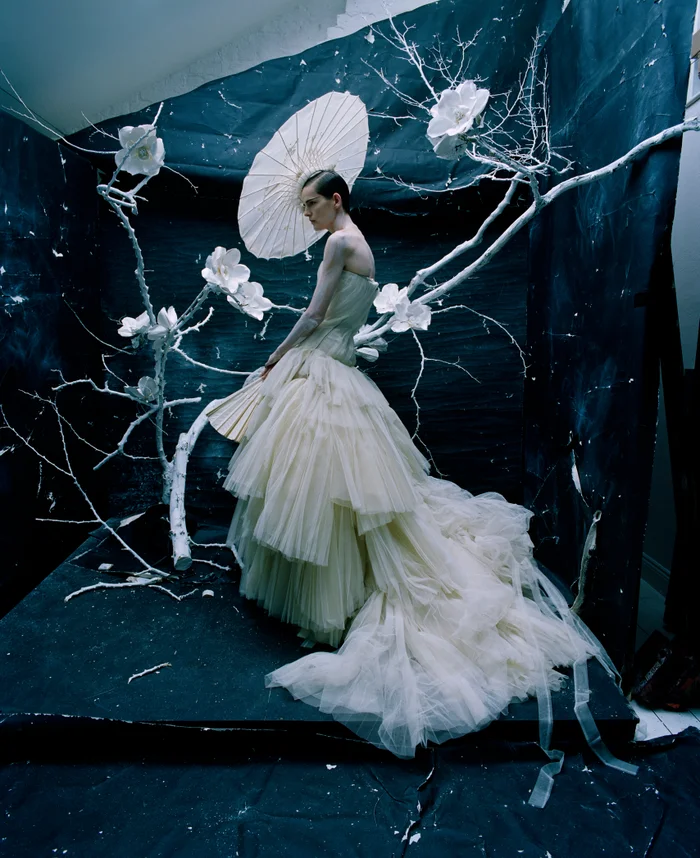
Tim Walker, born in 1970, is a renowned British fashion photographer whose work has transcended the conventional boundaries of the genre. Known for his eccentric, dreamlike images, Walker has become one of the most influential photographers of his generation, captivating audiences with his ability to transform reality into a fantastical world. This exploration of Tim Walker’s life, career, and contributions to fashion photography delves into the nuances of his creative journey and the historical context that shaped his work.
Early Life and Introduction to Photography
Tim Walker’s journey into the world of photography began at an early age. Growing up in England, Walker was deeply inspired by the visual arts. His fascination with photography was ignited while working at the Condé Nast library in London, where he spent a year archiving the work of the legendary fashion photographer Cecil Beaton. This early exposure to Beaton’s work, which often merged high fashion with theatricality, had a profound influence on Walker’s developing aesthetic.
Walker pursued his passion for photography academically at the Exeter College of Art, where he graduated with a degree in photography. His dedication and talent did not go unnoticed, as he soon won the third prize as the Young Photographer of the Year, an accolade that marked the beginning of his promising career.
Mentorship Under Richard Avedon and Early Career
In 1994, Walker’s burgeoning career took a significant leap forward when he moved to New York City to work as a full-time assistant to the legendary photographer Richard Avedon. Avedon, known for his innovative and often provocative fashion photography, was an ideal mentor for Walker. Under Avedon’s guidance, Walker honed his technical skills and developed a deeper understanding of the artistic potential of fashion photography.
Working with Avedon exposed Walker to the upper echelons of the fashion industry, and he quickly gained valuable experience that would shape his future work. This period in New York was crucial for Walker, as it allowed him to immerse himself in a creative environment that challenged and inspired him.
Breakthrough with Vogue and the Birth of a Unique Style
Tim Walker’s big break came when he returned to London and began working with British Vogue at the age of 25. His early editorial work for Vogue was marked by a distinctive style that set him apart from his contemporaries. Inspired by a quote from Irving Penn, “Fashion photography is about selling dreams, not clothes,” Walker embraced the idea that fashion imagery could be more about storytelling than simply showcasing garments.
Walker’s photographs for Vogue were not just images; they were narratives that transported viewers into a world of fantasy. His use of elaborate sets, often built to life-size proportions, became a signature element of his work. These sets, which could include anything from oversized props to surreal landscapes, allowed Walker to create scenes that blurred the line between reality and imagination. His images were, in essence, visual fairy tales—rich in detail, color, and emotion.
Exhibitions and the 2000s: Establishing a Legacy
The 2000s marked a period of significant growth and recognition for Tim Walker. In 2008, he held his first major solo exhibition at the Design Museum in London. The exhibition was a resounding success, solidifying Walker’s reputation as a leading figure in contemporary photography. That same year, he published his first book, Pictures, which further showcased his unique approach to fashion photography.
Walker’s work during this time continued to push the boundaries of the genre. He was not content with merely capturing beautiful images; he sought to create entire worlds within his photographs. This vision led to his first short film, The Lost Explorer, in 2010. Premiering at the Locarno Film Festival in Switzerland, the film was a critical success and won the Best Short Film award at the Chicago United Film Festival the following year.
The success of The Lost Explorer demonstrated Walker’s ability to translate his photographic style into the medium of film, proving that his creative talents were not confined to a single art form. This period also saw the release of his second book, Story Teller, in 2012, accompanied by a major exhibition at Somerset House in London. The book and exhibition were both met with critical acclaim, further establishing Walker as a visionary artist.
The 2010s: Continued Innovation and the Pirelli Calendar
As Walker’s career progressed into the 2010s, his work continued to evolve, yet his commitment to creating immersive, fantastical images remained constant. In 2018, Walker was chosen to shoot the iconic Pirelli Calendar, a commission that is considered one of the highest honors in the world of fashion photography. For the calendar, Walker drew inspiration from Alice in Wonderland, creating a series of images that were both whimsical and profound.
The Pirelli Calendar, traditionally known for its glamorous and often provocative imagery, was transformed by Walker’s vision into something entirely different—a collection of photographs that celebrated diversity, fantasy, and the power of imagination. The calendar featured an all-black cast, including celebrities such as Naomi Campbell, Lupita Nyong’o, and Whoopi Goldberg, and was widely praised for its innovative and inclusive approach.
Tim Walker’s Artistic Philosophy: Blending Fantasy and Reality
One of the most remarkable aspects of Tim Walker’s photography is his ability to blend fantasy and reality seamlessly. His images are often described as dreamlike, and for good reason. Walker himself has stated that he aims to create pictures that capture the essence of a dream—images that are at once familiar and otherworldly.
What sets Walker apart from many of his contemporaries is his commitment to creating these fantastical images without relying heavily on digital manipulation. While many photographers today use Photoshop and other editing tools to enhance their work, Walker prefers to build his sets and props by hand, ensuring that everything in his photographs exists in real life. This approach gives his work a tangible quality that is often lost in digitally altered images.
Walker’s dedication to authenticity extends to his use of color, composition, and lighting. He is known for his meticulous attention to detail, and every element of his photographs is carefully considered and executed. This level of craftsmanship is one of the reasons why his work resonates so deeply with viewers; it feels real, even when it is portraying the impossible.
Influence and Legacy: A Lasting Impact on Fashion Photography
Tim Walker’s influence on the world of fashion photography cannot be overstated. His work has inspired countless photographers and artists who admire his ability to tell stories through images. Walker’s photographs have been featured in numerous high-profile publications, including Vogue, W, and Harper’s Bazaar, and his work has been exhibited in some of the world’s most prestigious galleries and museums.
In 2019, to celebrate 30 years of his career, a major retrospective titled Tim Walker: Wonderful Things was held at the Victoria and Albert Museum in London. The exhibition showcased some of Walker’s most iconic images alongside new work, providing a comprehensive look at his career and creative process. The retrospective was a testament to Walker’s enduring relevance in the world of fashion photography and his ability to continue pushing the boundaries of the medium.
Conclusion: The Art of Tim Walker
Tim Walker’s career is a testament to the power of imagination and the importance of staying true to one’s artistic vision. From his early days working in the Condé Nast library to his current status as one of the world’s most celebrated fashion photographers, Walker has consistently created work that is both innovative and deeply personal.
His photographs are not just images; they are stories, dreams, and fantasies brought to life. By rejecting digital manipulation in favor of handcrafted sets and real-life props, Walker has maintained a sense of authenticity in his work that is increasingly rare in today’s digitally driven world.
As we look back on Tim Walker’s life and career, it is clear that he is more than just a photographer; he is a visionary artist who has redefined what fashion photography can be. His work continues to inspire and captivate audiences around the world, and his legacy will undoubtedly influence future generations of photographers for years to come.


