
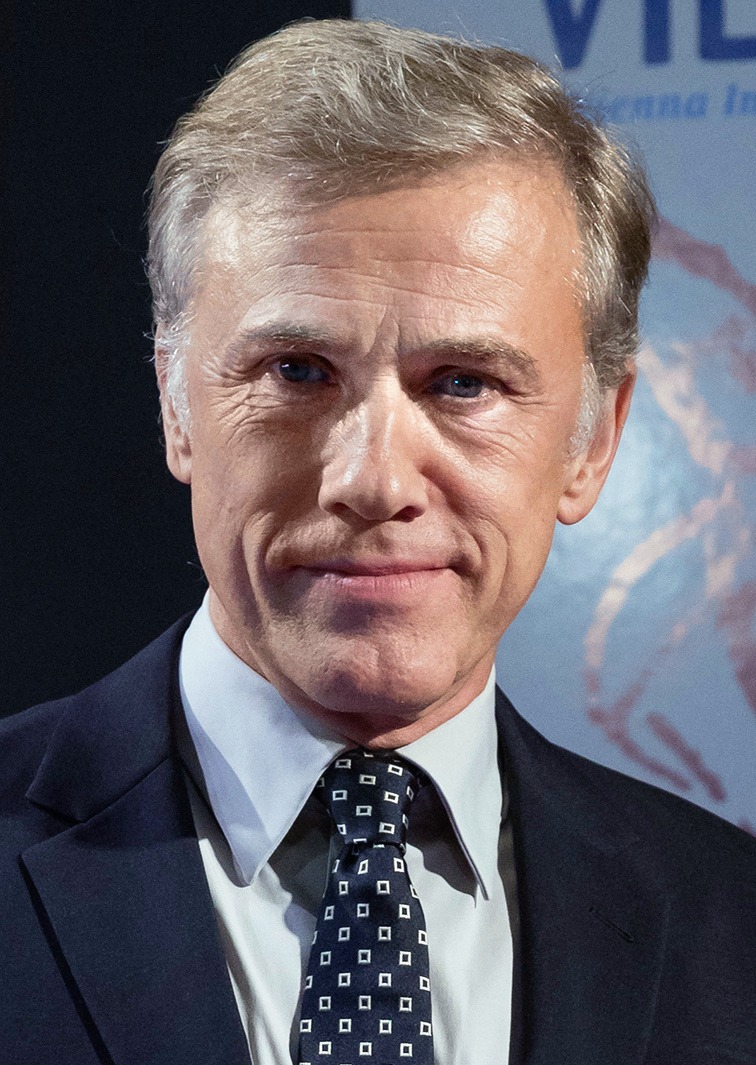
Christoph Waltz, born on October 4, 1956, in Vienna, Austria, is a name that has become synonymous with excellence in the world of acting. His journey from a young actor in European theaters to an internationally acclaimed star is one of perseverance, talent, and a deep passion for the craft. In this article, we will explore the life and career of Christoph Waltz, delving into his early years, rise to fame, and the milestones that have defined his illustrious career.
Early Life and Education
Christoph Waltz was born into a family deeply entrenched in the arts. His parents, Elisabeth Urbancic and Johannes Waltz, were both German set designers, and from a young age, Waltz was exposed to the world of theater and film. This early exposure would prove to be a significant influence on his future career.
Waltz pursued his passion for the performing arts by studying opera and voice. He further honed his acting skills at the Max Reinhardt Seminar in Vienna, one of the most prestigious acting schools in Europe. Eager to expand his horizons, Waltz later enrolled at the Lee Strasberg Theatre and Film Institute in New York, where he immersed himself in the method acting technique, a style that emphasizes an actor’s deep emotional connection to the character.
Early Career: European Cinema and Theater
Christoph Waltz’s early career was predominantly centered in Europe, where he worked extensively in theater and television. He made his film debut in 1981 with Ernst Josef Lauscher’s “Kopfstand,” followed by roles in “Feuer und Schwer – Die Legende von Tristan und Isolde” in 1982 and “Wahnfried” in 1986. These early roles showcased his versatility and dedication to his craft, though they did not yet bring him widespread recognition.
Throughout the 1980s and 1990s, Waltz continued to build his career in European cinema and television, taking on a variety of roles that highlighted his ability to adapt to different genres and characters. Notable films from this period include “Vita per vita – Padre Kolbe” (1990), directed by Krzysztof Zanussi, and “Sieben Monde” (1998), directed by Peter Fratzscher. Although these roles helped establish him as a respected actor in Europe, it wasn’t until the next decade that Waltz would achieve international stardom.
The Breakthrough: “Inglourious Basterds” and Quentin Tarantino
The turning point in Christoph Waltz’s career came in 2009 when he was cast by director Quentin Tarantino in the role of Colonel Hans Landa in the film “Inglourious Basterds.” This role would not only define Waltz’s career but also introduce him to a global audience.
Colonel Hans Landa, also known as “The Jew Hunter,” is a complex character, and Waltz’s portrayal was nothing short of extraordinary. He delivered a chilling yet charismatic performance, speaking in multiple languages (German, English, French, and Italian) and embodying a character that was both terrifying and mesmerizing. His ability to bring depth and nuance to Landa made the character unforgettable and earned Waltz widespread acclaim.
The role of Hans Landa garnered Christoph Waltz numerous awards, including the Academy Award for Best Supporting Actor, the BAFTA Award, the Golden Globe Award, and the Screen Actors Guild Award. This recognition catapulted him to international fame and established him as one of the most talented actors of his generation.
Hollywood Stardom: Continued Success with Tarantino
Following the success of “Inglourious Basterds,” Christoph Waltz’s career in Hollywood took off. He quickly became a sought-after actor, known for his ability to portray complex, multifaceted characters. Tarantino recognized Waltz’s unique talent and cast him in another significant role in “Django Unchained” (2012).
In “Django Unchained,” Waltz played Dr. King Schultz, a German bounty hunter with a moral compass. Once again, Waltz delivered a masterful performance, balancing the character’s charm and ruthlessness with finesse. His portrayal of Schultz earned him his second Academy Award for Best Supporting Actor, making him one of the few actors to win two Oscars for roles in films directed by the same filmmaker.
Waltz’s collaboration with Quentin Tarantino is one of the most celebrated partnerships in modern cinema. Tarantino has often praised Waltz’s ability to bring his characters to life, noting that Waltz’s performances are marked by a combination of intellect, wit, and an understanding of the darker aspects of human nature.
Expanding Horizons: Roles Beyond Tarantino
While Christoph Waltz’s work with Quentin Tarantino has been pivotal to his career, he has also taken on a variety of roles in films directed by other prominent filmmakers. In 2011, he replaced Nicolas Cage in the role of Chudnofsky in Michel Gondry’s “The Green Hornet.” Although the film received mixed reviews, Waltz’s performance was highlighted as one of its strengths.
In 2012, Waltz starred in Roman Polanski’s “Carnage,” a film adaptation of the play “God of Carnage” by Yasmina Reza. The film, which also starred Jodie Foster, Kate Winslet, and John C. Reilly, was a critical success, and Waltz’s portrayal of the abrasive lawyer Alan Cowan was widely praised.
Waltz continued to demonstrate his versatility with roles in films such as “The Zero Theorem” (2013), directed by Terry Gilliam, and “Big Eyes” (2014), directed by Tim Burton. In “Big Eyes,” Waltz played Walter Keane, a charismatic yet manipulative artist who takes credit for his wife’s work. His performance earned him a Golden Globe nomination, further solidifying his reputation as a talented and versatile actor.
Becoming a Bond Villain: Franz Oberhauser in “Spectre”
In 2015, Christoph Waltz joined the James Bond franchise, taking on the role of Franz Oberhauser in “Spectre.” As the primary antagonist, Waltz brought his signature blend of sophistication and menace to the character, making Oberhauser one of the most memorable Bond villains in recent history.
“Spectre” marked a significant milestone in Waltz’s career, as it allowed him to reach an even broader audience. His performance was well-received, and the film’s success further cemented his status as a leading actor in Hollywood.
Directorial Debut: “The Worst Marriage in Georgetown”
In 2016, Christoph Waltz expanded his creative horizons by making his directorial debut with the film “The Worst Marriage in Georgetown.” The film, based on a true story and adapted from an article in New York Magazine, explores the life of Albrecht Muth, a social climber who is convicted of murdering his wealthy wife.
Waltz not only directed the film but also starred in it, showcasing his multifaceted talent. The film received positive reviews, and Waltz’s transition from actor to director was praised as a successful move, further demonstrating his versatility in the entertainment industry.
Personal Life and Background
Despite his fame, Christoph Waltz has managed to keep much of his personal life out of the public eye. He was married to his first wife, Jackie, a psychotherapist, with whom he has three children: Miriam, Leon, and Rachel. After their separation, Waltz married Judith Holste, a costume designer, and together they have a daughter.
Waltz’s background and multilingual abilities have played a significant role in his career. Fluent in German, English, and French, he has been able to take on roles in various languages, enhancing his appeal in international cinema. His experiences living in different countries and working in diverse cultural settings have also contributed to his ability to portray a wide range of characters with authenticity.
The Legacy of Christoph Waltz
Christoph Waltz’s career is a testament to the power of persistence, talent, and a deep love for the craft of acting. From his early days in European theater to his rise as an international film star, Waltz has consistently delivered performances that captivate audiences and critics alike.
His ability to seamlessly transition between roles in different genres, languages, and settings has made him one of the most respected actors in the industry. Whether playing a charming yet ruthless villain or a morally complex hero, Waltz brings a unique depth and nuance to his characters that few actors can match.
As he continues to take on new challenges in his career, both in front of and behind the camera, Christoph Waltz’s influence on the world of cinema is undeniable. His work has not only entertained millions but has also set a high standard for what it means to be a truly great actor.
Conclusion
Christoph Waltz is a rare talent in the world of film, an actor whose performances transcend borders and genres. His journey from Vienna to Hollywood is one of determination and skill, and his impact on the industry will be felt for generations to come. As we look forward to the next chapter in his career, there is no doubt that Christoph Waltz will continue to surprise and delight audiences with his remarkable talent and unwavering dedication to his craft.


