
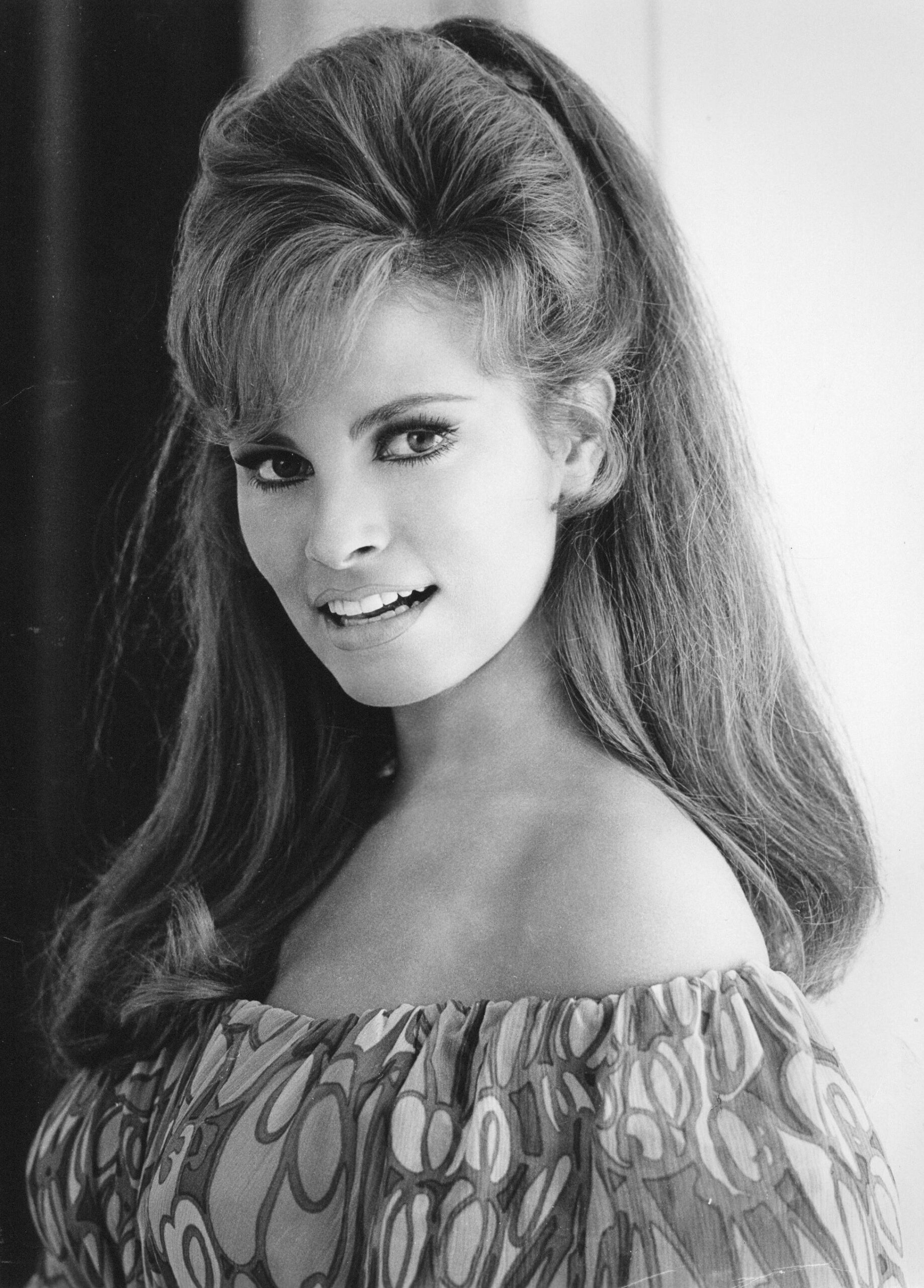
Raquel Welch, born Jo Raquel Tejada on September 5, 1940, in Chicago, Illinois, was a celebrated American actress, singer, and model who became an international sex symbol in the 1960s and 1970s. Known for her stunning beauty, charisma, and screen presence, Welch’s career spanned over five decades, during which she starred in a variety of films, television shows, and stage productions. Her rise to fame was marked by her iconic role in One Million Years B.C. (1966), which cemented her status as a cultural icon. Welch passed away at the age of 82 on February 15, 2023, in Los Angeles, California.
Early Life and Background
Raquel Welch was born to a Bolivian father, Armando Carlos Tejada Urquizo, and an American mother, Josephine Sarah Hall. Her parents moved the family to San Diego, California, when Raquel was just two years old. Growing up, she exhibited an early interest in the performing arts, particularly dance and acting. Her natural beauty and poise quickly set her apart, leading her to participate in numerous beauty contests during her teenage years.
In 1958, at the age of 18, Raquel married her high school sweetheart, James Welch, with whom she had two children. Although the marriage ended in divorce, Raquel retained her ex-husband’s last name, which would soon become synonymous with glamour and Hollywood stardom.
Breakthrough and Rise to Fame
Raquel Welch’s entry into Hollywood was marked by her debut role in the film A House Is Not a Home (1964), followed by a small part in the musical Roustabout (1964), starring Elvis Presley. However, it was her role as Loana in One Million Years B.C. (1966) that catapulted her to international stardom. Although Welch had few lines in the film, her appearance in a fur bikini became iconic, making her an overnight sensation. The promotional poster for the film, featuring Welch in the now-famous bikini, became a best-seller and cemented her status as a sex symbol.
Welch’s newfound fame allowed her to transition into more substantial roles. She starred in a series of successful films throughout the late 1960s and 1970s, including Fantastic Voyage (1966), Bandolero! (1968), and 100 Rifles (1969). Her performance in 100 Rifles was particularly notable for its controversial interracial love scene with co-star Jim Brown, which broke new ground in Hollywood at the time.
Raquel Welch’s ability to blend sex appeal with a strong, independent persona made her stand out in an era when female roles in Hollywood were often limited to damsels in distress. She challenged the traditional roles available to women and became a symbol of empowerment for many of her fans.
Career Highlights and Achievements
Raquel Welch’s career is marked by a series of memorable performances that showcased her versatility as an actress. In 1970, she starred in Myra Breckinridge, a film adaptation of Gore Vidal’s controversial novel. Although the film was met with mixed reviews, Welch’s performance was praised for its boldness and her willingness to take on challenging roles.
In 1973, Welch starred in The Three Musketeers, directed by Richard Lester. Her portrayal of Constance Bonacieux earned her a Golden Globe Award for Best Actress in a Musical or Comedy. The success of the film led to a sequel, The Four Musketeers (1974), in which she reprised her role.
Throughout the 1970s, Welch continued to work steadily in film and television, balancing roles in comedies, dramas, and action films. Some of her notable films from this period include The Last of Sheila (1973), Mother, Jugs & Speed (1976), and Animal (1977). Her ability to navigate different genres and her refusal to be typecast demonstrated her range as an actress.
In addition to her work in film, Welch also made a name for herself on stage and in television. She starred in several television specials and guest appearances, further solidifying her status as a beloved figure in American entertainment. In the 1980s, Welch made her Broadway debut in the musical Woman of the Year, replacing Lauren Bacall in the lead role. Her performance received positive reviews and proved that she was more than just a screen siren—she was a multifaceted performer with talent that extended beyond film.
Challenges and Resilience
Despite her success, Raquel Welch’s career was not without its challenges. The label of “sex symbol” often overshadowed her acting abilities, and she struggled to be taken seriously as a performer in an industry that frequently objectified women. Welch was also known for her strong will and determination, qualities that sometimes led to conflicts with directors and producers who were unaccustomed to a woman asserting herself in the male-dominated world of Hollywood.
In the mid-1980s, Welch faced one of the most significant challenges of her career when she was fired from the film Cannery Row (1982) and subsequently sued MGM Studios for breach of contract. The case was widely publicized, and Welch ultimately won the lawsuit, receiving a multimillion-dollar settlement. The victory was seen as a landmark case in Hollywood, reinforcing the idea that even a star as established as Raquel Welch could face unjust treatment in the industry.
Despite these obstacles, Welch remained a resilient figure in Hollywood. She continued to work steadily throughout the 1980s and 1990s, appearing in films such as Legally Blonde (2001) and television shows like Sabrina the Teenage Witch (1996). Her ability to adapt to the changing landscape of Hollywood and remain relevant for decades is a testament to her talent and determination.
Later Life and Legacy
In her later years, Raquel Welch continued to work in the entertainment industry while also branching out into other ventures. In 2010, she published her first book, Beyond the Cleavage, in which she reflected on her life and career, offering insights into the challenges she faced as a woman in Hollywood. The book was well-received and provided a deeper understanding of the woman behind the glamorous image.
Welch also became a successful entrepreneur, launching a line of wigs and hairpieces that were marketed to women experiencing hair loss. Her business acumen and ability to connect with her audience further solidified her status as a role model for women of all ages.
Raquel Welch’s impact on popular culture is undeniable. She was one of the first actresses to challenge the traditional roles available to women in Hollywood, and her influence can be seen in the careers of many actresses who followed in her footsteps. Welch’s iconic image and strong, independent persona helped pave the way for future generations of women in the entertainment industry.
In recognition of her contributions to film and popular culture, Welch received numerous awards and honors throughout her career. She was awarded a star on the Hollywood Walk of Fame in 1994, and her legacy as a pioneering actress and sex symbol continues to be celebrated.
Conclusion
Raquel Welch was more than just a Hollywood icon—she was a trailblazer who redefined what it meant to be a leading lady in the entertainment industry. From her early days as a beauty queen to her rise to international fame, Welch’s career was marked by a commitment to challenging the status quo and breaking down barriers for women in Hollywood. Her legacy as an actress, businesswoman, and cultural icon will continue to inspire future generations.
As we remember Raquel Welch, we celebrate not only her beauty and talent but also her resilience, determination, and ability to navigate a complex and often unforgiving industry with grace and strength. Her impact on Hollywood and popular culture is immeasurable, and her contributions will not be forgotten.


