
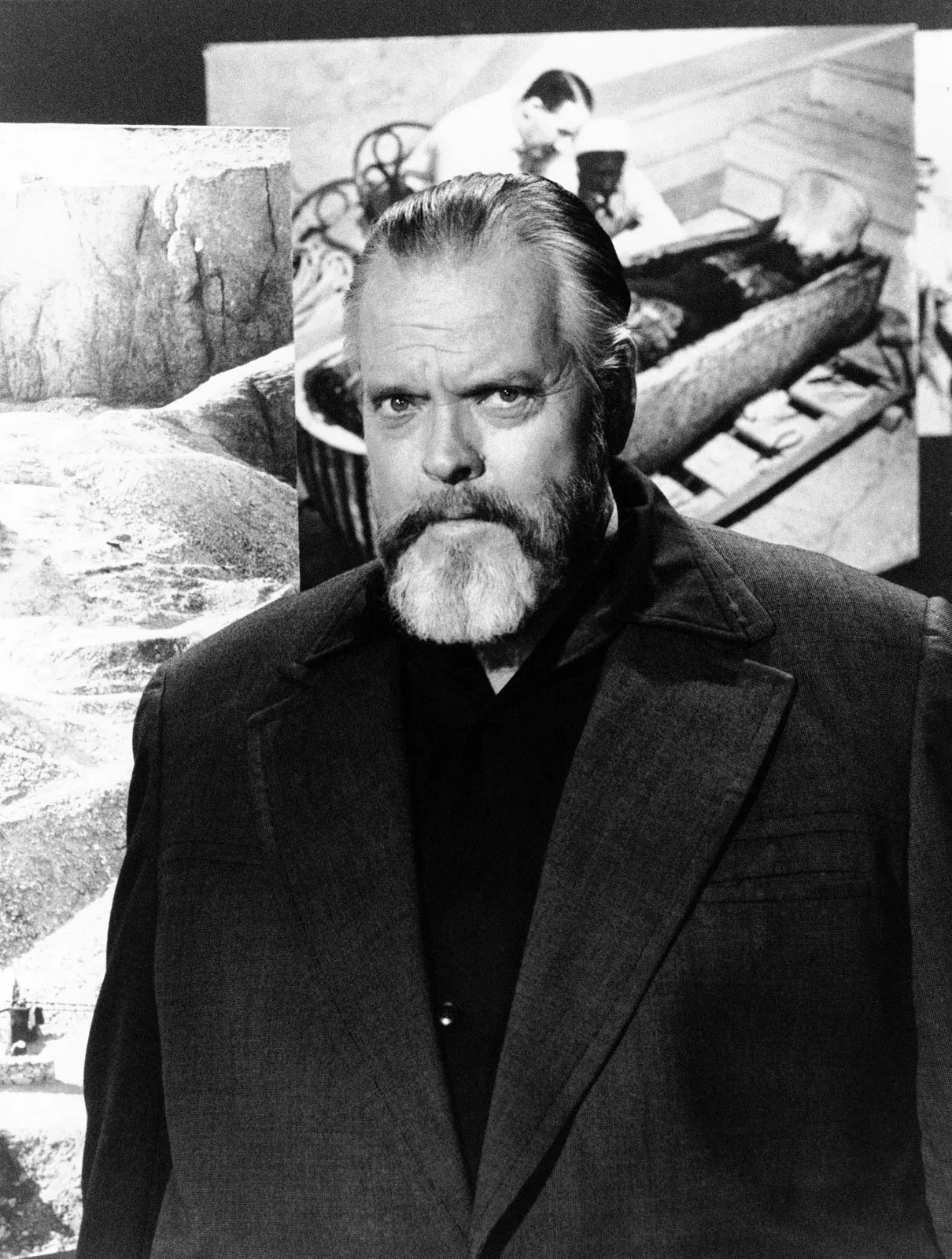
Orson Welles, born George Orson Welles on May 6, 1915, in Kenosha, Wisconsin, remains one of the most influential figures in the history of cinema, theater, and radio. His legacy as a groundbreaking filmmaker, director, actor, and writer is anchored in a career that revolutionized the arts and continues to inspire generations of creators. Welles’ life was a mosaic of artistic brilliance, personal turmoil, and a relentless pursuit of creative freedom, all of which have cemented his status as a cultural icon.
Early Life: A Prodigious Beginning
Orson Welles was born into a family that nurtured his early talents. His mother, Beatrice Ives, was a pianist and suffragette, while his father, Richard Welles, was an inventor and businessman. From a young age, Orson displayed an extraordinary range of talents. By the age of three, he was already performing in theatrical productions, and his mother’s influence ensured that he was well-versed in music and the arts. However, his early life was also marked by instability. His parents divorced when he was four, and after his mother’s death in 1924, young Orson was left to the care of his father, with whom he traveled extensively.
These travels exposed Welles to diverse cultures and experiences, which would later inform his work as a filmmaker. His father’s death in 1930, when Orson was just 15, left him in the care of family friends, but it also gave him the freedom to pursue his passions without the constraints of a traditional education.
The Todd School for Boys: A Crucible of Creativity
Orson Welles’ formative years at the Todd School for Boys in Woodstock, Illinois, were pivotal in shaping his creative vision. Under the mentorship of the school’s headmaster, Roger Hill, Welles was given the opportunity to direct and act in various theatrical productions. This experience was crucial in developing his understanding of stagecraft and storytelling. At Todd, Welles staged a production of Shakespeare’s Julius Caesar, a play he would later famously adapt for the stage in New York.
It was at Todd that Welles’ prodigious talents began to garner attention. His ability to command the stage, coupled with his innovative approach to direction, hinted at the extraordinary career that lay ahead. After graduating, Welles briefly attended the Art Institute of Chicago, where he studied painting, but his true passion lay in theater, and he soon abandoned formal education to pursue a career on the stage.
The Road to Stardom: Theater and Radio
Orson Welles’ early career was marked by a series of bold and innovative projects that would establish him as a rising star in American theater and radio. In 1931, he traveled to Ireland with the intent of becoming a painter, but his path took a dramatic turn when he auditioned for the Gate Theatre in Dublin. Despite his youth and lack of professional experience, Welles impressed the theater’s directors and was cast in several roles. His performances were well-received, and he quickly gained a reputation as a formidable talent.
Returning to the United States in 1933, Welles joined the Federal Theatre Project in New York, where he continued to push the boundaries of theatrical production. His work with the Mercury Theatre, which he co-founded with producer John Houseman, was particularly groundbreaking. Their productions were known for their innovative use of sound, lighting, and staging, and Welles’ adaptation of Macbeth, set in Haiti and performed with an all-Black cast, remains a landmark in American theater.
Welles’ work in radio further solidified his reputation as a master storyteller. His most famous radio broadcast, The War of the Worlds, aired on October 30, 1938, and is perhaps the most notorious in the history of the medium. Presented as a series of news bulletins reporting an alien invasion, the broadcast caused widespread panic among listeners who believed it to be real. This event not only showcased Welles’ talent for creating suspense but also demonstrated the power of radio as a medium for storytelling.
Hollywood: The Making of a Legend
Orson Welles’ success in theater and radio soon caught the attention of Hollywood. In 1939, he signed a contract with RKO Pictures, a deal that granted him an unprecedented level of creative control over his projects. This partnership resulted in the creation of Citizen Kane (1941), a film that would become his magnum opus and a cornerstone of cinematic history.
Citizen Kane, often hailed as the greatest film ever made, was revolutionary in its use of deep focus cinematography, nonlinear storytelling, and complex character development. The film tells the story of Charles Foster Kane, a powerful newspaper magnate, whose life is pieced together through the memories of those who knew him. The character of Kane was widely believed to be based on the real-life media mogul William Randolph Hearst, a connection that led to significant controversy and resistance from Hearst’s allies in the press.
Despite its innovative techniques and critical acclaim, Citizen Kane was not an immediate commercial success. However, its influence on the art of filmmaking cannot be overstated. The film’s exploration of themes such as power, corruption, and the elusiveness of truth continues to resonate with audiences and filmmakers alike.
A Career of Triumphs and Trials
Following the success of Citizen Kane, Welles continued to produce a series of films that, while often met with critical acclaim, were frequently plagued by production challenges and studio interference. His next major project, The Magnificent Ambersons (1942), was another critical success but was heavily edited by the studio, much to Welles’ dismay. The original cut, which is now lost, was reportedly a masterpiece in its own right.
Welles’ career in Hollywood was marked by a series of unfinished projects and films that were altered or compromised by studios. Yet, despite these setbacks, he managed to produce a number of significant works, including The Lady from Shanghai (1947), Touch of Evil (1958), and Chimes at Midnight (1965). Each of these films showcased Welles’ distinctive style and his ability to weave complex narratives that challenged the conventions of the time.
Welles’ work often grappled with themes of power, betrayal, and the passage of time. His films were deeply personal, reflecting his own struggles with authority and his relentless pursuit of artistic freedom. This commitment to his vision often put him at odds with the Hollywood establishment, leading to a career that was as tumultuous as it was brilliant.
The Later Years: A Return to Europe
Disillusioned with Hollywood, Orson Welles spent much of his later career in Europe, where he found greater artistic freedom and continued to work on a variety of projects. During this period, he directed The Trial (1962), an adaptation of Franz Kafka’s novel, which is now considered one of his finest works. Welles’ European films, while not as commercially successful as his earlier American productions, were nonetheless critical achievements that further cemented his legacy as a master filmmaker.
In Europe, Welles also completed Chimes at Midnight, a film that combined elements from several of Shakespeare’s plays to tell the story of Sir John Falstaff, one of the Bard’s most enduring characters. The film was a deeply personal project for Welles, who both directed and starred in it. Though it received limited distribution at the time, it has since been recognized as one of Welles’ greatest achievements.
Legacy: The Enduring Influence of Orson Welles
Orson Welles’ impact on the world of cinema and theater is immeasurable. His innovations in storytelling, cinematography, and sound design have influenced countless filmmakers, from Martin Scorsese to Christopher Nolan. Welles’ ability to blend high art with popular entertainment set a new standard for what cinema could achieve.
Despite the challenges he faced throughout his career—studio interference, financial difficulties, and the constant struggle to realize his artistic vision—Welles remained committed to his craft. His work continues to be studied and celebrated, not only for its technical brilliance but also for its deep exploration of the human condition.
Orson Welles passed away on October 10, 1985, at the age of 70, leaving behind a body of work that remains a testament to his genius. His films, radio broadcasts, and theatrical productions continue to inspire and challenge artists and audiences alike. Today, Welles is remembered not just as a filmmaker but as a visionary artist whose contributions to the arts have left an indelible mark on the world.
Final Thoughts: The Genius of Orson Welles
Orson Welles was more than just a filmmaker; he was a force of nature in the arts, a man whose creativity knew no bounds. His ability to transcend mediums—whether on the stage, on the airwaves, or on the silver screen—set him apart as one of the true geniuses of the 20th century. Welles’ work continues to resonate because it taps into the universal themes of ambition, identity, and the search for meaning. As long as there is cinema, the name Orson Welles will be synonymous with the highest standards of artistic achievement.


