
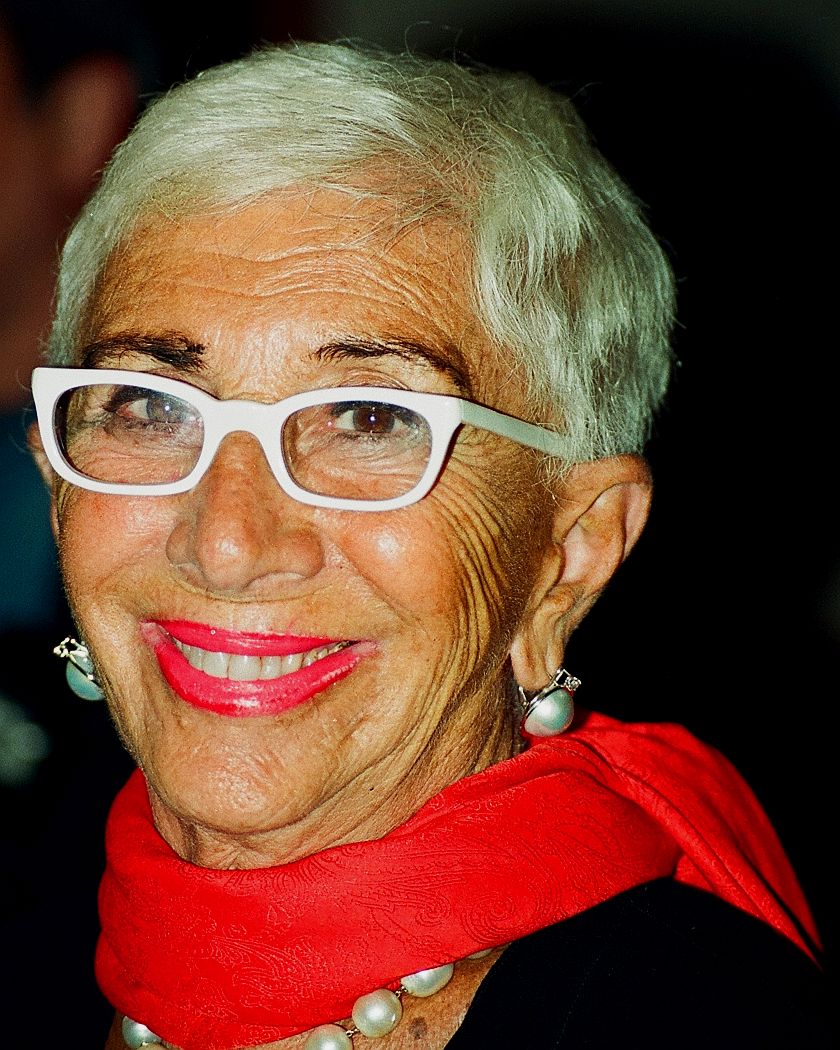
Lina Wertmüller, born Arcangela Felice Assunta Wertmüller von Elgg Spanol von Braueich on August 14, 1928, in Rome, Italy, was a pioneering Italian filmmaker known for her distinctive voice in cinema. As a director and screenwriter, Wertmüller became an influential figure in international cinema, renowned for her bold storytelling, sharp social commentary, and groundbreaking achievements. She made history as the first woman ever nominated for the Academy Award for Best Director, a milestone that cemented her legacy in the film industry.
Early Life and Background
Lina Wertmüller was born into a family that combined Italian and Swiss heritage. Her father was a lawyer with roots in Lucania (now known as Basilicata), while her mother came from a noble and affluent Swiss family. This diverse cultural background provided Wertmüller with a unique perspective that would later influence her work in cinema.
From an early age, Wertmüller was drawn to the performing arts. At seventeen, she enrolled in the Accademia Teatrale in Rome, directed by the Russian-born theater director Pietro Sharoff, a disciple of the famous Konstantin Stanislavski. This training provided her with a strong foundation in theatrical techniques and a deep understanding of character development, skills that would prove invaluable in her later work as a filmmaker.
Wertmüller’s early career was eclectic and multifaceted. She worked as a puppeteer, animating and directing puppet shows, and collaborated with notable Italian theater directors such as Luchino Visconti and Giorgio Strehler. Her experience in theater greatly influenced her cinematic style, which often included exaggerated characters and a keen sense of drama.
The Foray into Cinema and Early Successes
Lina Wertmüller transitioned to cinema in the early 1960s, initially working as an assistant director. One of her early roles was as an assistant on Federico Fellini’s iconic films “La Dolce Vita” (1960) and “8 ½” (1963). Working alongside Fellini, one of the most influential directors in film history, was a formative experience for Wertmüller. It exposed her to the intricacies of filmmaking and the power of visual storytelling.
Wertmüller made her directorial debut in 1963 with “I basilischi” (“The Lizards”), a satirical portrayal of life in a small southern Italian town. The film was both a critical and commercial success, earning her the Silver Sail award at the Locarno International Film Festival. “I basilischi” showcased Wertmüller’s sharp wit and her ability to blend humor with social commentary, themes that would become hallmarks of her later work.
In the mid-1960s, Wertmüller continued to experiment with different genres. She directed the comedy “Questa volta parliamo di uomini” (“This Time We’re Talking About Men”) in 1965, starring Nino Manfredi. The film was well-received and won the Silver Ribbon Award for Best Screenplay. Wertmüller also explored musical comedies, directing “Rita the Mosquito” (1966) and “Don’t Sting the Mosquito” (1967), both starring the popular Italian singer Rita Pavone and featuring Giancarlo Giannini, an actor who would become a frequent collaborator.
Breakthrough and Collaboration with Giancarlo Giannini
The late 1960s and 1970s marked a turning point in Wertmüller’s career, as she began to develop a distinctive style that combined social satire, political commentary, and a deep exploration of human relationships. Her collaboration with actor Giancarlo Giannini proved to be particularly fruitful, resulting in a series of films that would establish her as one of the most important directors of her time.
In 1972, Wertmüller directed “Mimì metallurgico ferito nell’onore” (“The Seduction of Mimi”), a film that blended comedy with a critique of the Italian class system and machismo culture. The film was a major success, both in Italy and internationally, and showcased Wertmüller’s ability to tackle serious social issues with humor and irony. Giannini’s performance as the film’s protagonist, a Sicilian laborer navigating the complexities of life and love, was widely praised and solidified his status as a leading actor in Italian cinema.
Following the success of “Mimì metallurgico,” Wertmüller and Giannini continued their collaboration with several more critically acclaimed films. In 1973, they released “Film d’amore e d’anarchia” (“Love and Anarchy”), a tragicomedy set in Mussolini’s Italy that tells the story of an anarchist who falls in love with a prostitute while planning to assassinate the dictator. The film was nominated for the Palme d’Or at the Cannes Film Festival, further establishing Wertmüller’s reputation as a filmmaker unafraid to explore the darker aspects of Italian history.
Wertmüller’s next major film, “Travolti da un insolito destino nell’azzurro mare d’agosto” (“Swept Away”), released in 1974, became one of her most famous works. The film, a satirical examination of class dynamics and gender roles, tells the story of a wealthy woman and a communist deckhand who are stranded on a deserted island. The film’s provocative themes and the intense chemistry between Giannini and his co-star Mariangela Melato captivated audiences worldwide. “Swept Away” received widespread critical acclaim and remains one of Wertmüller’s most enduring films.
“Pasqualino Settebellezze” and Oscar Nomination
The pinnacle of Wertmüller’s career came in 1975 with the release of “Pasqualino Settebellezze” (“Seven Beauties”). The film, a dark comedy set during World War II, follows the story of Pasqualino, a petty criminal who navigates the horrors of war with cunning and survival instincts. Giancarlo Giannini’s portrayal of the titular character was widely lauded, and the film itself was a critical and commercial success.
“Pasqualino Settebellezze” earned Wertmüller international acclaim and made history when she became the first woman ever nominated for the Academy Award for Best Director. This nomination was a groundbreaking achievement, highlighting Wertmüller’s unique voice in a male-dominated industry. The film also received nominations for Best Foreign Language Film, Best Original Screenplay, and Best Actor for Giannini.
Wertmüller’s Oscar nomination was a significant moment in film history, as it opened doors for future generations of female filmmakers. Her success challenged the traditional norms of the film industry and proved that women could excel in all aspects of filmmaking.
Later Career and Legacy
After the success of “Pasqualino Settebellezze,” Wertmüller continued to make films that blended social commentary with bold storytelling. In 1978, she directed “La fine del mondo nel nostro solito letto in una notte piena di pioggia” (“The End of the World in Our Usual Bed in a Night Full of Rain”), a film that explored the complexities of relationships and gender dynamics. Although not as successful as her previous works, the film further showcased Wertmüller’s commitment to addressing controversial and thought-provoking topics.
Throughout the 1980s and 1990s, Wertmüller continued to direct films and television projects, although none reached the critical heights of her earlier work. Notable films from this period include “Io speriamo che me la cavo” (“Ciao, Professore!”) in 1992, starring Paolo Villaggio, and “Metalmeccanico e parrucchiera in un turbine di sesso e politica” (“The Blue Collar Worker and the Hairdresser in a Whirl of Sex and Politics”) in 1996, which returned to her familiar themes of political satire.
In addition to her film work, Wertmüller also published several novels, demonstrating her versatility as a writer. Some of her notable works include “Essere o avere, ma per essere devo avere la testa di Alvise su un piatto d’argento” and “Avrei voluto uno zio esibizionista,” which showcased her wit and satirical edge.
Awards and Honors
Lina Wertmüller’s contributions to cinema were widely recognized throughout her career. In 2020, she was awarded an honorary Academy Award for her contributions to film, a fitting recognition for a filmmaker who had paved the way for future generations of directors. Wertmüller was also honored with numerous other awards, including the David di Donatello Award, Italy’s most prestigious film award, and the Golden Globe for Best Foreign Language Film.
Her influence on cinema is undeniable. Wertmüller’s films have been studied for their unique blend of humor, satire, and social commentary, and her pioneering role as a female director in a male-dominated industry has inspired countless women to pursue careers in filmmaking.
Death and Posthumous Recognition
Lina Wertmüller passed away on December 9, 2021, at the age of 93, in her beloved Rome. Her death marked the end of an era in Italian cinema, but her legacy continues to live on through her films, which remain relevant and influential. Wertmüller’s work is celebrated not only for its artistic merit but also for its boldness in tackling difficult subjects with a unique blend of humor and pathos.
Conclusion: The Enduring Legacy of Lina Wertmüller
Lina Wertmüller’s life and career were defined by her relentless pursuit of creative expression and her commitment to challenging societal norms through her art. As a director, she broke barriers and set new standards for what cinema could achieve, particularly for women in the industry. Her films, characterized by their satirical edge, complex characters, and willingness to confront uncomfortable truths, continue to resonate with audiences and inspire filmmakers around the world.
Wertmüller’s legacy is not just that of a filmmaker, but of a trailblazer who opened doors for women in cinema and proved that stories told from a female perspective could be as powerful and impactful as any. Her contributions to film have earned her a place among the greats, and her work will undoubtedly be studied, admired, and celebrated for generations to come.


