
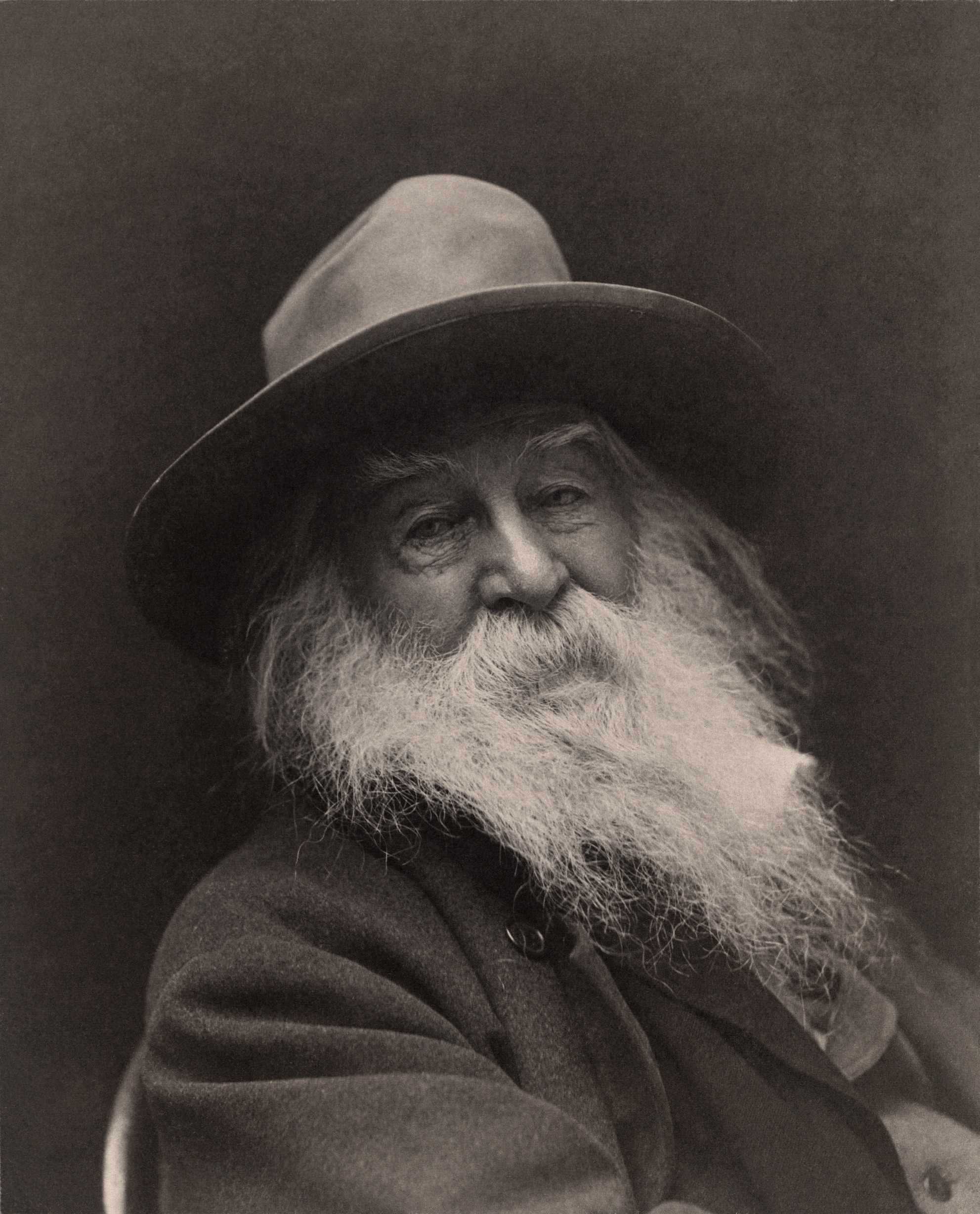
Walt Whitman, born on May 31, 1819, in Huntington, Long Island, New York, is one of America’s most revered poets. Often referred to as the “Bard of Democracy,” Whitman’s work is celebrated for its deep exploration of American life and the human experience. His contributions to literature, particularly through his seminal work Leaves of Grass, have earned him a place among the greatest poets in history. This article delves into the life of Walt Whitman, exploring his journey from humble beginnings to literary fame, the historical context of his work, and the legacy he left behind.
Early Life and Influences
Walt Whitman was born into a large, working-class family. His father, Walter Whitman Sr., was a carpenter and housebuilder, while his mother, Louisa Van Velsor Whitman, played a significant role in nurturing his emotional and intellectual development. The Whitman family struggled financially, which meant that young Walt had to start working at an early age to help support the household.
Whitman’s childhood in Long Island and later in Brooklyn was marked by a profound connection to the natural world and a keen awareness of the social and political changes taking place in America. The family’s move to Brooklyn in 1823 exposed him to the rapidly growing urban environment, which would later influence his writing.
Although Whitman attended school until he was 11, he was largely self-educated. He devoured books on various subjects, ranging from history and philosophy to the works of Shakespeare and the Bible. This self-directed education laid the foundation for his expansive and inclusive worldview, which would come to define his poetry.
At the age of 12, Whitman began working as a printer’s apprentice, a job that introduced him to the world of words and sparked his interest in writing. By the time he was in his late teens, he had already begun writing articles for newspapers, and he briefly worked as a teacher in several small towns across Long Island.
Early Career and the Road to Leaves of Grass
Walt Whitman’s early career was marked by a series of jobs that allowed him to explore various facets of writing and publishing. He worked as a printer, teacher, and journalist, and eventually became the editor of several newspapers, including the Brooklyn Eagle. During this period, Whitman became deeply involved in the cultural and political life of New York City, where he mingled with artists, intellectuals, and political radicals.
In the late 1840s, Whitman began to develop the poetic style that would later characterize Leaves of Grass. Influenced by the Transcendentalist movement, particularly the works of Ralph Waldo Emerson, Whitman sought to create a new form of poetry that would capture the spirit of America. He wanted to break away from traditional poetic forms and experiment with free verse, a style that would allow him to express the dynamism and diversity of American life.
Whitman’s experiences traveling across the United States in the early 1850s had a profound impact on his writing. His journeys through the South, the Midwest, and New Orleans exposed him to the vastness and variety of the American landscape, as well as the complexities of its social fabric. These experiences deepened his understanding of the American experience, which he sought to capture in his poetry.
In 1855, at the age of 36, Whitman self-published the first edition of Leaves of Grass, a collection of twelve poems that introduced his innovative style to the world. The book was printed without the author’s name on the cover, but it featured a striking frontispiece of Whitman himself, dressed in working clothes, symbolizing his identification with the common man.
Leaves of Grass and Literary Fame
Leaves of Grass was a revolutionary work in American literature. Its celebration of the individual, its embrace of the sensual and physical aspects of life, and its free verse form broke new ground and challenged the conventions of the time. The first edition, however, received little attention from the public and critics alike. It wasn’t until Ralph Waldo Emerson, a leading intellectual of the time, wrote a letter of praise to Whitman, calling the work “the most extraordinary piece of wit and wisdom that America has yet contributed,” that the book began to gain recognition.
Encouraged by Emerson’s endorsement, Whitman continued to revise and expand Leaves of Grass throughout his life, with the final edition published shortly before his death in 1892. Each edition added new poems and refined existing ones, reflecting Whitman’s evolving thoughts on democracy, nature, the human body, and the soul.
The themes of Leaves of Grass resonate deeply with the ideals of democracy and individualism that were central to the American ethos in the 19th century. Whitman’s poetry celebrated the common man, the dignity of labor, and the beauty of the natural world. His work also explored the complexities of human relationships, sexuality, and the self, often in ways that were considered controversial at the time.
Whitman’s use of free verse, with its lack of rhyme and meter, was groundbreaking. It allowed him to capture the rhythms of natural speech and to convey the expansiveness of his vision. This innovative approach to poetry would later influence countless poets, both in America and abroad.
The Civil War and Its Impact on Whitman’s Work
The outbreak of the American Civil War in 1861 had a profound impact on Walt Whitman, both personally and professionally. Deeply affected by the conflict, Whitman moved to Washington, D.C., where he volunteered as a nurse, tending to wounded soldiers in the city’s hospitals. The experience of witnessing the horrors of war and the suffering of soldiers left an indelible mark on him and significantly influenced his writing.
During the war, Whitman published Drum-Taps (1865), a collection of poems that reflected his experiences and the nation’s collective trauma. The poems in Drum-Taps capture the chaos, brutality, and sorrow of the war, as well as the profound sense of loss felt by the American people. The assassination of President Abraham Lincoln in 1865 deeply affected Whitman, who commemorated the fallen leader in his famous elegy, “O Captain! My Captain!” The poem became one of Whitman’s most famous works, embodying the grief and reverence felt by many Americans at the time.
Whitman’s war poems, along with his later works, reveal a more somber and reflective tone compared to the exuberance of his earlier poetry. The Civil War and its aftermath marked a period of personal and national crisis, during which Whitman grappled with the realities of death, suffering, and the fragility of the American experiment.
Later Life and Legacy
After the Civil War, Walt Whitman continued to write and publish, although his health began to decline. In 1873, he suffered a stroke that left him partially paralyzed, and he moved to Camden, New Jersey, to live with his brother. Despite his physical limitations, Whitman remained active as a writer and public figure. He continued to revise Leaves of Grass and published several new works, including Specimen Days (1882), a prose collection that provided a personal account of his life and experiences.
Whitman’s later years were marked by both critical acclaim and controversy. While he was celebrated by many as a pioneering voice in American literature, his work also faced criticism for its unconventional style and explicit themes. Nevertheless, by the time of his death on March 26, 1892, Whitman had firmly established himself as one of America’s most important poets.
Whitman’s influence on literature and culture extends far beyond his lifetime. His embrace of free verse and his exploration of the human experience in all its complexity paved the way for modern poetry. His work has been celebrated for its inclusivity, its celebration of diversity, and its deep connection to the American landscape and spirit.
Whitman’s legacy also includes his impact on social and political thought. His poetry reflects a deep commitment to democracy, equality, and the belief in the potential of the individual. These ideals continue to resonate in contemporary discussions about identity, rights, and the role of the artist in society.
Historical Context and Cultural Significance
Walt Whitman’s work must be understood within the broader context of 19th-century America. The period in which he wrote was marked by rapid social, political, and technological changes. The expansion of the United States, the debates over slavery, the rise of industrialization, and the Civil War all influenced Whitman’s vision of America and its people.
Leaves of Grass can be seen as both a reflection of and a response to these changes. Whitman sought to capture the essence of the American experience in his poetry, celebrating the diversity and dynamism of the nation while also confronting its contradictions and challenges. His work embodies the tension between the idealism of American democracy and the realities of inequality, conflict, and division.
Whitman’s celebration of the body and the physical aspects of life was also groundbreaking. At a time when much of American literature was influenced by Puritanical values, Whitman’s frank and open treatment of sexuality was revolutionary. His work challenged conventional notions of morality and paved the way for more open discussions of sexuality and the body in literature.
Conclusion
Walt Whitman’s life and work are a testament to the power of poetry to capture the human experience and to influence the course of literary and cultural history. From his humble beginnings on Long Island to his emergence as one of America’s greatest poets, Whitman’s journey was marked by a deep commitment to exploring the complexities of life and the possibilities of the individual.
Leaves of Grass remains one of the most important works in American literature, a text that continues to inspire and challenge readers with its vision of a democratic and inclusive society. Whitman’s legacy as the “Bard of Democracy” endures, as his work continues to resonate with those who seek to understand the ever-evolving American identity.
As we look back on Whitman’s contributions, it is clear that his work transcends the boundaries of time and place. His poetry speaks to the universal human experience, celebrating the beauty and diversity of life while also acknowledging its struggles and contradictions. In doing so, Walt Whitman has left an indelible mark on the world of literature and on the cultural landscape of America.


