
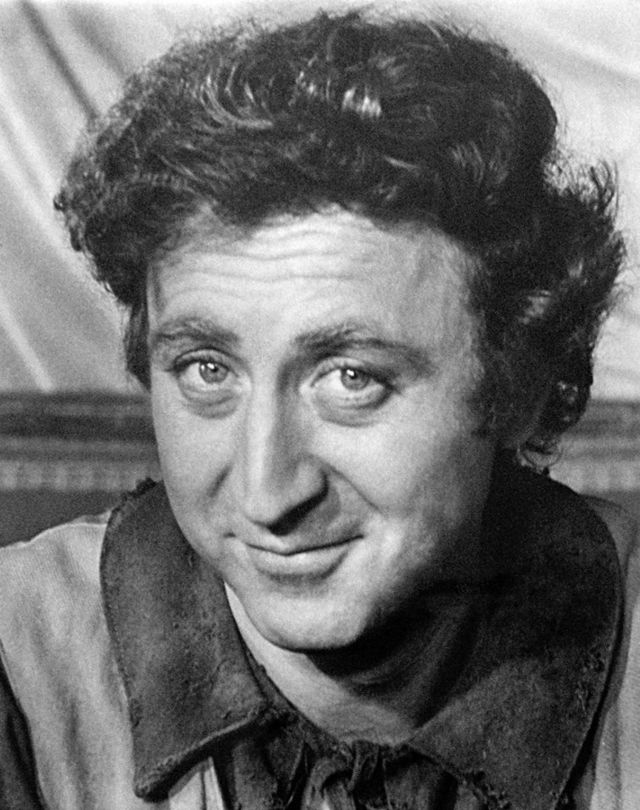
Gene Wilder, born Jerome Silberman on June 11, 1933, in Milwaukee, Wisconsin, was an American actor, screenwriter, director, and author, best known for his memorable performances in classic films like Willy Wonka & the Chocolate Factory and his collaborations with Mel Brooks. Wilder’s unique blend of comedic timing, vulnerability, and depth made him one of the most beloved figures in Hollywood. His career spanned several decades, during which he left an indelible mark on the film industry and the hearts of audiences worldwide.
Early Life and Influences
Gene Wilder was born into a family of Jewish immigrants from Russia. His father, William J. Silberman, was a manufacturer, and his mother, Jeanne Baer, was a homemaker. Wilder’s early life was shaped by his mother’s battle with rheumatic fever, a condition that required young Jerome to entertain her as a means of improving her spirits. This early experience of making his mother laugh played a crucial role in fostering his love for performance and comedy.
Wilder attended the Black-Foxe Military Institute, a boarding school where he faced bullying due to his Jewish heritage. These experiences, though challenging, further fueled his desire to escape into the world of acting, where he could become anyone he wished. After completing high school at Washington High School in Milwaukee, Wilder enrolled at the University of Iowa, where he studied theater and developed his craft.
His formal education in acting continued at the Old Vic Theatre School in Bristol, England, where he studied classical theater and honed his skills in fencing. This diverse training laid the foundation for his versatile acting style, which would later become his trademark.
Early Career and Name Change
In 1956, Wilder was drafted into the U.S. Army, where he served for two years. Upon his return to civilian life, he moved to New York City to pursue acting full-time. It was during this time that he adopted the stage name “Gene Wilder,” drawing inspiration from the writer Thornton Wilder and the character Eugene Gant from Thomas Wolfe’s novel Look Homeward, Angel.
Wilder’s early career was marked by performances in various off-Broadway productions and television roles. His first major break came in 1963 when he was cast in the play Mother Courage and Her Children alongside Anne Bancroft. It was through Bancroft that Wilder met Mel Brooks, a relationship that would prove to be one of the most significant in his career.
Collaboration with Mel Brooks
Wilder’s collaboration with Mel Brooks began with the 1967 film The Producers, where he played the nervous accountant Leo Bloom. His performance was widely acclaimed, earning him an Academy Award nomination for Best Supporting Actor. The film itself became a cult classic and marked the beginning of a fruitful partnership between Brooks and Wilder.
The duo’s next collaboration was in the 1974 Western comedy Blazing Saddles, where Wilder played the role of the Waco Kid, a washed-up gunslinger. The film was a box office hit and is now considered one of the greatest comedies of all time. Later that year, Wilder co-wrote and starred in Young Frankenstein, another Brooks-directed film that became a critical and commercial success. The film, a parody of the classic horror genre, showcased Wilder’s impeccable timing and comedic genius. He received an Academy Award nomination for Best Adapted Screenplay for his work on Young Frankenstein.
These films not only solidified Wilder’s status as a comedic actor but also demonstrated his talent as a writer and collaborator. His ability to blend humor with heart earned him a special place in the pantheon of great comedic actors.
Iconic Role as Willy Wonka
In 1971, Wilder took on what would become one of his most iconic roles: Willy Wonka in Willy Wonka & the Chocolate Factory. Directed by Mel Stuart and based on the beloved children’s book by Roald Dahl, the film initially received mixed reviews but went on to become a classic, with Wilder’s performance as the eccentric and enigmatic candy maker earning widespread acclaim.
Wilder’s portrayal of Willy Wonka was a masterclass in balancing whimsy with a touch of darkness. His ability to convey the character’s unpredictability and underlying sadness made the role unforgettable. The film has since become a cultural touchstone, with generations of viewers enchanted by Wilder’s performance.
Personal Life and Relationships
Gene Wilder’s personal life was marked by several marriages and significant relationships. His first marriage, to actress Mary Mercier in 1960, ended in divorce after five years. He later married Mary Joan Schutz in 1967, adopting her daughter, but this marriage also ended in divorce.
Perhaps the most significant relationship of Wilder’s life was with comedian and actress Gilda Radner, whom he married in 1984. The couple met on the set of the film Hanky Panky (1982), and their relationship was marked by a deep bond both personally and professionally. Tragically, Radner was diagnosed with ovarian cancer and passed away in 1989. Her death had a profound impact on Wilder, who became an advocate for cancer awareness and treatment, establishing the Gilda Radner Ovarian Cancer Detection Center in her honor.
In 1991, Wilder married Karen Boyer, a speech pathologist who had helped him prepare for a role. The couple remained together until Wilder’s death in 2016.
Later Career and Writing
As the 1980s progressed, Wilder’s career experienced a mix of successes and challenges. He continued to work with Richard Pryor, forming one of the most popular comedic duos of the time, with films like Silver Streak (1976), Stir Crazy (1980), and See No Evil, Hear No Evil (1989). These films were box office successes, showcasing the chemistry and comedic timing between Wilder and Pryor.
However, Wilder’s ventures into directing and writing met with mixed results. Films like The Woman in Red (1984) and Haunted Honeymoon (1986) did not achieve the same level of critical or commercial success as his earlier works. Despite this, Wilder remained a beloved figure in Hollywood.
In the later years of his life, Wilder shifted his focus from acting to writing. He published his memoir, Kiss Me Like a Stranger: My Search for Love and Art in 2005, where he reflected on his life, career, and relationships. Wilder also wrote several novels, including My French Whore (2007) and The Woman Who Wouldn’t (2008), showcasing his talent as a storyteller beyond the screen.
Legacy and Impact
Gene Wilder’s impact on the entertainment industry is undeniable. His performances in films like Willy Wonka & the Chocolate Factory, Young Frankenstein, and The Producers have become timeless classics, influencing generations of actors and comedians. Wilder’s ability to combine humor with vulnerability and his commitment to his craft have made him a beloved figure in the world of cinema.
Wilder’s work with Mel Brooks remains a benchmark for comedic excellence, and his portrayal of Willy Wonka continues to be celebrated as one of the most iconic characters in film history. Beyond his on-screen achievements, Wilder’s advocacy for cancer awareness and his contributions to literature have further cemented his legacy as a multi-talented and compassionate individual.
Conclusion
Gene Wilder was a true Hollywood legend, whose work transcended genres and generations. From his early days as a stage actor to his unforgettable roles in some of cinema’s most beloved comedies, Wilder’s career was marked by creativity, innovation, and a deep love for storytelling. His life was a testament to the power of humor, resilience, and the impact that one individual can have on the world.
As fans continue to enjoy his films and read his writings, Gene Wilder’s legacy lives on, reminding us of the joy and laughter he brought to millions around the globe. His contributions to the arts have left an indelible mark, making him a figure who will be remembered and celebrated for years to come.


