
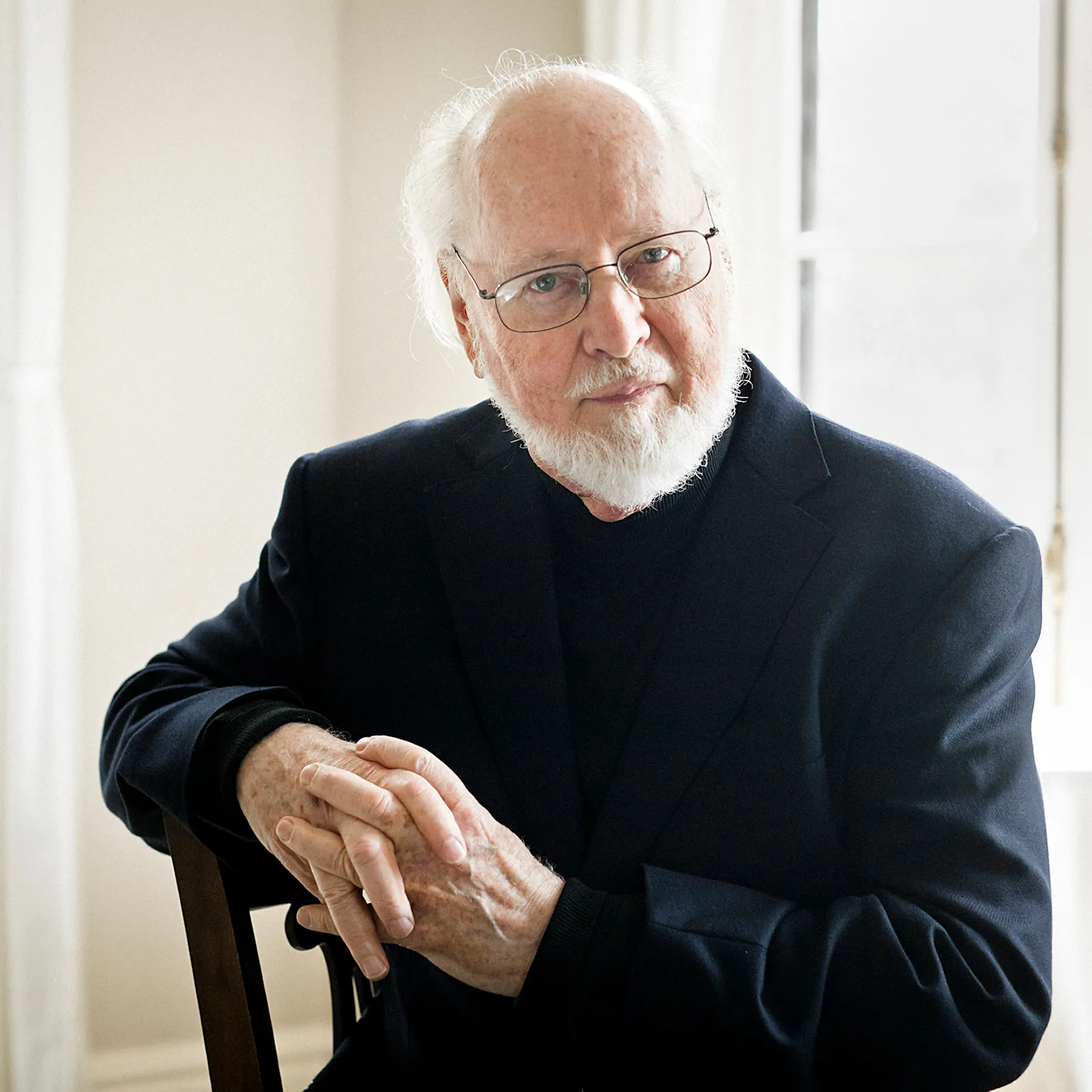
John Towner Williams, born on February 8, 1932, in New York, is one of the most influential and celebrated composers of the 20th and 21st centuries. With a career spanning over six decades, Williams has created some of the most iconic and memorable film scores in the history of cinema. His work has not only shaped the sound of modern movies but has also left an indelible mark on popular culture. This article explores the life, achievements, and enduring legacy of John Williams, providing a comprehensive view of his contributions to music and film.
Early Life and Musical Beginnings
John Williams was born into a musical family. His father, Johnny Williams, was a jazz drummer and one of the founding members of the Raymond Scott Quintet. Growing up in such an environment, Williams was surrounded by music from an early age, and it was only natural that he would follow in his father’s footsteps. He began his formal music education at the age of seven, studying piano, which soon expanded to include the clarinet, trumpet, and trombone.
Williams demonstrated exceptional talent early on, composing music for school bands and later for the U.S. Air Force during his military service. After completing his service, Williams pursued further musical education at the prestigious Juilliard School of Music in New York, where he studied piano under the tutelage of Rosina Lhévinne. His time at Juilliard helped refine his skills, but it was his move to Hollywood that would truly set the stage for his illustrious career.
Hollywood and Early Career
Upon arriving in Hollywood, Williams studied under notable composers such as Mario Castelnuovo-Tedesco and Arthur Olaf Anderson. These experiences provided him with a strong foundation in composition, which he would soon apply to the burgeoning television industry. In the 1950s, Williams began composing music for television series such as “Today” (1952) and “General Electric Theatre” (1953). These early projects allowed him to hone his craft and gain valuable experience in composing for visual media.
As the 1960s rolled in, Williams transitioned into composing for feature films. His early works included scores for movies like “I Passed for White” (1960) and “Because They’re Young” (1960). During this period, he was often credited as “Johnny Williams,” a name that reflected his work on lighter, less prestigious projects. However, as his talent became more recognized, so did the projects he was involved in.
Breakthrough and the 1970s
The 1970s marked a turning point in Williams’s career. His work on the television series “NBC Nightly News” and films like “Story of a Woman” (1970) and “Jane Eyre” (1971) began to earn him critical acclaim. However, it was his score for the 1971 film “Fiddler on the Roof” that truly put him on the map. The score earned him an Academy Award, the first of many that would follow.
Williams’s collaboration with director Steven Spielberg began in the early 1970s, a partnership that would become one of the most successful in film history. Their first project together was “The Sugarland Express” (1974), followed by the blockbuster hit “Jaws” (1975). The score for “Jaws,” with its iconic two-note motif, became one of the most recognizable pieces of music in film history and earned Williams another Academy Award. This collaboration with Spielberg would continue throughout both of their careers, leading to some of the most memorable film scores ever created.
In 1977, Williams composed the score for “Star Wars,” directed by George Lucas. The score was a monumental success, blending classical symphonic traditions with modern cinematic needs. The main theme from “Star Wars” became one of the most famous film scores of all time, and Williams’s work on the film won him his third Academy Award. The success of “Star Wars” solidified Williams’s reputation as one of the leading composers in Hollywood and set the stage for a series of collaborations on the franchise’s subsequent films.
The 1980s: A Decade of Masterpieces
The 1980s were a period of unparalleled success for John Williams. He continued to collaborate with Spielberg on films like “E.T. the Extra-Terrestrial” (1982), which earned him another Academy Award. The score for “E.T.” is often cited as one of Williams’s finest works, perfectly capturing the wonder and emotion of the film.
During this decade, Williams also composed the music for the “Indiana Jones” series, starting with “Raiders of the Lost Ark” (1981). The score for “Indiana Jones” featured another iconic theme that became instantly recognizable worldwide. Williams’s ability to create memorable and emotive music that could stand on its own was evident in every project he touched during this period.
In addition to his film work, Williams was commissioned to compose music for the 1984 Summer Olympics in Los Angeles. The result was “Olympic Fanfare and Theme,” a piece that has since become synonymous with the Olympic Games and is still used in broadcasts today.
The 1990s: Continued Success and New Challenges
The 1990s saw Williams continuing to dominate the film music industry, with scores for films such as “Jurassic Park” (1993), “Schindler’s List” (1993), and “Saving Private Ryan” (1998). His work during this period was diverse, ranging from the thrilling and adventurous themes of “Jurassic Park” to the haunting and somber melodies of “Schindler’s List.”
“Schindler’s List,” in particular, showcased Williams’s ability to create deeply emotional and evocative music. The score, which featured violinist Itzhak Perlman, won Williams his fifth Academy Award. The music’s ability to convey the tragedy and humanity of the Holocaust made it one of the most powerful film scores ever written.
Throughout the 1990s, Williams received numerous Oscar nominations, further cementing his status as one of the greatest film composers of all time. He also continued his work with the “Star Wars” franchise, composing the scores for the prequel trilogy that began with “The Phantom Menace” in 1999.
The 2000s: A Legacy Continues
The new millennium brought new challenges and opportunities for John Williams. He continued to collaborate with Spielberg, composing scores for films like “A.I. Artificial Intelligence” (2001), “Minority Report” (2002), and “Catch Me If You Can” (2002). His work during this period demonstrated his ability to adapt to different genres and storytelling styles, from science fiction to crime capers.
One of Williams’s most notable projects during the 2000s was his work on the “Harry Potter” series. Beginning with “Harry Potter and the Philosopher’s Stone” (2001), Williams created a musical world that captured the magic and wonder of J.K. Rowling’s books. The “Hedwig’s Theme” from the series became one of the most recognizable pieces of music associated with the franchise and is still beloved by fans today.
In addition to his film work, Williams continued to compose for special events, such as the 2002 Winter Olympics in Salt Lake City. His piece “Call of the Champions” was another triumph, showcasing his ability to compose music that inspires and uplifts.
The 2010s: Honors and New Projects
As Williams entered his eighth decade, his work showed no signs of slowing down. In the 2010s, he continued to receive accolades for his contributions to film music. He was nominated for Oscars for his work on films like “War Horse” (2011), “Lincoln” (2012), and “The Book Thief” (2013).
During this decade, Williams also returned to the “Star Wars” universe, composing the scores for the new trilogy starting with “The Force Awakens” (2015). His work on these films was met with critical acclaim, and he continued to prove that his music was as vital and relevant as ever.
In 2016, Williams received the prestigious AFI Life Achievement Award, becoming the first composer to be honored with the award. This recognition was a testament to his impact on the film industry and his influence on generations of composers and musicians.
The 2020s: A Living Legend
Even in his 90s, John Williams continues to be active in the world of film music. He has worked on scores for projects like “The Fabelmans” (2022) and “Indiana Jones and the Dial of Destiny” (2023), showing that his creativity and passion for music remain undiminished.
Williams’s legacy is not only defined by his incredible body of work but also by the profound influence he has had on the world of music and film. His scores have become a part of the cultural fabric, resonating with audiences around the world and elevating the films they accompany to new heights.
Conclusion: The Enduring Impact of John Williams
John Williams’s career is a testament to the power of music in storytelling. His ability to craft melodies that resonate with audiences on a deep emotional level has made him one of the most beloved and respected composers in history. From “Star Wars” to “Harry Potter,” “Jaws” to “Schindler’s List,” his music has become an integral part of the cinematic experience.
As Williams continues to compose and inspire, his influence on the world of film music will undoubtedly be felt for generations to come. He is not just a composer; he is a storyteller, a creator of worlds, and a master of his craft. The legacy of John Williams is one that will endure, a testament to the power of music to move, inspire, and transcend.


