
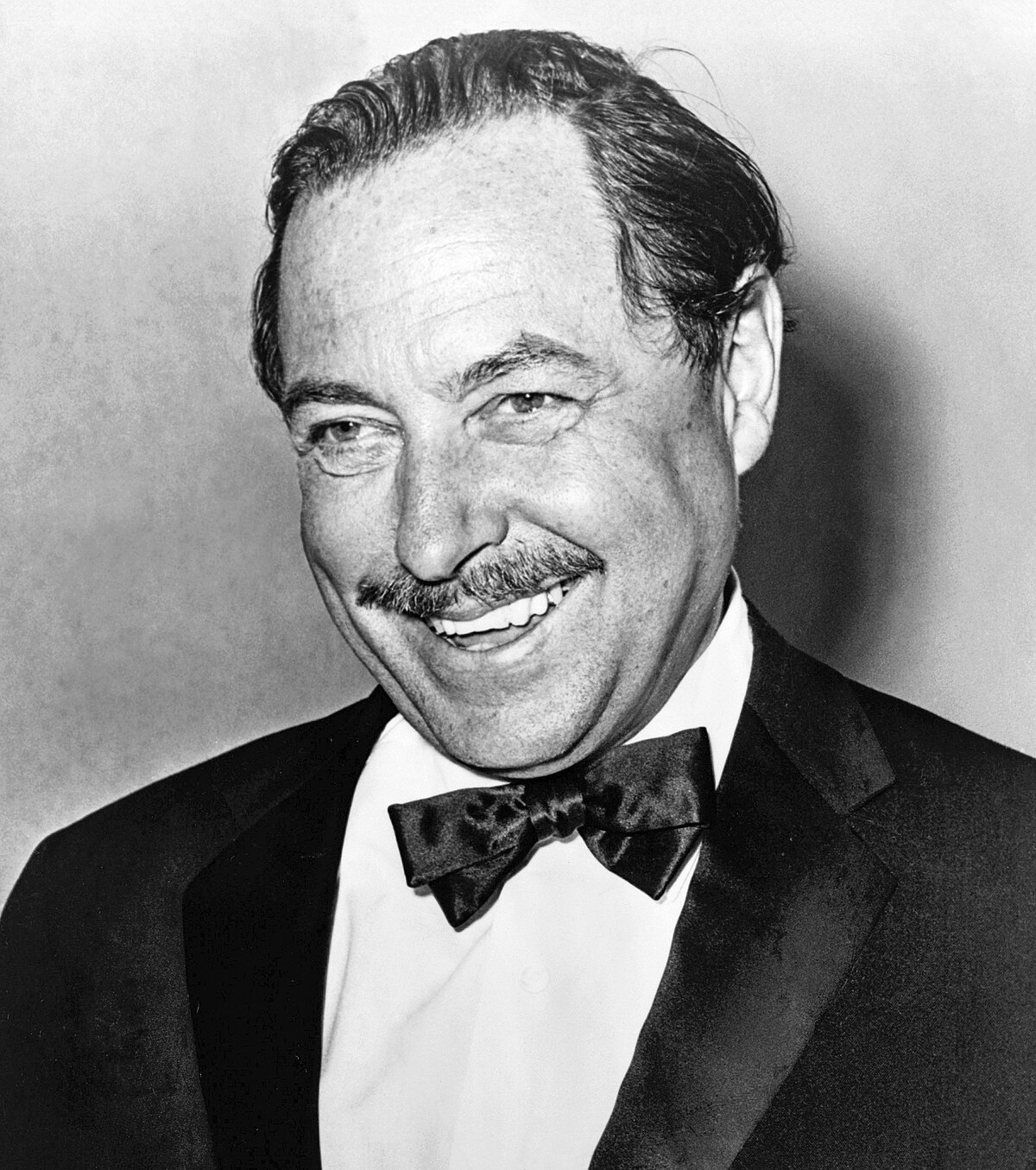
Tennessee Williams, born Thomas Lanier Williams on March 26, 1911, in Columbus, Mississippi, is widely regarded as one of the greatest American playwrights of the 20th century. His work is known for its exploration of human frailty, emotional complexity, and the tension between societal expectations and personal desires. Williams’ life, much like his plays, was marked by both brilliance and tragedy, and his legacy continues to influence modern theater and literature.
Early Life and Influences
Thomas Lanier Williams was born into a family that would profoundly shape his work. His mother, Edwina Dakin Williams, was a Southern belle with a strong personality, while his father, Cornelius Coffin Williams, was a traveling shoe salesman who was often absent and abusive. Growing up in the Deep South, Williams experienced a tumultuous childhood, marred by the strict, puritanical nature of his mother and the emotional distance of his father.
Williams found solace in reading and writing from a young age, using these activities as an escape from his troubled home life. The Southern Gothic atmosphere of his upbringing, combined with the emotional turmoil within his family, would later become central themes in his plays. His early exposure to the complexities of human relationships, particularly the dynamics within his own family, provided a rich foundation for his later work.
At the age of 16, Williams began attending the University of Missouri, where he studied journalism. However, his academic journey was cut short when his father forced him to leave school and work at a shoe factory. This period of his life was deeply unhappy, and it was during this time that Williams suffered his first nervous breakdown. The experience only deepened his resolve to pursue a career as a writer.
The Birth of Tennessee Williams
In 1938, Williams graduated from the University of Iowa with a degree in English. Around this time, he began using the pen name “Tennessee,” a nod to his Southern heritage. The adoption of this name marked the beginning of a new chapter in his life, as he fully committed himself to a career in playwriting.
Williams’ early works were heavily influenced by his experiences in the South and the personal struggles he faced, particularly regarding his sister, Rose. Rose suffered from severe mental illness and was eventually lobotomized, an event that had a profound impact on Williams. His deep sense of guilt and fear that he might suffer a similar fate became recurring themes in his work, particularly in his portrayal of fragile, mentally unstable characters.
Breakthrough and Success: The 1940s
Williams’ first major success came in 1944 with the play The Glass Menagerie. The play, which is semi-autobiographical, tells the story of a young man, Tom, who struggles with his responsibilities toward his mentally fragile sister, Laura, and his domineering mother, Amanda. The Glass Menagerie was an immediate hit, earning critical acclaim and establishing Williams as a major force in American theater.
Following the success of The Glass Menagerie, Williams wrote what would become one of his most famous plays, A Streetcar Named Desire. Premiering on Broadway in 1947, the play starred Jessica Tandy as Blanche DuBois and introduced a young Marlon Brando as Stanley Kowalski, under the direction of Elia Kazan. A Streetcar Named Desire was a critical and commercial success, winning the Pulitzer Prize for Drama in 1948. The play’s exploration of desire, mental illness, and the clash between old Southern values and modernity resonated with audiences and critics alike.
The character of Blanche DuBois, with her tragic vulnerability and desperate clinging to the past, is often seen as a reflection of Williams’ own fears and insecurities. A Streetcar Named Desire remains one of the most studied and performed plays in American theater, and its impact on the genre cannot be overstated.
Personal Life and Struggles
Throughout his life, Tennessee Williams struggled with his sexuality, mental health, and substance abuse. As a gay man in a time when homosexuality was stigmatized, Williams often felt isolated and conflicted about his identity. His relationships with men were often fraught with difficulties, and his lifelong struggle with depression and addiction only compounded these challenges.
Williams’ relationship with Frank Merlo, a former Navy man, was one of the few sources of stability in his life. The couple met in the late 1940s and were together for nearly 15 years. During this period, Williams was at the height of his career, producing some of his most famous works, including Cat on a Hot Tin Roof (1955) and Suddenly Last Summer (1958). However, the death of Merlo from lung cancer in 1963 plunged Williams into a deep depression from which he never fully recovered.
Merlo’s death marked the beginning of a decline in Williams’ personal and professional life. He became increasingly dependent on alcohol and drugs, and his later works, while still containing flashes of brilliance, were often met with less critical and commercial success than his earlier plays.
The Later Years: The 1950s and Beyond
Despite his personal struggles, Williams continued to write prolifically throughout the 1950s and 1960s. Cat on a Hot Tin Roof, which premiered in 1955, is one of his most celebrated works and won him his second Pulitzer Prize. The play explores themes of mendacity, sexual repression, and the disintegration of a Southern family, reflecting many of the recurring motifs in Williams’ work.
Cat on a Hot Tin Roof was followed by a series of successful plays, including Orpheus Descending (1957) and The Night of the Iguana (1961). However, as the 1960s progressed, Williams’ work began to receive more mixed reviews. The critical response to plays such as The Milk Train Doesn’t Stop Here Anymore (1963) and The Seven Descents of Myrtle (1968) was lukewarm, and many critics began to see Williams as a writer in decline.
Despite the critical backlash, Williams remained dedicated to his craft, continuing to write and produce plays until his death. His later works, while not as commercially successful as his earlier plays, are still studied and performed, offering insight into the mind of a playwright grappling with his own demons.
Legacy and Impact on American Theater
Tennessee Williams’ impact on American theater is immeasurable. His plays are celebrated for their lyrical language, complex characters, and exploration of the human condition. Williams had a unique ability to portray the fragility of the human spirit, particularly through his female characters, who are often depicted as trapped by societal expectations and personal insecurities.
Williams’ work is also noted for its exploration of taboo subjects, including mental illness, homosexuality, and sexual desire. His willingness to confront these issues head-on, at a time when they were often ignored or stigmatized, was groundbreaking and paved the way for future generations of playwrights.
The influence of Southern Gothic literature is evident throughout Williams’ work. His plays are often set in the South and explore themes of decay, loss, and the haunting presence of the past. Williams’ ability to capture the essence of the South, with its complex social dynamics and cultural tensions, has made his work a cornerstone of American literature.
In addition to his influence on theater, Williams’ work has also had a significant impact on film. Many of his plays have been adapted into successful movies, including A Streetcar Named Desire (1951), Cat on a Hot Tin Roof (1958), and The Night of the Iguana (1964). These adaptations have introduced Williams’ work to a broader audience and have helped to cement his place in the pantheon of great American writers.
Historical Context and Cultural Significance
To fully appreciate Tennessee Williams’ contributions to American literature, it is essential to understand the historical and cultural context in which he wrote. Williams’ work emerged during a time of significant social change in the United States. The post-World War II era was marked by a shift in societal values, with growing tension between traditional norms and modernity.
Williams’ plays often reflect this tension, particularly in their exploration of the South’s struggle to reconcile its past with the rapidly changing present. The decline of the Southern aristocracy, the rise of industrialization, and the changing role of women are all themes that permeate Williams’ work. His characters often find themselves caught between these opposing forces, struggling to find their place in a world that is increasingly alien to them.
Williams’ exploration of mental illness and sexual identity was also ahead of its time. His portrayal of characters grappling with these issues, often in a deeply personal and empathetic way, challenged the social norms of the time and opened up new possibilities for representation in literature and theater.
Conclusion
Tennessee Williams’ life and work are a testament to the power of storytelling to explore the depths of the human experience. His plays continue to resonate with audiences today, offering timeless insights into the complexities of identity, desire, and the human condition. Williams’ ability to capture the fragility and resilience of the human spirit has secured his place as one of the most important playwrights in American history.
Despite the personal struggles that plagued him throughout his life, Williams’ dedication to his craft never wavered. His legacy lives on not only through his plays but also through the countless writers, directors, and actors he has inspired. Tennessee Williams remains a towering figure in American literature, and his work continues to challenge, inspire, and move audiences around the world.


