
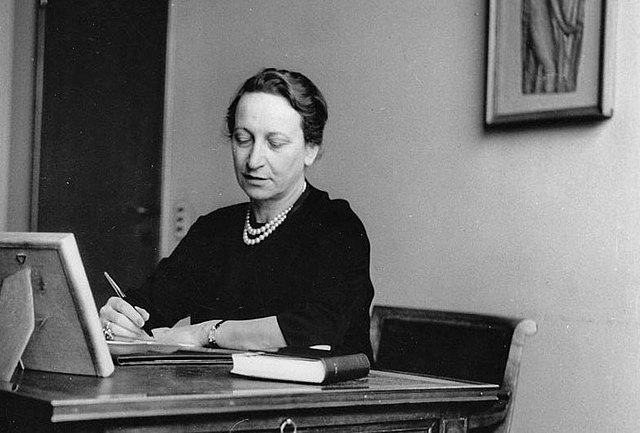
Fernanda Wittgens is a name that resonates with profound respect and admiration in the realms of art history and museum management. Born on April 3, 1903, in Milan, Italy, Wittgens was not only a pioneering art historian and critic but also the first woman to become the director of the prestigious Pinacoteca di Brera in Milan. Her life was marked by a relentless pursuit of excellence in the arts, a commitment to cultural preservation, and an unyielding stand against fascism during one of the most tumultuous periods in Italian history. This article explores the life, fame, and key highlights of Fernanda Wittgens, providing a detailed account of her contributions to the art world and her enduring legacy.
Early Life and Education: The Seeds of Passion
Fernanda Wittgens was born into a culturally rich and intellectually stimulating environment. Her father, Adolfo Wittgens, was a professor of letters at the Regio Liceo Ginnasio Giuseppe Parini and a translator of Swiss descent. Her mother, Margherita Righini, nurtured a household that valued education and the arts. From a young age, Fernanda was immersed in the world of culture and learning. Her father, who had a profound love for the arts, would take Fernanda and her six siblings on regular visits to museums, instilling in them a deep appreciation for artistic beauty.
The early loss of her father in July 1910, when Fernanda was just seven years old, was a significant event in her life. Despite this tragedy, Fernanda’s passion for the arts only grew stronger. She pursued her education with diligence and focus, eventually enrolling in the Accademia Scientifico-Letteraria di Milano, where she studied under the guidance of the esteemed art historian Paolo D’Ancona. In 1925, Fernanda graduated with honors, earning a degree in Letters with a thesis on art history, a field that would become her lifelong passion.
A Rising Star in Art History: From Teacher to Museum Professional
After completing her education, Fernanda Wittgens began her career as a teacher, sharing her knowledge of art history with students at the Liceo Parini and the Regio Liceo Ginnasio Alessandro Manzoni in Milan. Her deep understanding of art and her ability to communicate complex ideas made her a beloved and respected educator.
In 1928, Fernanda’s career took a pivotal turn when she was introduced to Ettore Modigliani, the then-director of the Pinacoteca di Brera and Superintendent of the Galleries of Lombardy. Modigliani recognized Wittgens’ talent and passion for art, and he offered her a position at the Pinacoteca as an “operaia avventizia,” a temporary and somewhat humble role. However, Wittgens’ abilities quickly became apparent, and she was soon performing tasks far beyond her official job description. By 1931, she was appointed as Modigliani’s assistant, and in 1933, she officially became an inspector, a role that involved both technical and administrative responsibilities. Modigliani, who affectionately nicknamed her “the little lark,” mentored Wittgens, and their professional relationship blossomed into a close friendship.
The Challenges of Fascism and World War II: Courage in the Face of Adversity
The 1930s were a period of significant political and social upheaval in Italy. The rise of fascism under Benito Mussolini brought with it severe restrictions on intellectual freedom and the persecution of those who opposed the regime. In 1935, Ettore Modigliani was removed from his position at the Pinacoteca di Brera due to his anti-fascist views. As an additional blow, the racial laws introduced in 1938 further marginalized him because of his Jewish heritage, leading to his internment and subsequent persecution.
During this dark period, Fernanda Wittgens continued her work at the Pinacoteca, maintaining a clandestine line of communication with Modigliani and providing him with updates on the state of the museum and its collections. Despite the dangers, she took on the responsibility of safeguarding Italy’s artistic heritage from the threats posed by the war and the Nazi occupation. Wittgens played a crucial role in organizing the evacuation and protection of valuable artworks from the Pinacoteca di Brera, the Museo Poldi Pezzoli, and the Quadreria dell’Ospedale Maggiore. Her efforts ensured that many priceless pieces of art were saved from destruction or theft during the war.
In addition to her work in art preservation, Wittgens used her position and influence to help those persecuted by the fascist regime, including her former professor, Paolo D’Ancona, who was Jewish. She assisted many individuals in escaping the country, often at great personal risk. Her cousin, Gianni Mattioli, a future prominent art collector, was also involved in these rescue efforts.
However, Wittgens’ courageous actions eventually led to her arrest on July 14, 1944, following the betrayal by a young German Jewish collaborator whom she had been helping to escape. Accused of being an enemy of fascism, she was sentenced to four years in prison. She was initially held at the Como prison and later transferred to the notorious San Vittore prison in Milan, where she shared a cell with the artist Carla Badiali.
Despite the harsh conditions of her imprisonment, Wittgens remained resolute and composed. In letters to her family, she expressed her belief that her time in prison was a form of moral and spiritual testing, a “kind of… graduation exam.” Her strength of character and unwavering commitment to her principles shone through even in these darkest moments.
After seven months in prison, Wittgens’ family managed to secure her release by presenting a false medical certificate indicating she was suffering from tuberculosis. She was released in February 1945, and her sentence was officially ended with the Liberation of Italy on April 24, 1945.
Post-War Reconstruction: Rebuilding Brera and Revitalizing Italian Art
With the war over and Italy beginning to rebuild, Fernanda Wittgens returned to the Pinacoteca di Brera. The museum had suffered significant damage during the war, with 26 of its 34 galleries destroyed by bombing. Despite these challenges, Wittgens was determined to restore the Pinacoteca to its former glory.
In 1946, Ettore Modigliani was reinstated as Superintendent of the Galleries of Lombardy, and Wittgens was appointed his deputy. Together, they initiated the massive task of reconstructing the Pinacoteca. Wittgens played a pivotal role in this effort, working closely with the architect Piero Portaluppi to redesign and rebuild the museum. Modigliani’s vision of a “Grande Brera,” an expanded and more inclusive cultural institution, became a guiding principle for the reconstruction. This vision was later carried forward by Wittgens and, after her, by Franco Russoli, who succeeded her.
The restoration of Brera was completed in June 1950, and the museum was officially reopened on June 9, 1950. At the inauguration, Wittgens delivered a moving speech, highlighting the “miracle” of the museum’s rebirth after four years of tireless work. Her efforts were widely recognized, and she was appointed Superintendent of the Galleries of Lombardy, a role in which she oversaw the restoration of other significant cultural sites, including the Museo Teatrale alla Scala and the Museo Poldi Pezzoli.
One of Wittgens’ most notable achievements during this period was her successful campaign to acquire Michelangelo’s Pietà Rondanini for the city of Milan. The sculpture, which had been placed on the market, was highly sought after by Rome, Florence, and even buyers from the United States. However, Wittgens, known for her tenacity and persuasive abilities, convinced the Milan City Council to allocate the necessary funds, securing the Pietà Rondanini for 130 million lire. On November 1, 1952, the sculpture officially became part of Milan’s cultural heritage, thanks to Wittgens’ determined advocacy.
Innovative Leadership: Transforming the Pinacoteca di Brera
Fernanda Wittgens was not content with merely restoring the Pinacoteca di Brera; she sought to transform it into a vibrant cultural institution that was accessible to all. In 1951, she initiated a series of groundbreaking educational and cultural programs aimed at making art more accessible to the public. Under her leadership, the Pinacoteca began offering guided tours led by specialized staff, often including Wittgens herself. These tours were tailored to different audiences, including children, the elderly, and people with disabilities, encouraging active participation and engagement with the art.
Wittgens also oversaw the creation of a dedicated educational section within the museum, established in 1955. This initiative was revolutionary at the time and laid the groundwork for the modern concept of museum education. Through these efforts, Wittgens ensured that the Pinacoteca di Brera was not just a repository of art but a dynamic space for learning and cultural exchange.
Her commitment to cultural preservation and education did not go unnoticed. On April 17, 1955, during Milan’s “Day of Gratitude,” Wittgens was awarded a gold medal by the Union of Italian Jewish Communities in recognition of her efforts to protect and rescue Jews during the war.
Final Years and Legacy: A Life of Service to Art and Humanity
Fernanda Wittgens’ life was one of dedication to art, culture, and humanity. Her work in preserving Italy’s cultural heritage during World War II, her leadership in rebuilding and revitalizing the Pinacoteca di Brera, and her innovative approach to museum education have left an enduring legacy.
In 1956, Wittgens declined an invitation from Ferruccio Parri to run for public office with the Laic Front, citing her need for absolute artistic freedom. This decision reflected her deep commitment to her work and her belief that her true contributions were in the realm of culture, not politics.
Tragically, Fernanda Wittgens passed away on July 12, 1957, at the age of 54, after a brief illness. Her death was a significant loss to the cultural world, and her funeral, held at the Church of San Marco in Milan, was attended by thousands of mourners. She was initially buried at the Cimitero Monumentale di Milano, and her remains were later moved to the Civico Mausoleo Palanti, among other illustrious figures.
In recognition of her bravery and humanitarian efforts during the Holocaust, Fernanda Wittgens was posthumously honored as a “Righteous Among the Nations” in 2014, a title given by Yad Vashem, Israel’s official memorial to the victims of the Holocaust.
Conclusion: The Enduring Influence of Fernanda Wittgens
Fernanda Wittgens’ life and work stand as a testament to the power of art and culture to inspire and uplift humanity, even in the face of the greatest adversity. Her contributions to the preservation of Italian art, her pioneering role as the first female director of a major museum in Italy, and her courageous actions during World War II have left an indelible mark on history.
Wittgens’ legacy continues to inspire museum professionals, art historians, and cultural leaders around the world. Her story is a reminder of the importance of cultural preservation and the role that art can play in shaping and reflecting the values of society. As a woman who broke barriers and fought for what she believed in, Fernanda Wittgens remains a shining example of leadership, courage, and dedication to the arts.


