
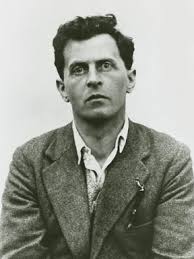
Ludwig Wittgenstein is often regarded as one of the most influential philosophers of the 20th century, renowned for his work in logic, mathematics, and the philosophy of language. His life and intellectual contributions have left an indelible mark on modern thought, and his ideas continue to be studied and debated to this day. This article delves into the life, work, and legacy of Ludwig Wittgenstein, offering insights into his philosophical journey and the historical context in which he developed his groundbreaking theories.
Early Life and Background
Ludwig Josef Johann Wittgenstein was born on April 26, 1889, in Vienna, Austria, into one of the wealthiest and most prominent families in the Austro-Hungarian Empire. His father, Karl Wittgenstein, was a leading industrialist, and his mother, Leopoldine Kalmus, came from a family of intellectuals and artists. The Wittgenstein household was a hub of cultural and intellectual activity, frequently hosting some of the most notable figures of the time, including the composer Johannes Brahms and the painter Gustav Klimt.
Growing up in such an environment, Ludwig Wittgenstein was exposed to a broad range of ideas and artistic influences from a young age. He was the youngest of eight children, several of whom were highly gifted but also deeply troubled—three of his brothers committed suicide. Ludwig himself was known to be a sensitive and introspective child, traits that would later characterize his philosophical work.
Academic Pursuits and the Path to Philosophy
Wittgenstein’s academic journey began with studies in engineering, following in the footsteps of his father. He enrolled at the Technische Hochschule in Berlin in 1906 and later moved to Manchester, England, in 1908 to study aeronautical engineering. During his time in Manchester, Wittgenstein developed an interest in the philosophy of mathematics, particularly the foundations of mathematics and logic.
This interest eventually led him to the work of Bertrand Russell, a leading philosopher and logician at the time. Wittgenstein was so taken with Russell’s work that he decided to pursue philosophy, abandoning his engineering studies. In 1911, he moved to Cambridge to study under Russell, who quickly recognized Wittgenstein’s extraordinary intellect and became his mentor.
Wittgenstein’s time at Cambridge was pivotal in shaping his philosophical outlook. Under Russell’s guidance, he began to develop the ideas that would later form the basis of his first major work, the Tractatus Logico-Philosophicus. This text, published in 1921, is considered one of the most important works in the philosophy of language and logic, laying the groundwork for much of 20th-century analytic philosophy.
The Tractatus Logico-Philosophicus: A Philosophical Landmark
The Tractatus Logico-Philosophicus is Wittgenstein’s only book-length work published during his lifetime, and it represents a culmination of his early philosophical efforts. In this work, Wittgenstein sought to address the relationship between language and reality, and to delineate the limits of what can be said meaningfully.
The central thesis of the Tractatus is that the structure of language mirrors the structure of reality. According to Wittgenstein, the world consists of facts, not things, and these facts are represented in language through propositions that have a logical form corresponding to the world. Wittgenstein famously asserted that “the limits of my language mean the limits of my world,” emphasizing the idea that language and thought are intimately connected.
One of the most famous and controversial aspects of the Tractatus is its conclusion, where Wittgenstein suggests that much of traditional philosophy is meaningless because it attempts to speak about things that cannot be expressed in language. His famous dictum, “Whereof one cannot speak, thereof one must be silent,” encapsulates this idea, urging philosophers to refrain from engaging in metaphysical speculation that goes beyond the limits of language.
The Interwar Period: A Life of Contradictions
After the publication of the Tractatus, Wittgenstein believed he had solved all the central problems of philosophy, and he subsequently abandoned the field. He gave away his considerable inheritance, renounced his academic career, and took up a series of manual jobs, including working as a gardener and a schoolteacher in rural Austria. This period of his life was marked by a profound sense of disillusionment with the intellectual world and a search for a simpler, more meaningful existence.
However, Wittgenstein’s time as a schoolteacher was fraught with difficulties. His teaching methods were often unconventional and severe, leading to conflicts with both students and parents. In 1926, after a particularly troubling incident in which he struck a student, Wittgenstein resigned from teaching and retreated to a secluded life, building a small hut in Norway where he could live in solitude and reflect on his life and work.
Despite his retreat from academic life, Wittgenstein remained intellectually active, corresponding with friends and former colleagues. During this time, he began to question some of the conclusions he had reached in the Tractatus, particularly the idea that the meaning of a proposition is determined solely by its correspondence to reality. These doubts would eventually lead him back to philosophy and the development of his later work.
Return to Cambridge and the Philosophical Investigations
In 1929, Wittgenstein returned to Cambridge, where he resumed his philosophical work and was eventually appointed to a lectureship. During this period, he developed a new approach to philosophy that diverged significantly from the ideas he had put forth in the Tractatus. This later philosophy is best captured in his posthumously published work, the Philosophical Investigations (1953).
The Philosophical Investigations represents a radical shift in Wittgenstein’s thinking. Whereas the Tractatus was concerned with the logical structure of language and its relationship to reality, the Philosophical Investigations focuses on the use of language in everyday life. Wittgenstein argued that the meaning of words is determined by their use in specific language games, rather than by their correspondence to reality.
This new approach led Wittgenstein to reject the idea of a single, underlying logic that governs all of language. Instead, he emphasized the diversity of language and the importance of context in understanding meaning. The Philosophical Investigations is often considered one of the most important works in 20th-century philosophy, and it has had a profound influence on various fields, including linguistics, cognitive science, and literary theory.
Personal Life: A Complex and Troubled Existence
Wittgenstein’s personal life was as complex and enigmatic as his philosophical work. He was known for his intense and often difficult personality, marked by periods of deep depression and self-doubt. He had a number of close friendships, including with the philosopher Bertrand Russell, the economist John Maynard Keynes, and the literary critic F.R. Leavis, but he also had a tendency to alienate those around him with his uncompromising views and erratic behavior.
One of the most significant aspects of Wittgenstein’s personal life was his struggle with his own identity, particularly his sexuality. Wittgenstein was gay, but he lived in a time and place where homosexuality was not only socially unacceptable but also illegal. This led to a great deal of inner turmoil and a sense of isolation that pervaded much of his life.
Despite these personal challenges, Wittgenstein remained deeply committed to his work. He continued to write and teach until his death, although he increasingly withdrew from public life in his later years. His final years were spent in relative seclusion, battling prostate cancer, which ultimately claimed his life on April 29, 1951.
Legacy and Influence
Ludwig Wittgenstein’s influence on philosophy and related fields is immense and enduring. His work has shaped the course of 20th-century thought in profound ways, particularly in the areas of logic, language, and the philosophy of mind. The Tractatus and Philosophical Investigations remain central texts in the study of philosophy, and Wittgenstein’s ideas continue to inspire and challenge scholars across disciplines.
One of Wittgenstein’s most significant contributions to philosophy is his challenge to the traditional view that philosophy’s role is to discover universal truths about the world. Instead, Wittgenstein saw philosophy as a therapeutic activity, aimed at clarifying the use of language and resolving the conceptual confusions that arise from it. This approach has had a lasting impact on the way philosophers think about the nature of their discipline and the role of language in human life.
Beyond philosophy, Wittgenstein’s ideas have influenced a wide range of fields, from linguistics to psychology to literary theory. His emphasis on the contextual and pragmatic aspects of language has informed the development of speech act theory, discourse analysis, and other areas of linguistic research. In cognitive science, his work has contributed to the understanding of how language shapes thought and how meaning is constructed in social interactions.
Historical Context and Philosophical Significance
To fully appreciate Wittgenstein’s contributions, it’s important to consider the historical and intellectual context in which he worked. The early 20th century was a time of rapid change and upheaval, both in Europe and in the broader intellectual landscape. The collapse of the Austro-Hungarian Empire, the devastation of World War I, and the rise of new scientific and philosophical paradigms all influenced Wittgenstein’s thinking.
Wittgenstein’s early work, particularly the Tractatus, can be seen as part of the broader movement of logical positivism, which sought to apply the methods of the natural sciences to philosophy. However, Wittgenstein’s later work, particularly the Philosophical Investigations, represents a break from this tradition and a move toward a more humanistic and pragmatic approach to philosophical questions.
In many ways, Wittgenstein’s work reflects the broader tensions and uncertainties of the 20th century. His philosophy grapples with the limits of human knowledge, the complexity of language, and the challenges of communication in a rapidly changing world. His ideas continue to resonate with those who seek to understand the complexities of modern life and the ways in which language shapes our understanding of reality.
Conclusion: A Life of Intellectual Brilliance
Ludwig Wittgenstein’s life and work represent a remarkable journey of intellectual exploration and personal struggle. From his early days as an engineering student to his final years as one of the most celebrated philosophers of his time, Wittgenstein’s legacy is one of profound influence and enduring significance.
His work continues to challenge and inspire, offering new ways of thinking about language, meaning, and the nature of philosophy itself. For anyone interested in the history of ideas, the life and work of Ludwig Wittgenstein offer a rich and rewarding subject of study, one that remains as relevant today as it was during his lifetime.


