
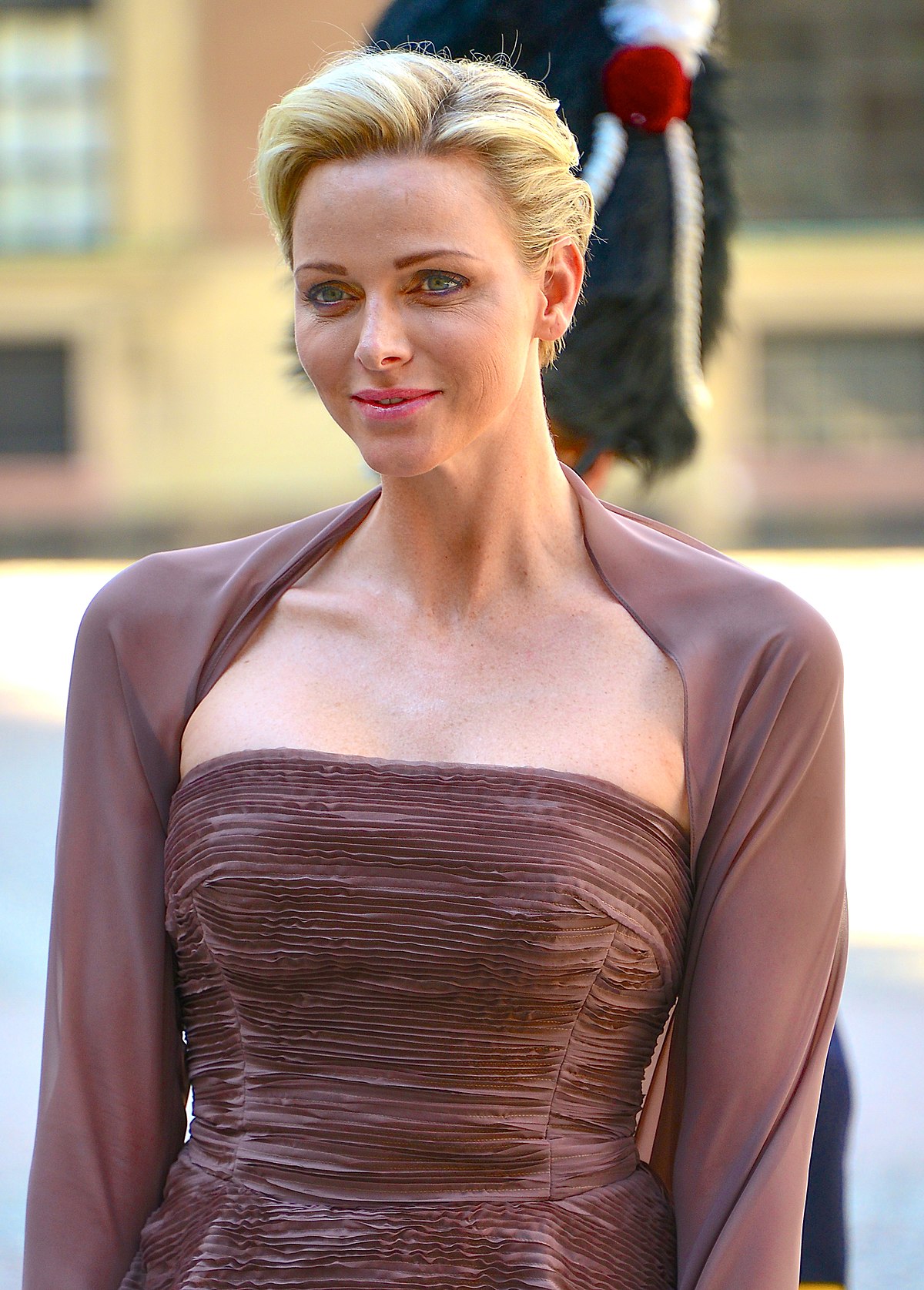
Charlène Wittstock, known today as Princess Charlène of Monaco, is a figure who has captured the public’s imagination with her grace, poise, and intriguing life story. Born on January 25, 1978, in Bulawayo, Rhodesia (now Zimbabwe), she has journeyed from a childhood in Africa to the grand palaces of Monaco. This article delves into her life, highlighting key moments and the significant roles she has played both on the global stage and within her family.
Early Life and Athletic Achievements
Charlène Lynette Wittstock was born to a textile industry father and a mother who was a competitive diver. Her family moved to Johannesburg, South Africa, when she was just 11 years old. This relocation marked the beginning of Charlène’s deep connection to the world of sports, particularly swimming. By the age of 18, she had made the significant decision to leave formal education to focus entirely on her burgeoning swimming career.
Charlène’s talent in the pool soon became apparent. She represented South Africa in numerous international competitions, most notably at the 2000 Sydney Olympics, where she competed in the 4×100 meter medley relay, finishing in fifth place. Her success continued with a sixth-place finish in the 200-meter breaststroke at the 2002 World Championships. Over the early 2000s, Charlène secured numerous national titles, becoming one of South Africa’s most celebrated swimmers.
However, her dream of competing in the 2008 Beijing Olympics was cut short due to a shoulder injury. This unfortunate event led her to retire from competitive swimming, marking the end of one chapter of her life but paving the way for another—one that would see her rise to international prominence in a very different arena.
Meeting Prince Albert II of Monaco
Charlène’s life took a significant turn in 2001 when she met Prince Albert II of Monaco at a swimming event, the Mare Nostrum in Monte Carlo. Their connection was instant, and over the years, their relationship blossomed. By 2006, Charlène was seen accompanying Prince Albert to various public events, signaling the seriousness of their relationship. Notable appearances included the opening ceremony of the Winter Olympics in Turin and the Monaco Grand Prix.
Their relationship became public knowledge in 2006, but it was in 2010 that the world learned of their engagement. The couple had been together for nearly a decade by the time they announced their marriage, with Prince Albert famously stating that he had found the woman who could match the qualities of his late mother, Grace Kelly.
Marriage and Life as Princess of Monaco
On July 2, 2011, Charlène Wittstock married Prince Albert II in a grand ceremony held in Monaco. The event was watched by millions around the world, as the couple exchanged vows in the courtyard of the Prince’s Palace. Following the wedding, Charlène was bestowed with the title “Her Serene Highness, Princess Charlène of Monaco.”
Before the marriage, Charlène, who was raised Protestant, converted to Catholicism, the official religion of Monaco. This decision was a significant one, underscoring her commitment to her new role and responsibilities as a member of the royal family.
The wedding was a blend of modernity and tradition, reflecting both Charlène’s South African heritage and the centuries-old customs of Monaco’s royal family. The princess’s wedding gown, designed by Giorgio Armani, was a masterpiece, featuring over 40,000 Swarovski crystals and a 16-foot-long train.
Motherhood and Public Life
On December 10, 2014, Charlène and Albert welcomed their twins, Gabriella Thérèse Marie and Jacques Honoré Rainier. The birth of the twins was a joyous occasion, and it also secured the future of the Grimaldi dynasty, with Jacques being named the heir apparent to the Monegasque throne.
As Princess of Monaco, Charlène has embraced her role with a focus on philanthropy and public service. She has been particularly active in promoting sports, health, and education, drawing on her background as an athlete to inspire young people. One of her notable initiatives is the Charlène Foundation, which aims to prevent drowning and promote water safety, especially among children.
Charlène has also worked closely with various humanitarian organizations, including the Born Free Foundation, where she serves as an honorary president. Her passion for environmental conservation and animal welfare aligns with the principality’s long-standing commitment to these causes.
Challenges and Media Scrutiny
Despite the fairy-tale aspects of her life, Charlène has faced her share of challenges, many of which have been played out in the public eye. The media has often speculated about her apparent struggles with the pressures of royal life, with some reports suggesting that she has found it difficult to adapt to the constant scrutiny and expectations placed upon her.
In the early 2020s, Charlène spent extended periods away from Monaco, including time in South Africa and Switzerland. These absences sparked rumors of marital strife, although the royal family has consistently denied such claims. Instead, it has been suggested that Charlène’s time away was related to health issues, including psychological challenges. The exact nature of these issues remains private, and the princess has expressed a desire to protect her family’s privacy in these matters.
Personal Interests and Legacy
Beyond her royal duties, Charlène has a range of personal interests that reflect her diverse background. She is an avid surfer and enjoys hiking in the mountains, a passion that harks back to her South African roots. Her love for contemporary art and South African ethnic poetry also adds depth to her public persona, showing a woman of varied interests and intellectual pursuits.
As a consort of a Catholic sovereign, Charlène holds the unique privilege of being allowed to wear white during audiences with the Pope, a rare honor known as the “Privilège du blanc.” This privilege is granted only to a select few royal women who are Catholic queens or consorts.
The Future of Princess Charlène
As Princess of Monaco, Charlène continues to navigate the complexities of her role, balancing her duties as a mother, wife, and public figure. Her story is one of resilience and adaptation, from her early days as an Olympic swimmer to her current position as one of the world’s most recognized royals.
In the years to come, Charlène is likely to continue her philanthropic work, particularly in areas close to her heart, such as children’s health and safety, sports, and environmental conservation. Her legacy will be shaped not only by her contributions to Monaco but also by how she handles the ongoing challenges of royal life.
Charlène Wittstock’s journey from a young girl in Africa to the Princess of Monaco is a testament to her strength, grace, and determination. Her life may have its challenges, but it is also filled with purpose and potential. As she continues to write her own story, the world watches with interest, eager to see what the future holds for this remarkable woman.


