
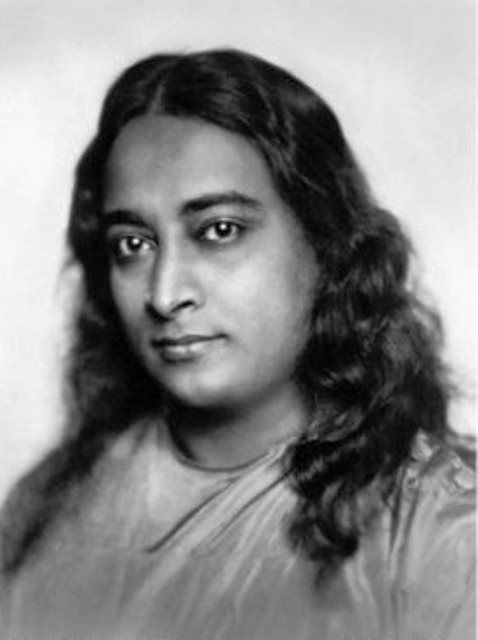
Paramhansa Yogananda, born Mukunda Lal Ghosh on January 5, 1893, in Gorakhpur, India, was a towering figure in the spiritual history of the 20th century. A master of Kriya Yoga and a global ambassador of yoga and meditation, Yogananda’s teachings bridged the gap between Eastern and Western spirituality. His influence continues to resonate through his writings, particularly his landmark work, Autobiography of a Yogi, which has inspired millions around the world. Yogananda’s life is a compelling story of spiritual awakening, global outreach, and enduring legacy.
Early Life and Spiritual Awakening
Yogananda was born into a devout and affluent Bengali family in Gorakhpur, a town in the northeastern part of India. From a very young age, Mukunda, as he was known then, exhibited a profound spiritual consciousness. Stories of his early life often highlight his deep yearning for spiritual knowledge, a characteristic that set him apart from his peers. His parents were disciples of Lahiri Mahasaya, a prominent Kriya Yoga master, who is said to have blessed Mukunda, predicting that he would grow up to be a great spiritual teacher.
Mukunda’s spiritual quest began early. As a teenager, he embarked on a search for his guru, traveling across India to meet various spiritual teachers. His journey led him to Swami Sri Yukteswar Giri, a direct disciple of Lahiri Mahasaya, who became his guru in 1910 when Mukunda was just 17 years old. Under Sri Yukteswar’s guidance, Mukunda was trained in the ancient practices of Kriya Yoga, a spiritual discipline that emphasizes the control of life force (prana) through specific breathing techniques and meditation. This period of rigorous spiritual training profoundly shaped Mukunda’s future, laying the groundwork for his mission to the West.
The Path to Spiritual Leadership
In 1915, Mukunda graduated from the University of Calcutta. Shortly after, he entered the monastic Swami Order and took the name Yogananda, which means “bliss through divine union.” This name encapsulated his mission: to bring the spiritual teachings of India to the wider world, fostering a sense of unity and peace through the practice of yoga and meditation.
Yogananda’s early work as a spiritual teacher began in 1917 when the Maharajah of Kasimbazar provided him with an ashram, or spiritual center, in Ranchi, about 250 kilometers from Calcutta. Here, Yogananda founded a school that combined modern educational techniques with yoga training and spiritual values. The school attracted many students and gained the admiration of notable figures, including Mahatma Gandhi. It was during this time that Yogananda had a vision that directed him to bring his teachings to the West, a task that would define the rest of his life.
Mission to the West
In 1920, Yogananda made his first journey to the United States. He was invited to speak at the International Congress of Religious Liberals in Boston, where he delivered a lecture titled “The Science of Religion.” His talk, which emphasized the universal nature of spirituality and the scientific approach to understanding religious truths, was well received. This marked the beginning of his mission to spread the teachings of Kriya Yoga in the West.
Later that year, Yogananda founded the Self-Realization Fellowship (SRF) in Boston. The SRF became the cornerstone of his work, dedicated to disseminating the spiritual teachings of Kriya Yoga and promoting the unity of all religions. The organization quickly grew, with Yogananda establishing meditation centers across the United States.
Yogananda’s teachings were revolutionary for his time. He emphasized the compatibility of Eastern and Western spiritual practices, often drawing parallels between the teachings of Hinduism and Christianity. He particularly revered Jesus Christ and Saint Francis of Assisi, often referring to them in his lectures as exemplars of the spiritual ideals he sought to teach. This inclusive approach helped Yogananda gain a broad following, transcending religious and cultural boundaries.
The Expansion of His Teachings
Throughout the 1920s and 1930s, Yogananda traveled extensively across the United States, delivering lectures, conducting meditation classes, and initiating thousands of students into Kriya Yoga. His charisma, combined with his profound spiritual insight, made him a popular figure, and his public talks often attracted large audiences. He spoke in some of the most prestigious venues of the time, including Carnegie Hall in New York and the Philharmonic Auditorium in Los Angeles.
In 1925, Yogananda established the international headquarters of the Self-Realization Fellowship in Los Angeles, California. The location became the focal point of his work, where he continued to teach, write, and guide his students. The SRF, under Yogananda’s leadership, became a hub for spiritual seekers from all walks of life, offering a wide range of resources, including books, lessons, and guided meditations.
One of the hallmarks of Yogananda’s teachings was his ability to integrate the ancient wisdom of India with the modern scientific mindset of the West. He often spoke of the science behind yoga and meditation, explaining how these practices could help individuals achieve higher states of consciousness and well-being. His teachings emphasized self-realization—the understanding of one’s true nature—as the ultimate goal of human life.
Autobiography of a Yogi: A Spiritual Classic
In 1946, Yogananda published his seminal work, Autobiography of a Yogi. This book, which has been translated into numerous languages and remains in print to this day, is widely regarded as one of the most important spiritual books of the 20th century. Autobiography of a Yogi is more than just a memoir; it is a profound exploration of the spiritual journey, filled with stories of Yogananda’s experiences with his guru, Sri Yukteswar, and other spiritual luminaries of his time.
The book also introduces readers to the principles of Kriya Yoga, offering insights into the nature of God, the soul, and the purpose of life. Autobiography of a Yogi has had a lasting impact on countless readers, including many influential figures in the West. It played a significant role in popularizing yoga and meditation in the United States and Europe, inspiring a wave of interest in Eastern spirituality during the 1960s and 1970s.
Notably, Autobiography of a Yogi has been credited with influencing the spiritual paths of many prominent individuals, including Steve Jobs, who famously left copies of the book to be distributed at his memorial service. The book’s inclusion on the cover of The Beatles’ album Sgt. Pepper’s Lonely Hearts Club Band further cemented Yogananda’s influence in the Western cultural landscape.
The Return to India and Final Years
In 1935, Yogananda embarked on a two-year journey to Europe and India. During this time, he met with various spiritual leaders and dignitaries, including Mahatma Gandhi, with whom he shared the teachings of Kriya Yoga. Yogananda’s return to India was a momentous occasion, as he reconnected with his roots and his guru, Sri Yukteswar. It was during this period that Yogananda was bestowed the title of “Paramhansa,” meaning “Supreme Swan,” a recognition of his elevated spiritual status.
After his travels, Yogananda returned to the United States, where he continued his work until his passing. On March 7, 1952, Yogananda entered mahasamadhi, a yogi’s final conscious exit from the body, during a speech in Los Angeles. His passing was marked by an extraordinary event: his body showed no signs of decay for several weeks, a phenomenon that was documented by the mortuary officials and cited as evidence of his spiritual mastery.
Legacy and Continuing Influence
Paramhansa Yogananda’s legacy endures through the ongoing work of the Self-Realization Fellowship and the teachings he left behind. The SRF continues to operate worldwide, offering classes, retreats, and spiritual guidance to individuals seeking to deepen their practice of Kriya Yoga and meditation. The principles that Yogananda taught—universal love, self-realization, and the unity of all religious traditions—remain as relevant today as they were during his lifetime.
Yogananda’s influence extends beyond the spiritual community. His emphasis on the scientific aspects of yoga has contributed to the growing acceptance of meditation and mindfulness practices in mainstream healthcare and psychology. Today, practices such as yoga and meditation are recognized for their numerous physical, mental, and emotional benefits, a validation of the teachings that Yogananda brought to the West nearly a century ago.
Moreover, Yogananda’s teachings have continued to inspire a new generation of spiritual seekers. His writings, particularly Autobiography of a Yogi, remain a source of wisdom and guidance for millions around the world. The book’s impact is evident in the way it has shaped the spiritual journeys of countless individuals, encouraging them to explore the deeper dimensions of their existence.
Conclusion
Paramhansa Yogananda was more than just a spiritual teacher; he was a pioneer who brought the ancient wisdom of India to the modern world. His life and teachings continue to resonate with people of all backgrounds, offering a path to inner peace, self-realization, and a deeper understanding of the divine. Yogananda’s mission was to bridge the gap between East and West, and in doing so, he left an indelible mark on the spiritual landscape of the 20th century and beyond.
Through his tireless efforts, Yogananda introduced millions to the practice of yoga and meditation, transforming lives and awakening a global consciousness of spiritual unity. His teachings remind us that the pursuit of spiritual knowledge is a universal quest, transcending cultural and religious boundaries. As we continue to explore the depths of our own spiritual journeys, the wisdom of Paramhansa Yogananda remains a guiding light, leading us toward the realization of our highest potential.


