
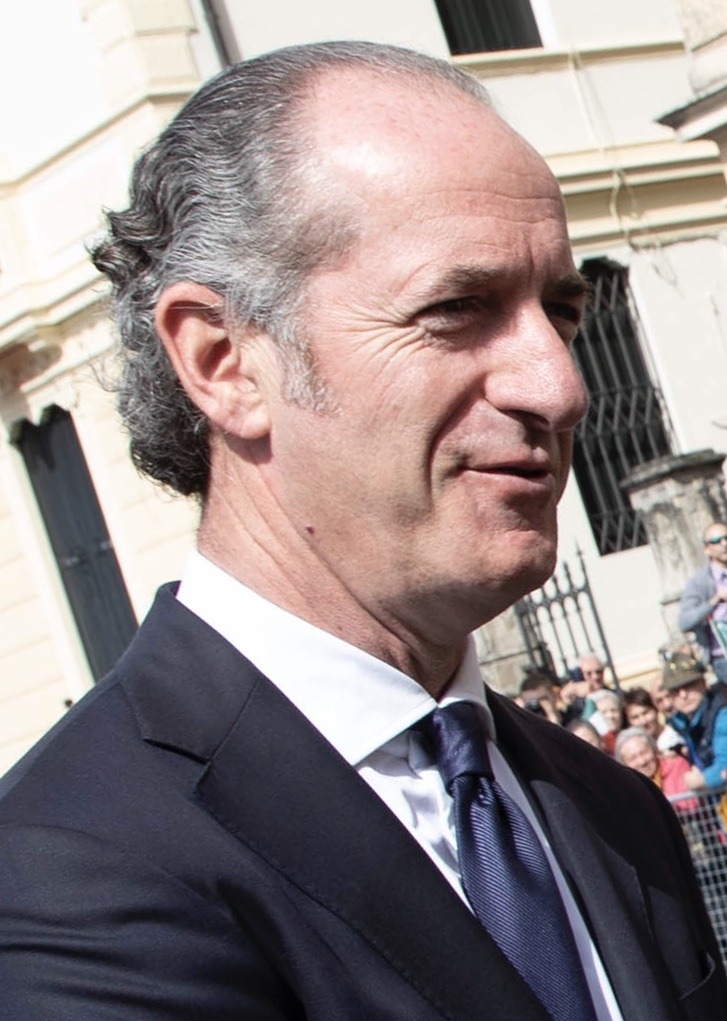
Luca Zaia, a prominent figure in Italian politics, has become one of the most recognized and influential leaders in the country. Born on March 27, 1968, in Conegliano, a town in the province of Treviso, Zaia’s life journey from a humble background to the heights of political power is both inspiring and noteworthy. As the President of the Veneto Region, Zaia has played a critical role in shaping regional policies and has gained national attention for his leadership style and governance. This article explores the life, fame, and key highlights of Luca Zaia, delving into his early years, political career, and his significant impact on the Italian political landscape.
Early Life and Education
Luca Zaia was born into a modest family in Conegliano, where he was raised in the small agricultural town of Bibàno di Godega di Sant’Urbano. His parents, Giuseppe and Carmela, instilled in him the values of hard work and dedication, which would later define his career. Zaia’s early education was at the prestigious “Giovanni Battista Cerletti” School of Enology in Conegliano, the oldest enology school in Europe, where he developed a strong foundation in the sciences.
Zaia’s passion for animals, particularly horses, led him to pursue higher education in veterinary medicine. He enrolled at the University of Udine, where he graduated with a degree in Animal Production Sciences. This academic background in veterinary science is a unique aspect of Zaia’s profile, distinguishing him from many of his political peers.
During his youth, Zaia took on various jobs, from working as a waiter and a construction worker to being a horse-riding instructor and a private chemistry tutor. These experiences provided him with a diverse skill set and a deep understanding of the everyday challenges faced by ordinary people, which later influenced his political ideology.
Entry into Politics: The 1990s
Luca Zaia’s political career began in the early 1990s when he joined the Lega Nord (Northern League), a regionalist political party that advocated for greater autonomy for Northern Italy. In 1993, at the age of 25, Zaia was elected to the municipal council of Godega di Sant’Urbano for the Lega Nord-Liga Veneta list. Despite receiving only 61 votes, Zaia quickly rose to prominence within the local political scene and was appointed as the leader of his party’s group in the council.
Two years later, in 1995, Zaia was elected as a provincial councilor for the Province of Treviso, where he received nearly 4,000 votes. His dedication and effectiveness in this role led to his appointment as the Provincial Assessor for Agriculture. Zaia’s tenure in this position was marked by his focus on improving agricultural policies, reflecting his deep connection to the rural community and his educational background.
In 1998, at just 30 years old, Zaia achieved a significant milestone in his career by becoming the youngest President of the Province of Treviso in Italian history. His leadership in this role set the stage for his future political successes and established him as a rising star within the Lega Nord.
The 2000s: Ascending the Political Ladder
Zaia’s popularity continued to grow throughout the 2000s, and in 2002, he was re-elected as President of the Province of Treviso with a landslide victory, securing over 240,000 votes. During this period, Zaia focused on infrastructure development, particularly in road safety, overseeing the construction of 400 roundabouts across the province. These projects were part of his broader vision to modernize and improve the region’s infrastructure, which earned him widespread acclaim.
In 2005, Zaia transitioned to regional politics when he was appointed Vice President of the Veneto Region, with responsibilities for Venetian identity, mountain development, agriculture, and tourism. His role in the regional government allowed him to expand his influence and pursue policies that aligned with his commitment to preserving the cultural and economic heritage of the Veneto region.
Zaia’s career took a significant turn in 2008 when he was appointed Minister of Agriculture in the fourth Berlusconi government. As Minister, Zaia faced numerous challenges, including a high-profile issue involving the export of Brunello di Montalcino wine to the United States. The U.S. had banned the import of Brunello due to concerns over certification fraud, but Zaia successfully negotiated an agreement that allowed the wine to return to the American market, thereby protecting an important Italian export.
During his tenure as Agriculture Minister, Zaia also advocated for relocating the National Food Safety Agency from Foggia to Verona, sparking a public dispute with Raffaele Fitto, the Minister for Regional Affairs. Although the agency was ultimately not relocated, the episode highlighted Zaia’s assertiveness in championing the interests of his region.
In 2009, Zaia published two books, “Con le scarpe sporche di terra: un anno di rinascimento agricolo” and “La mia multinazionale: dalla terra alla tavola: viaggio al centro della questione alimentare,” which further solidified his reputation as a committed advocate for Italian agriculture. He also chaired the first-ever G8 of Agriculture, held in Cison di Valmarino shortly before the main G8 summit in L’Aquila, demonstrating his growing influence on the global stage.
Presidency of the Veneto Region
In December 2009, Luca Zaia announced his candidacy for the Presidency of the Veneto Region in the upcoming regional elections. His candidacy was unanimously approved by the national leadership of the Lega Nord, and he received the backing of the center-right coalition, including Silvio Berlusconi’s Popolo della Libertà (People of Freedom) party. Zaia’s campaign focused on regional autonomy, economic development, and preserving Veneto’s cultural identity.
Zaia won the 2010 regional election with over 60% of the vote, making him the most popular candidate in the country during that electoral cycle. Upon taking office on April 13, 2010, he quickly made headlines by opposing the distribution of the abortion pill RU486 in the Veneto region. Although his stance sparked controversy and was ultimately overridden by national legislation, it underscored Zaia’s conservative values and willingness to take a stand on contentious issues.
Throughout his first term as President, Zaia remained a vocal opponent of genetically modified organisms (GMOs) in agriculture, reflecting his commitment to traditional farming practices and the protection of Italy’s agricultural heritage. He also opposed adoption by same-sex couples, a stance that further aligned him with conservative voters.
Zaia’s leadership was tested in 2014 when he publicly supported a digital plebiscite on Veneto’s independence from Italy, drawing comparisons between the region and Crimea, which had recently seceded from Ukraine. Although the plebiscite was non-binding, it highlighted Zaia’s strong regionalist sentiments and his desire for greater autonomy for Veneto.
In the 2015 regional elections, Zaia faced a potential challenge from Flavio Tosi, the mayor of Verona, who considered running for the governorship. However, the Lega Nord leadership, including Matteo Salvini and Roberto Maroni, rallied behind Zaia, leading to Tosi’s exclusion from the party. Zaia won re-election with a record-breaking 50% of the vote, further cementing his position as one of Italy’s most powerful regional leaders.
The 2020s: Continued Leadership and Challenges
Zaia’s popularity and influence continued to grow as he approached the 2020 regional elections. His handling of the COVID-19 pandemic in Veneto earned him widespread praise for his proactive measures and transparent communication with the public. Zaia’s approach to the pandemic, which included aggressive testing and contact tracing, was seen as a model for other regions and helped him secure an unprecedented 75% of the vote in the 2020 election.
In his third term as President, Zaia reiterated his commitment to making Veneto an independent region, emphasizing the need for greater fiscal autonomy and control over local governance. His popularity remains strong, and he is often mentioned as a potential future leader of the Lega Nord, should Matteo Salvini step down.
In 2021, Zaia published a book titled “Ragioniamoci sopra. Dalla pandemia all’autonomia” (“Let’s Reason About It: From the Pandemic to Autonomy”), in which he reflects on the challenges of managing the pandemic and his vision for the future of Veneto. The book further cements his reputation as a thoughtful and forward-thinking leader who is deeply committed to his region and its people.
Conclusion: A Regional Leader with National Influence
Luca Zaia’s journey from a small-town politician to one of Italy’s most influential regional leaders is a testament to his determination, strategic acumen, and deep connection to the Veneto region. His ability to navigate the complexities of both local and national politics, while remaining true to his conservative and regionalist principles, has made him a respected figure in Italian politics.
Zaia’s legacy is one of strong leadership, regional pride, and a commitment to protecting and promoting the interests of his constituents. As he continues to lead Veneto, his influence on Italian politics is likely to grow, and he remains a key player in the ongoing debate over regional autonomy and the future of Italy.
Whether through his role in regional governance, his contributions to agricultural policy, or his handling of the COVID-19 crisis, Luca Zaia has proven himself to be a leader who is both capable and compassionate. His story is one of perseverance and success, and his impact on Italian politics will be felt for years to come.


