
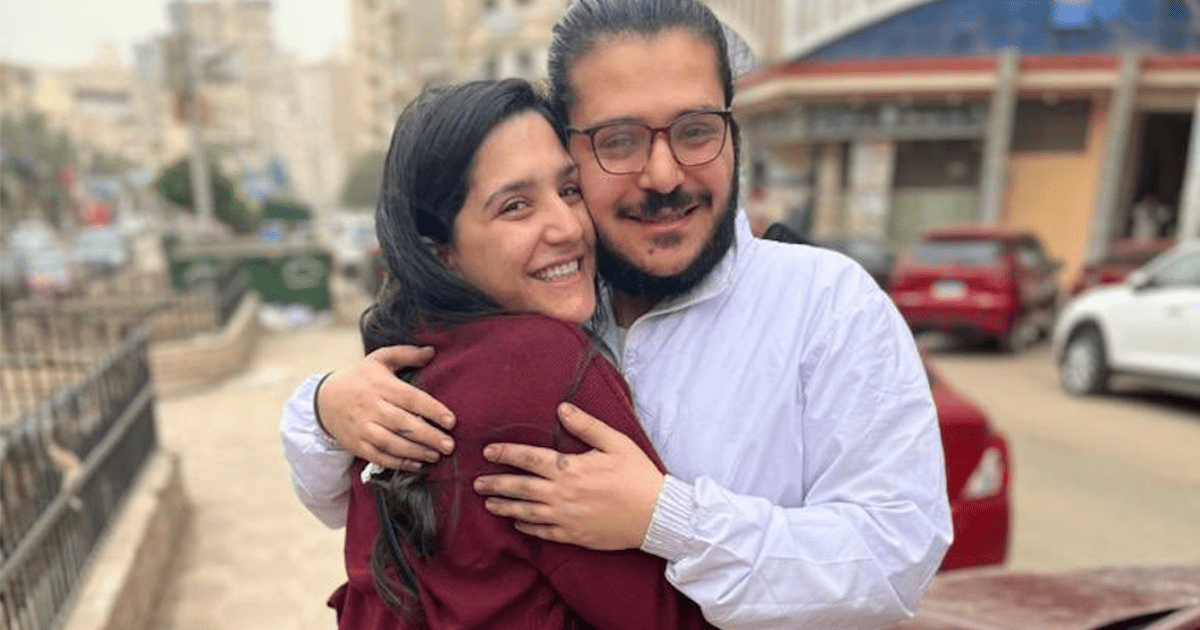
Patrick George Zaki, born on June 16, 1991, in Mansoura, a town in northeastern Egypt, is a prominent Egyptian researcher, human rights activist, and student whose life has been marked by his advocacy for human rights and his subsequent imprisonment. Zaki’s story has captured international attention, especially in Italy, where he pursued his studies and became a symbol of the struggle for freedom and justice. His experiences highlight the challenges faced by activists in authoritarian regimes and underscore the importance of international solidarity in the fight for human rights.
Early Life and Passion for Human Rights
Patrick Zaki was born into a middle-class Coptic Christian family in Mansoura, a city known for its historical and cultural significance in Egypt. His upbringing was shaped by the socio-political environment of his homeland, where issues of civil rights and freedoms were becoming increasingly contentious. From an early age, Zaki demonstrated a strong interest in social issues, which later evolved into a deep commitment to human rights activism.
Zaki’s early education took place in Mansoura, where he excelled academically. His intellectual curiosity and determination led him to pursue higher education, with a focus on social justice and human rights. Zaki’s involvement in activism began in earnest during the Egyptian Revolution of 2011, a period that saw widespread protests and political upheaval across the country. The revolution, which ultimately led to the overthrow of President Hosni Mubarak, had a profound impact on Zaki, solidifying his resolve to work for the defense of human rights.
After witnessing the violence and repression that followed the revolution, Zaki decided to dedicate his career to activism. He became increasingly involved in various initiatives aimed at protecting civil liberties and advocating for marginalized communities in Egypt. His work focused particularly on the rights of women and the LGBTQ+ community, groups that were often targeted by the state under the increasingly authoritarian regime that followed the revolution.
Academic Pursuits and the Move to Italy
In 2019, Zaki’s academic ambitions took him to Italy, where he enrolled in a Master’s program in Gender and Women’s Studies at the University of Bologna under the Erasmus Mundus program. Bologna, with its rich academic history as the home of the world’s oldest university, provided an ideal environment for Zaki to further his studies and deepen his understanding of the issues he was passionate about.
At the University of Bologna, Zaki quickly became known for his academic excellence and his commitment to social justice. His professors and peers recognized his dedication to using his education as a tool to make a positive impact in the world. Zaki’s research focused on gender equality and the rights of women and LGBTQ+ individuals, reflecting his broader activist goals.
Despite the peaceful and intellectually stimulating environment in Italy, Zaki remained deeply connected to the situation in Egypt. He continued to work with the Egyptian Initiative for Personal Rights (EIPR), one of the country’s leading human rights organizations. His involvement with EIPR, where he had been employed since 2017, included monitoring and reporting on human rights abuses, particularly those related to gender and sexuality.
Arrest and Imprisonment
Patrick Zaki’s life took a dramatic turn on February 7, 2020, when he was arrested upon his arrival at Cairo International Airport. Zaki had returned to Egypt to visit his family, unaware of the ordeal that awaited him. As soon as he landed, he was detained by Egyptian security forces who had been waiting for him. He was taken to a secret location where he was interrogated, and he later alleged that he was subjected to torture, including beatings and electric shocks.
Zaki was formally charged with spreading false news, incitement to protest, and incitement to violence, charges that were widely criticized by international human rights organizations as being politically motivated. The Egyptian authorities accused him of using his social media accounts to destabilize the state and undermine public order, allegations that were part of a broader crackdown on activists and dissenting voices in the country.
The news of Zaki’s arrest sparked an outcry both within Egypt and internationally. In Italy, where he was a student, there was a particularly strong reaction. Italian civil society, academics, and politicians quickly mobilized to demand his release, drawing parallels between Zaki’s case and the tragic fate of Giulio Regeni, an Italian researcher who was tortured and killed in Egypt under suspicious circumstances in 2016.
Despite the international pressure, Zaki’s detention was repeatedly extended, with his trial postponed multiple times. The conditions of his detention were harsh, and his physical and mental health deteriorated over the months he spent in prison. Reports from his family and legal team indicated that he was losing weight and experiencing severe stress due to the prolonged uncertainty about his fate.
International Mobilization and Advocacy
Patrick Zaki’s case became a cause célèbre in Italy and across Europe, with widespread calls for his release. The Italian Parliament took the extraordinary step of voting to grant Zaki honorary Italian citizenship, a move intended to increase diplomatic pressure on Egypt. This decision was supported by a broad coalition of political parties and was seen as a gesture of solidarity with Zaki and his struggle for human rights.
The European Parliament also took up Zaki’s case, with several members advocating for stronger action to secure his release. In December 2020, the European Parliament passed a resolution condemning the human rights situation in Egypt, specifically highlighting Zaki’s detention as emblematic of the broader repression occurring in the country. This resolution called on European Union member states to take a firmer stance in their dealings with Egypt regarding human rights abuses.
High-profile international figures, including Hollywood actress Scarlett Johansson, also joined the campaign for Zaki’s release. Johansson, known for her activism, publicly called for the Egyptian government to free Zaki and other detained human rights defenders. Her involvement brought further global attention to Zaki’s plight, amplifying the pressure on Egyptian authorities.
Despite these efforts, Zaki remained in detention for nearly two years, with his legal team struggling to navigate the opaque and often arbitrary Egyptian judicial system. His case was repeatedly delayed, and his requests for release on bail were denied. Throughout this period, Zaki continued to maintain his innocence, insisting that his work as a researcher and activist was not a crime but a necessary effort to promote human rights in his country.
Release and Continuing Struggles
On December 7, 2021, after 22 months in detention, Patrick Zaki was finally released from prison, though he was not acquitted of the charges against him. His release was met with widespread relief and celebration, particularly in Italy, where his supporters had campaigned tirelessly for his freedom. However, his legal battles were far from over, as he was still required to face trial in Egypt.
Zaki’s release did not mark the end of his struggles. He remained under significant legal and political pressure, with the threat of imprisonment hanging over him. Nevertheless, he resumed his studies at the University of Bologna, determined to complete his Master’s degree despite the challenges. In July 2023, Zaki successfully graduated with honors, defending his thesis via video link from Egypt, as he was not permitted to leave the country.
Just days after his graduation, on July 18, 2023, an Egyptian court sentenced Zaki to three years in prison. The sentence was met with widespread condemnation, both in Egypt and internationally. However, in a surprising turn of events, the following day, Egyptian President Abdel Fattah el-Sisi granted Zaki a pardon, effectively freeing him from the threat of further imprisonment.
Zaki’s pardon was seen as a victory for the international campaign that had advocated for his release, though it also highlighted the precariousness of human rights in Egypt. His case served as a stark reminder of the ongoing repression faced by activists in the country and the importance of continued vigilance and advocacy.
Legacy and Ongoing Impact
Patrick Zaki’s ordeal has had a profound impact on the global conversation about human rights, particularly in relation to academic freedom and the rights of activists. His case has highlighted the dangers faced by those who dare to speak out against authoritarian regimes and has underscored the importance of international solidarity in protecting human rights defenders.
In Italy, Zaki has become a symbol of resistance and courage, with his story resonating deeply in a country still grappling with the unresolved case of Giulio Regeni. His honorary Italian citizenship and the broad support he received from Italian society reflect the strong ties that have developed between Zaki and Italy, ties that have been strengthened by his academic and personal connections to the country.
Zaki’s release and subsequent pardon are seen as significant, but they do not mark the end of his fight for justice. He remains committed to his work as a human rights advocate and continues to speak out on behalf of those who are still imprisoned or persecuted in Egypt. His experiences have only deepened his resolve to work for a more just and equitable society, both in Egypt and beyond.
Conclusion
Patrick Zaki’s story is one of resilience, courage, and the enduring power of the human spirit in the face of oppression. His journey from a small town in Egypt to becoming a symbol of international human rights advocacy is a testament to his determination and the support of a global community committed to justice.
As Zaki continues to navigate the challenges that lie ahead, his story serves as an inspiration to activists and ordinary citizens alike. It reminds us that the fight for human rights is a collective effort and that even in the darkest of times, hope and solidarity can lead to meaningful change.


