
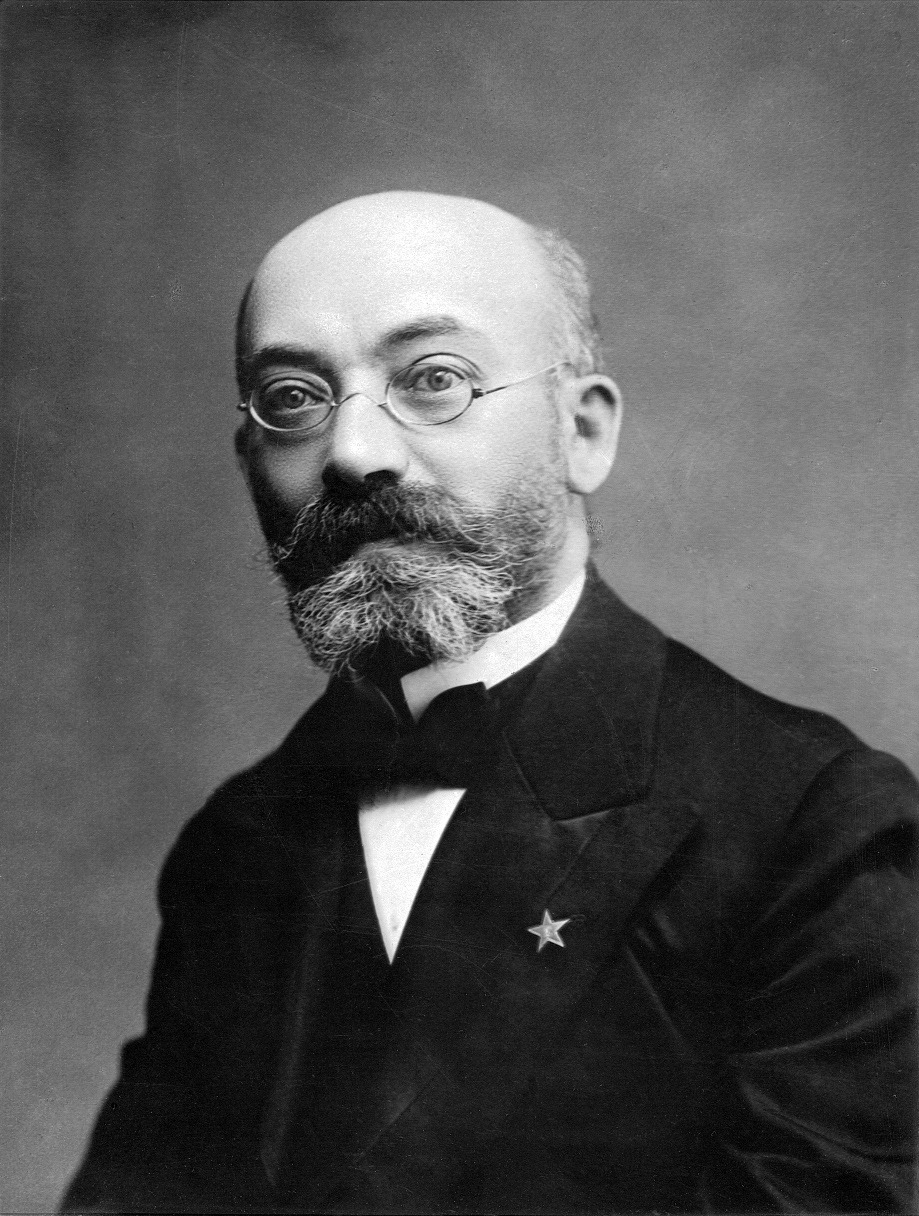
Lejzer Ludwik Zamenhof, born on December 15, 1859, in Białystok, a city that was then part of the Russian Empire, now in Poland, is a figure of immense historical and cultural significance. Zamenhof’s legacy is deeply intertwined with his invention of Esperanto, a constructed international language aimed at fostering peace and understanding across diverse linguistic and ethnic groups. His life was a complex interplay of intellectual brilliance, personal hardship, and unwavering idealism. This article delves into the life, fame, and key highlights of Lejzer Zamenhof, exploring the nuances and historical context that shaped his extraordinary contributions.
Early Life and Education
Zamenhof was born into a multilingual environment, which greatly influenced his later pursuits. Białystok, where he spent his formative years, was a melting pot of cultures and languages, including Russian, Polish, German, and Yiddish. This diverse linguistic environment was also fraught with tension and conflict, which Zamenhof perceived as a direct consequence of linguistic barriers. From a young age, he was acutely aware of the divisions and misunderstandings caused by language differences. This awareness planted the seeds for his later work in developing a universal language.
Zamenhof’s early education was rigorous and comprehensive. He was fluent in Russian, Polish, and Yiddish, and he studied German, French, Latin, and Greek in school. Under the tutelage of his father, a proficient Hebraist, Zamenhof also learned Hebrew. This multilingual background not only provided him with a deep understanding of linguistic structures but also fueled his desire to create a language that could bridge the divides he witnessed in his daily life.
The Birth of Esperanto
Zamenhof’s first attempt at creating a universal language came at the age of 19. However, it was not until 1887, at the age of 28, that he published his first booklet on the subject, titled “Internacia Lingvo,” under the pseudonym “Doktoro Esperanto,” which translates to “Doctor Hopeful.” The language, later known as Esperanto, was designed to be easy to learn and politically neutral, allowing people from different linguistic backgrounds to communicate on an equal footing.
The decision to publish his work under a pseudonym reflected Zamenhof’s humble nature and his belief that the language should belong to everyone, not just its creator. The booklet included a grammar guide, a vocabulary of about 900 roots, and sample texts in prose and poetry, showcasing the potential of Esperanto as a fully functional language.
Zamenhof’s vision for Esperanto was not merely linguistic but also deeply humanitarian. He believed that a common language could foster understanding and reduce the hostility between different national, ethnic, and religious groups. This idealism was a driving force throughout his life, influencing not only his linguistic work but also his involvement in social and cultural movements.
Challenges and Persistence
Despite his noble intentions, Zamenhof faced significant challenges in promoting Esperanto. The late 19th century was a period of intense nationalism, and the idea of a neutral, international language was met with skepticism and resistance. Additionally, Zamenhof’s status as a poor Jewish student in the Russian Empire further complicated his efforts. The political climate of the time was deeply anti-Semitic, and Zamenhof’s involvement in movements like Hibat Zion (a precursor to modern Zionism) only added to the difficulties he faced.
In 1887, the same year he published “Internacia Lingvo,” Zamenhof married Clara Zilbernik, who became a steadfast supporter of his work. Together, they endured financial hardships as Zamenhof struggled to balance his career as an ophthalmologist with his passion for Esperanto. Despite these challenges, Zamenhof continued to refine and promote his language, driven by his unwavering belief in its potential to change the world.
The Spread of Esperanto
The initial reception of Esperanto was modest but promising. Zamenhof’s approach to promoting the language was innovative for its time. He included a pledge at the end of his booklet, asking readers to promise to learn Esperanto if ten million people did the same. While the actual number of pledges fell far short of this goal, the initiative generated significant interest and laid the groundwork for a growing community of Esperanto speakers.
By the late 1880s, Esperanto had begun to attract a small but dedicated group of followers. The first Esperanto newspaper, “La Esperantisto,” was published in Nuremberg in 1889, further spreading awareness of the language. Over the next few years, Esperanto clubs and societies began to form in various countries, including France, Germany, and Russia. Zamenhof’s dream of a global community united by a common language was slowly becoming a reality.
The First Esperanto Congress
One of the most significant milestones in the history of Esperanto was the first World Esperanto Congress, held in Boulogne-sur-Mer, France, in August 1905. The event was attended by 688 participants from 20 countries, marking the first time that Esperanto speakers from around the world gathered to discuss and promote their shared language. The congress was a resounding success, solidifying Esperanto’s status as a legitimate international language.
At the congress, Zamenhof was awarded the French Legion of Honor, a recognition of his contributions to international understanding. The event also established important precedents for the Esperanto movement, including the adoption of the “Fundamento de Esperanto,” a document outlining the basic principles and structure of the language. This foundational text ensured that Esperanto would remain consistent and accessible to learners around the world.
Later Years and Legacy
As the Esperanto movement grew, so did Zamenhof’s fame. However, he remained deeply committed to his original vision of promoting peace and understanding through language. He continued to write and publish in Esperanto, producing important works such as the “Universala Vortaro” (Universal Dictionary) and the “Fundamenta Krestomatio” (Fundamental Anthology), which provided learners with a rich collection of texts in the language.
Zamenhof’s later years were marked by both triumph and tragedy. The outbreak of World War I in 1914 dealt a severe blow to his dream of global peace. Zamenhof, who had dedicated his life to fostering understanding between peoples, was devastated by the conflict. He continued to work tirelessly for the Esperanto cause, even as his health deteriorated.
Lejzer Zamenhof passed away on April 14, 1917, in Warsaw, leaving behind a legacy that continues to inspire millions. His creation, Esperanto, remains the most successful constructed language in history, with a vibrant global community of speakers and a rich body of literature, music, and culture.
The Enduring Impact of Esperanto
More than a century after Zamenhof’s death, Esperanto continues to thrive. It is spoken by an estimated two million people worldwide and has a significant presence online, with numerous websites, forums, and social media groups dedicated to the language. Esperanto is also taught in schools and universities in several countries and has been used in international organizations and scientific research.
The success of Esperanto can be attributed to its simplicity, flexibility, and the passionate community that has grown around it. Zamenhof’s vision of a neutral, international language that could promote peace and understanding remains as relevant today as it was in the 19th century. While the dream of universal adoption has not yet been realized, Esperanto has undoubtedly made a lasting impact on the world.
Conclusion: A Legacy of Hope
Lejzer Zamenhof was a man ahead of his time, driven by a deep sense of compassion and a desire to make the world a better place. His creation of Esperanto was not just a linguistic endeavor but a profound expression of his belief in the potential for humanity to overcome its divisions and work together for a common good.
Zamenhof’s life is a testament to the power of ideas and the enduring impact of a single individual’s vision. Despite the many challenges he faced, he never wavered in his commitment to his ideals. Today, Zamenhof is remembered not only as the creator of Esperanto but also as a symbol of hope and the possibility of a more peaceful and united world.
The story of Lejzer Zamenhof is a reminder that even in the face of adversity, it is possible to create something that transcends time and place, something that continues to inspire and bring people together long after its creator has passed away. Esperanto, the language of hope, stands as a lasting tribute to Zamenhof’s unwavering belief in the power of communication and understanding.


