
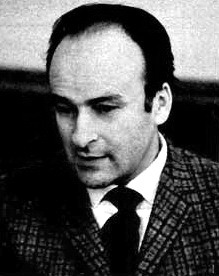
Andrea Zanzotto, born on October 10, 1921, in Pieve di Soligo, a small town in the province of Treviso, Italy, is considered one of the most significant Italian poets of the 20th century. His poetry, marked by a deep connection to the Venetian countryside and a profound exploration of language, has left an indelible mark on Italian literature. Zanzotto’s work is characterized by its complexity, linguistic experimentation, and a constant dialogue with nature and the human condition.
Early Life and Education
Andrea Zanzotto was born into a modest family in the Veneto region, an area rich in history and natural beauty, which would profoundly influence his poetry. His father, Giovanni, was a teacher and an artist, while his mother, Carmela Bernardi, came from a family of small farmers. The Zanzotto family lived through difficult times, especially during the rise of fascism in Italy, which led to political and economic hardships. Zanzotto’s father, who was openly anti-fascist, faced persecution, which forced him to leave Italy for a time, seeking refuge in France.
Zanzotto’s early education was marked by an introduction to literature and poetry, guided by his teachers and the cultural environment of his family. He developed an early love for language, nurtured by his experiences at school and the influence of his father, who encouraged his literary interests. Zanzotto attended the Scuola Magistrale in Treviso, where his passion for poetry blossomed. His early poetic attempts were deeply influenced by Italian poets like Giovanni Pascoli, and they reflected a keen sensitivity to the sounds and rhythms of language.
In 1939, Zanzotto enrolled at the University of Padua, where he studied literature and philology. It was during these years that he began to delve deeper into the works of European literary giants such as Charles Baudelaire, Arthur Rimbaud, and Friedrich Hölderlin. His academic studies provided him with a solid foundation in classical and modern literature, which would later inform his own poetic voice.
World War II and the Beginnings of a Poetic Career
The outbreak of World War II had a profound impact on Zanzotto’s life. Although he was exempted from military service due to health issues, he was deeply affected by the war’s devastation. During the war, Zanzotto became involved with the Italian Resistance movement, specifically with the Giustizia e Libertà (Justice and Freedom) group, which fought against the fascist regime and the occupying Nazi forces. His role in the Resistance included working on propaganda and underground publications, experiences that deepened his awareness of the power of language and its role in political and social contexts.
After the war, Zanzotto returned to his studies and completed his degree in Italian literature in 1942 with a thesis on the works of Grazia Deledda, the Nobel Prize-winning Sardinian author. His academic achievements, however, were overshadowed by the war’s aftermath, which left Italy in ruins both physically and morally. Zanzotto’s early post-war poetry reflects this period of disillusionment and reconstruction, as he grappled with the trauma of the war and the challenges of rebuilding a shattered world.
In 1951, Zanzotto published his first major collection of poetry, Dietro il paesaggio (“Behind the Landscape”), which won the prestigious Premio San Babila. This collection marked the beginning of Zanzotto’s exploration of the relationship between language, nature, and identity—a theme that would pervade much of his later work. The poems in Dietro il paesaggio reveal a deep connection to the Venetian landscape, with its rolling hills, rivers, and rural life, which Zanzotto both cherished and saw as emblematic of a lost harmony between humanity and the natural world.
The Emergence of a Unique Voice: 1950s and 1960s
The 1950s and 1960s were formative years for Zanzotto as he continued to refine his poetic voice and expand his thematic concerns. His subsequent collections, including Elegia e altri versi (1954) and Vocativo (1957), further established him as a leading figure in Italian poetry. These works are characterized by their dense, allusive language and their exploration of existential themes, often set against the backdrop of the Veneto countryside.
Zanzotto’s poetry from this period is noted for its intricate interplay of sound and meaning, as well as its frequent use of dialect and linguistic experimentation. He was particularly interested in the ways language could both reveal and obscure reality, a concern that is evident in the layered and sometimes opaque nature of his verse. This preoccupation with language and its limitations would become a central theme in his later work.
In 1968, Zanzotto published La beltà (“Beauty”), a collection that is widely regarded as one of his most important works. La beltà is notable for its ambitious scope and its exploration of the tensions between language, reality, and the self. The poems in this collection are often challenging, filled with linguistic play, and marked by a deep sense of unease about the modern world. Zanzotto’s use of fragmented syntax, neologisms, and shifts in tone and register create a poetic language that is at once disorienting and deeply evocative.
La beltà received significant critical acclaim and was presented by major literary figures like Pier Paolo Pasolini and Franco Fortini, which helped solidify Zanzotto’s reputation as a poet of great depth and innovation. The collection’s complex engagement with contemporary issues—ranging from environmental degradation to the alienation of modern life—resonated with readers and critics alike, establishing Zanzotto as a poet who could capture the anxieties of his time with unparalleled precision.
Collaboration with Federico Fellini and Later Works
Zanzotto’s work in the 1970s and 1980s saw him expanding his artistic collaborations and further deepening his exploration of poetic form. One of the most significant collaborations of his career was with the renowned Italian filmmaker Federico Fellini. Zanzotto wrote the lyrics for the choral segments in Fellini’s films Casanova (1976) and E la nave va (1983). These collaborations allowed Zanzotto to experiment with the intersection of poetry and cinema, blending his lyrical sensibilities with the visual and narrative demands of film.
The collaboration with Fellini was more than just a meeting of minds; it was an opportunity for Zanzotto to explore new dimensions of his creativity. His work on these films demonstrated his ability to adapt his poetic voice to different media, and it highlighted the musicality and visual richness of his verse. The experience also reinforced Zanzotto’s interest in the role of art and the artist in society, themes that would continue to inform his later work.
During this period, Zanzotto published Il Galateo in Bosco (1978), a collection that won the prestigious Premio Viareggio. This work, along with the subsequent volumes Fosfeni (1983) and Idioma (1986), forms a trilogy that delves into themes of language, identity, and the environment. These collections are characterized by their increasingly experimental approach to language, as Zanzotto sought to push the boundaries of poetic expression.
In Il Galateo in Bosco, Zanzotto engages with the natural world in a way that is both celebratory and mournful. The poems reflect his deep connection to the Veneto landscape but also express a profound sense of loss and dislocation, as the natural environment becomes increasingly threatened by human activity. The trilogy as a whole can be seen as a meditation on the fragility of both language and nature, as well as a critique of the destructive forces of modernity.
Recognition and Legacy
Andrea Zanzotto’s contributions to Italian literature were widely recognized during his lifetime. He received numerous awards, including the Premio Viareggio, the Premio Librex Montale, and the prestigious Premio Feltrinelli from the Accademia dei Lincei. His work was celebrated not only in Italy but also internationally, with translations of his poetry reaching audiences around the world.
Zanzotto’s influence extends beyond his poetry. His essays and critical writings, in which he engaged with the work of his contemporaries as well as the broader cultural and political issues of his time, have been equally influential. He was deeply involved in the intellectual and cultural life of post-war Italy, and his insights into the relationship between language, society, and the environment continue to resonate in contemporary discussions.
In addition to his literary achievements, Zanzotto was also known for his teaching and mentorship. He spent much of his career as a teacher in Treviso, where he influenced generations of students and young poets. His commitment to education and his role as a public intellectual were integral to his identity as a poet, and they underscore the importance he placed on the social function of art and literature.
Zanzotto continued to write and publish well into his later years. His final works, including Sovrimpressioni (2001) and Conglomerati (2009), reflect a continued engagement with the themes that had defined his earlier work, as well as a deepening concern with the challenges of contemporary life. These later collections are marked by a sense of urgency and a poignant reflection on the passage of time, as Zanzotto confronted the realities of aging and the approaching end of his life.
Death and Posthumous Recognition
Andrea Zanzotto passed away on October 18, 2011, just days after his 90th birthday. His death marked the end of an era in Italian poetry, but his work continues to be celebrated and studied. In the years since his passing, Zanzotto’s poetry has remained a touchstone for discussions about language, nature, and the role of the poet in society.
Zanzotto’s legacy is preserved not only in his published works but also in the many tributes and scholarly studies dedicated to his life and poetry. His influence can be seen in the work of contemporary poets who continue to grapple with the questions of language, identity, and the environment that were central to his writing.
In conclusion, Andrea Zanzotto was a poet who pushed the boundaries of language and form, creating a body of work that is both challenging and deeply rewarding. His exploration of the relationship between humanity and nature, his linguistic innovation, and his commitment to the social and political issues of his time have left an indelible mark on Italian literature. Zanzotto’s poetry remains a vital part of the literary landscape, offering readers a profound and complex vision of the world.


