
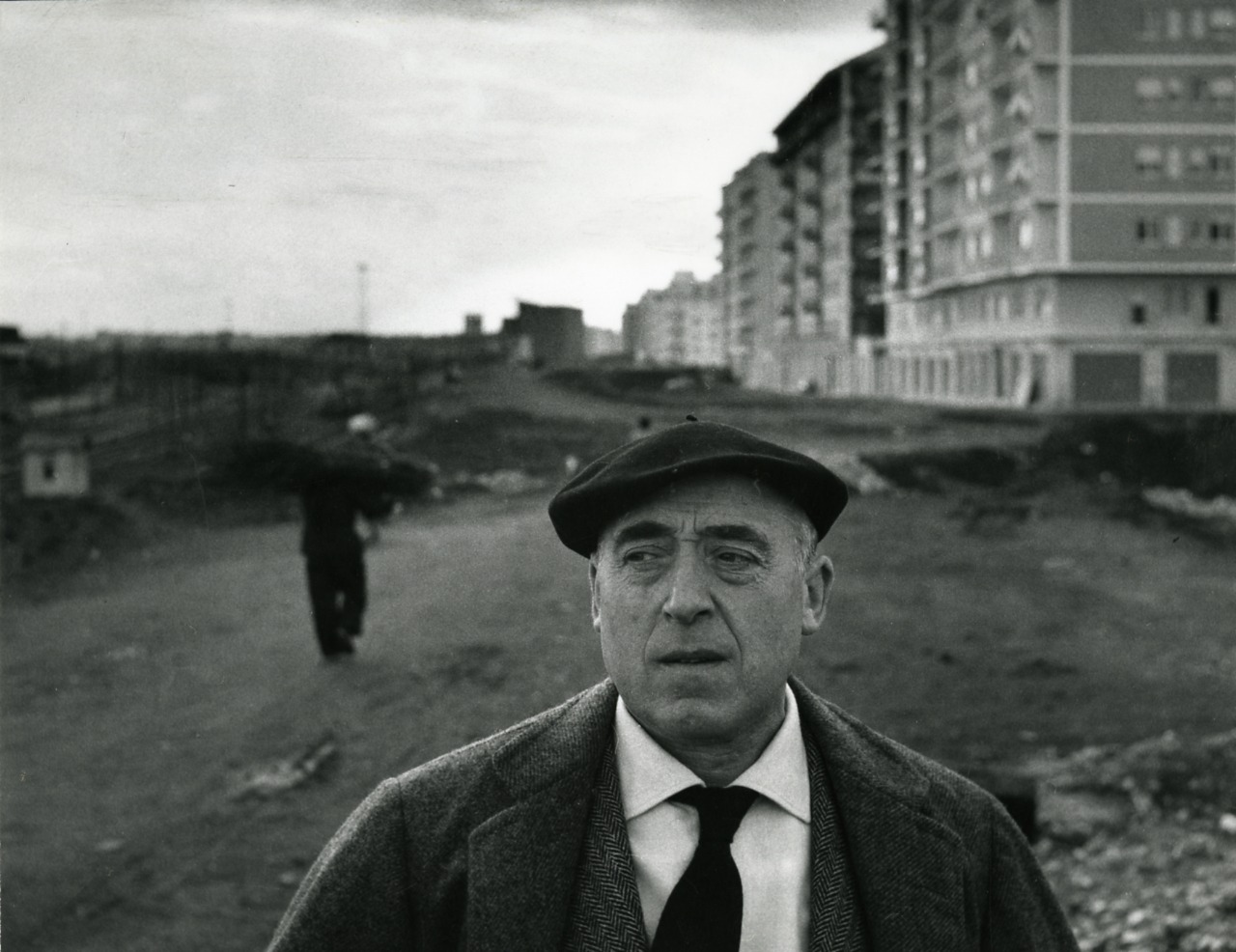
Cesare Zavattini is a name synonymous with the golden era of Italian cinema, particularly the neorealist movement that reshaped the film industry in the mid-20th century. Born on September 20, 1902, in Luzzara, Reggio Emilia, Italy, Zavattini was not just a screenwriter but also a journalist, novelist, painter, and an influential cultural figure. His contributions to cinema, especially his collaborations with directors like Vittorio De Sica, are considered cornerstones in the history of filmmaking.
Early Life and Academic Pursuits
Zavattini’s early life was marked by a blend of academic pursuits and a burgeoning passion for literature. After completing his secondary education, he enrolled in the Faculty of Law at the University of Parma. However, it wasn’t long before he realized that his true calling lay elsewhere. In 1923, Zavattini took a position as an instructor at the Maria Luigia College, but his literary inclinations soon drew him towards Milan, the epicenter of Italy’s publishing industry.
In Milan, Zavattini’s talents as a writer quickly garnered attention. His keen observations, sharp wit, and masterful prose led to numerous collaborations with leading magazines. By the 1930s, Zavattini had established himself as a formidable force in the literary world, eventually taking the reins as the editor of several Rizzoli periodicals, including the influential “Cinema Illustrato.” This period marked the beginning of Zavattini’s deep-seated fascination with cinema, setting the stage for his later work as a screenwriter.
Transition to Cinema: The Birth of a Neorealist Visionary
Zavattini’s entry into the world of cinema began in 1935 when he started working as a subject writer and screenwriter. His debut film, “Darò un milione” (I’ll Give a Million), directed by Mario Camerini, was a modest success, but it was just the beginning of a prolific career in screenwriting. His early works demonstrated a unique blend of surreal humor and incisive social commentary, characteristics that would later define his contributions to neorealism.
In 1938, Zavattini also began to explore another of his lifelong passions—painting. While his work as a painter never overshadowed his achievements in cinema, it remained an important creative outlet throughout his life. His artistic sensibilities would often influence his approach to filmmaking, contributing to the visual and thematic depth of his screenplays.
The Birth of Neorealism: A Partnership with Vittorio De Sica
The 1940s marked a turning point in Zavattini’s career, as he began collaborating with some of Italy’s most talented directors. Among these collaborations, his partnership with Vittorio De Sica stands out as the most significant. Together, Zavattini and De Sica created some of the most iconic films of the neorealist movement, a genre characterized by its focus on everyday life, social issues, and the experiences of ordinary people.
Their first major success came with “I bambini ci guardano” (The Children Are Watching Us) in 1943, a film that hinted at the neorealist style that would soon come to full fruition. However, it was with films like “Sciuscià” (Shoeshine, 1946), “Ladri di biciclette” (Bicycle Thieves, 1948), “Miracolo a Milano” (Miracle in Milan, 1951), and “Umberto D.” (1952) that Zavattini’s vision truly took shape. These films are celebrated not only for their narrative power but also for their unflinching portrayal of post-war Italian society.
Zavattini’s approach to screenwriting was revolutionary. He advocated for a cinema that eschewed traditional narrative structures and dramatic conventions in favor of a more realistic, almost documentary-like portrayal of life. His scripts were often stripped of melodrama, focusing instead on the quiet, often harsh realities of human existence. This style was not only groundbreaking but also deeply influential, laying the groundwork for future generations of filmmakers.
The Theoretical Foundations of Neorealism
Zavattini was not just a practitioner of neorealism; he was also one of its most vocal theorists. He believed that cinema should serve as a mirror to society, reflecting the lives of ordinary people with honesty and empathy. His vision was for a “cinema of truth,” where the boundaries between fiction and reality were blurred, and the camera became a tool for exploring the human condition.
In his theoretical writings and interviews, Zavattini often emphasized the importance of “pedinamento” (literally “tailing” or “shadowing”), a technique where the camera follows characters closely, capturing the minutiae of their daily lives. This method was central to his philosophy of neorealism, which sought to depict life as it truly was, without the embellishments or distortions of traditional cinematic storytelling.
Zavattini’s influence extended beyond his own films. His ideas helped shape the direction of Italian cinema during the post-war period and inspired filmmakers around the world. The impact of his work can be seen in the films of directors such as Federico Fellini, Michelangelo Antonioni, and Pier Paolo Pasolini, all of whom drew on neorealist principles in their own unique ways.
Expanding Horizons: Collaborations and Experiments
While Zavattini is most closely associated with Vittorio De Sica, his career included collaborations with a wide range of directors, each of whom brought their own style and perspective to his scripts. Among these were Luchino Visconti, with whom Zavattini worked on “Bellissima” (1951), and Alessandro Blasetti, with whom he collaborated on “Quattro passi fra le nuvole” (Four Steps in the Clouds, 1942). These films, though different in tone and style, shared Zavattini’s commitment to exploring the complexities of human life.
In addition to his work on feature films, Zavattini also engaged in a number of experimental projects that pushed the boundaries of conventional filmmaking. One such project was “Amore in città” (Love in the City, 1953), a collection of short films by different directors, each exploring the theme of love from a neorealist perspective. Zavattini’s segment, “Storia di Caterina” (The Story of Caterina), was a powerful example of his “pedinamento” technique, blending fiction and reality in a way that was both innovative and deeply affecting.
Another notable experiment was “Siamo donne” (We, the Women, 1953), a film that combined documentary and fictional elements to explore the lives of four famous Italian actresses. Zavattini’s contribution to this film highlighted his interest in blurring the lines between the real and the imagined, a theme that would recur throughout his career.
Challenges and Evolution: The Later Years
As the 1950s gave way to the 1960s, the neorealist movement began to wane, and Zavattini’s work evolved in new directions. His later films, while still rooted in the principles of neorealism, often incorporated more surreal and satirical elements. “Il giudizio universale” (The Last Judgment, 1961), directed by De Sica, is a prime example of this shift. The film, a darkly comic exploration of human folly, showcased Zavattini’s ability to adapt his style to the changing times while still maintaining his distinctive voice.
Despite the changing cinematic landscape, Zavattini remained a vital and active figure in the film industry. He continued to work with a diverse array of directors, including Michelangelo Antonioni, Federico Fellini, and Roberto Rossellini, contributing to films that ranged from stark dramas to whimsical comedies. His versatility as a screenwriter was matched by his commitment to social and political causes, which often found expression in his work.
Legacy and Cultural Impact
Cesare Zavattini’s legacy is inseparable from the history of Italian cinema. As a key figure in the neorealist movement, he helped redefine the possibilities of film, challenging audiences to engage with the world in new and profound ways. His influence can be seen not only in the work of the directors he collaborated with but also in the broader trajectory of international cinema.
Beyond his contributions to film, Zavattini was also a tireless advocate for cultural and social change. He played a crucial role in the establishment of the Italian cinema industry’s cooperative movement and was instrumental in the creation of the Archivio Audiovisivo del Movimento Operaio e Democratico, an organization dedicated to preserving the audiovisual history of Italy’s working-class and democratic movements.
Zavattini’s work was recognized with numerous awards and honors, including multiple Nastro d’Argento awards for his screenwriting. However, his greatest achievement lies in the lasting impact of his films, which continue to be studied, admired, and cherished by cinephiles and filmmakers alike.
Personal Life and Final Years
In his personal life, Zavattini was known for his intellectual curiosity and his deep commitment to the arts. He continued to paint and write throughout his life, publishing a collection of poems in the Luzzara dialect in 1973. He was also an avid promoter of naïve art, organizing annual exhibitions and championing the work of self-taught artists.
Zavattini spent his later years in close contact with the community of Luzzara, where he remained actively involved in cultural and artistic initiatives. His connection to his hometown was a source of great pride, and he often drew on his experiences there in his work.
Cesare Zavattini passed away on October 13, 1989, in Rome. He was laid to rest in Luzzara, the town that had shaped so much of his identity and artistic vision. Today, Zavattini is remembered not only as a master of cinema but also as a visionary thinker whose work transcended the boundaries of any single medium or genre.
In conclusion, Cesare Zavattini’s life and career offer a rich tapestry of creativity, innovation, and social engagement. From his early days as a writer and editor to his pivotal role in the neorealist movement, Zavattini’s contributions to cinema and culture are both profound and enduring. His work continues to inspire new generations of filmmakers and artists, ensuring that his legacy will live on for years to come.


