
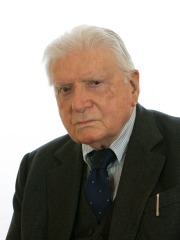
Sergio Zavoli, born on September 21, 1923, in Ravenna, Italy, and later a long-time resident of Rimini, was one of Italy’s most respected and influential journalists, writers, and broadcasters. His career, which spanned more than seven decades, was marked by a profound commitment to truth, social justice, and intellectual inquiry. Zavoli’s work as a journalist and television presenter made him a household name in Italy, and his contributions to Italian media and politics have left an enduring legacy.
Early Life and Path to Journalism
Sergio Zavoli was born in Ravenna but grew up in Rimini, a city that would later honor him as an honorary citizen. His early life was shaped by the political turbulence of the time, particularly the rise of fascism in Italy. Zavoli was known for his strong opposition to Benito Mussolini’s regime, a stance that would influence his later work as a journalist.
Zavoli’s career in journalism began in the post-World War II era, a time when Italy was rebuilding and redefining itself after the fall of fascism. He started as a radio journalist in 1947, working with RAI (Radiotelevisione Italiana), the national public broadcasting company of Italy. His early work in radio laid the foundation for his later success in television. From 1947 to 1962, Zavoli developed a reputation for his incisive and insightful reporting, covering a wide range of topics from politics to culture.
The Move to Television: A Career at RAI
In 1962, Zavoli transitioned from radio to television, a medium that was rapidly becoming the dominant form of communication and entertainment in Italy. At RAI, Zavoli quickly became one of the most prominent figures in Italian television. His work was characterized by a deep commitment to investigative journalism and a focus on in-depth, analytical reporting.
One of Zavoli’s most notable early works was the groundbreaking documentary series Nascita di una dittatura (“Birth of a Dictatorship”) in 1972, which examined the rise of fascism in Italy. The series was lauded for its rigorous historical analysis and its ability to engage the public in a critical reflection on the recent past. This series set the tone for Zavoli’s career as a journalist who was unafraid to tackle difficult and controversial subjects.
Throughout his career, Zavoli held various influential positions at RAI, including serving as co-director of the Telegiornale (RAI’s news program), director of the GR1 (RAI’s main radio news program), and eventually as the director of RAI itself from 1980 to 1986. His leadership at RAI was marked by efforts to maintain the integrity and independence of public broadcasting in Italy, despite the increasing pressures of political and commercial interests.
Political Involvement and Later Career
Zavoli’s career was not limited to journalism; he was also deeply involved in Italian politics. His political views, closely aligned with the Italian Socialist Party (PSI) and its leader Bettino Craxi, led him to engage more directly in the political arena. In 1994, Zavoli formally entered politics, joining the Democratici di Sinistra (Democrats of the Left), a center-left political party. He was elected to the Italian Senate in 2001 and re-elected in 2006, where he continued to advocate for media independence and social justice.
Despite his political involvement, Zavoli remained committed to journalism and continued to produce significant works for both television and print. His television programs from this period include Viaggio intorno all’uomo (1987), a deep dive into the human condition, and La notte della Repubblica (1989), a seminal series that examined the Years of Lead—a period of social and political turmoil in Italy marked by widespread terrorism and political violence.
La notte della Repubblica was particularly significant, as it provided a comprehensive and balanced view of a highly contentious period in Italian history. The series combined interviews, archival footage, and expert analysis to explore the causes and consequences of the political violence that gripped Italy during the 1970s and 1980s. It is still regarded as one of the most important documentaries in Italian television history.
In addition to his television work, Zavoli continued to write extensively. His books covered a wide range of topics, including politics, religion, and social issues. His first book, Socialista di Dio (1981), explored the intersection of faith and socialism and won the prestigious Premio Bancarella. Zavoli’s literary output was diverse, encompassing essays, poetry, and in-depth journalistic works that reflected his broad intellectual interests and his commitment to exploring the complexities of the human experience.
Notable Works and Contributions
Throughout his career, Sergio Zavoli was known for his meticulous approach to journalism, his ability to delve deeply into complex issues, and his dedication to public service. Some of his most notable works include:
-
Nascita di una dittatura (1972) – This documentary series about the rise of fascism in Italy is considered one of the finest examples of historical documentary filmmaking. It combined rigorous research with compelling storytelling to engage and educate the public about the dangers of totalitarianism.
-
La notte della Repubblica (1989) – A comprehensive examination of Italy’s Years of Lead, this series remains a benchmark for political journalism. Zavoli’s nuanced approach allowed for a deeper understanding of the social and political factors that contributed to the violence of the era.
-
Viaggio intorno all’uomo (1987) – A television series that explored the human condition through various lenses, including psychology, philosophy, and religion. This series exemplified Zavoli’s ability to connect with audiences on a deeply personal level, while also addressing universal themes.
-
Socialista di Dio (1981) – Zavoli’s exploration of the relationship between faith and socialism, which won the Premio Bancarella, demonstrated his ability to engage with complex ideological issues in a way that was accessible and thought-provoking.
-
Viaggio nel Sud (1992) – This documentary series focused on the social and economic conditions of Southern Italy, providing a detailed and empathetic portrait of a region often neglected by the national media. Zavoli’s work highlighted the disparities between the North and South of Italy, contributing to the national conversation about inequality and development.
-
Il dolore inutile (2005) – A book that dealt with the suffering of the sick, particularly the emotional and psychological pain that accompanies physical illness. Zavoli’s sensitivity to human suffering and his commitment to social justice were evident in this work, which called for greater compassion and understanding in the treatment of the ill.
Legacy and Recognition
Sergio Zavoli’s contributions to journalism, literature, and public life were widely recognized during his lifetime. He was the recipient of numerous awards, including the Prix Italia, which he won twice—a rare achievement that underscored his excellence in broadcasting. In 2007, the University of Rome Tor Vergata awarded him an honorary degree in Publishing, Multimedia Communication, and Journalism in recognition of his extraordinary contributions to Italian journalism.
Zavoli’s impact extended beyond his professional achievements. He was admired for his integrity, his commitment to the truth, and his ability to engage with audiences on issues that mattered deeply to society. His work set a high standard for Italian journalism, one that emphasized the importance of intellectual rigor, ethical responsibility, and a deep understanding of the human condition.
Even in his later years, Zavoli remained active in public life. In 2014, after the death of his first wife, Rosalba, Zavoli remarried at the age of 93 to Alessandra Chello, a journalist with Il Mattino. This personal chapter of his life was conducted with the same discretion and dignity that characterized his professional career.
Sergio Zavoli passed away on August 4, 2020, in Rome, at the age of 96. His death marked the end of an era in Italian journalism, but his legacy continues to influence journalists and public figures in Italy and beyond. Zavoli’s life and work serve as a testament to the power of journalism to inform, educate, and inspire.
Conclusion
Sergio Zavoli was more than just a journalist; he was a historian, a thinker, and a voice of reason in a world often marked by chaos and confusion. His work transcended the boundaries of traditional journalism, offering insights into the political, social, and spiritual dimensions of human life. Zavoli’s dedication to truth, his intellectual curiosity, and his compassionate approach to the subjects he covered made him one of the most respected figures in Italian media. His legacy is one of excellence, integrity, and a deep commitment to the ideals of journalism as a force for good in society.


