
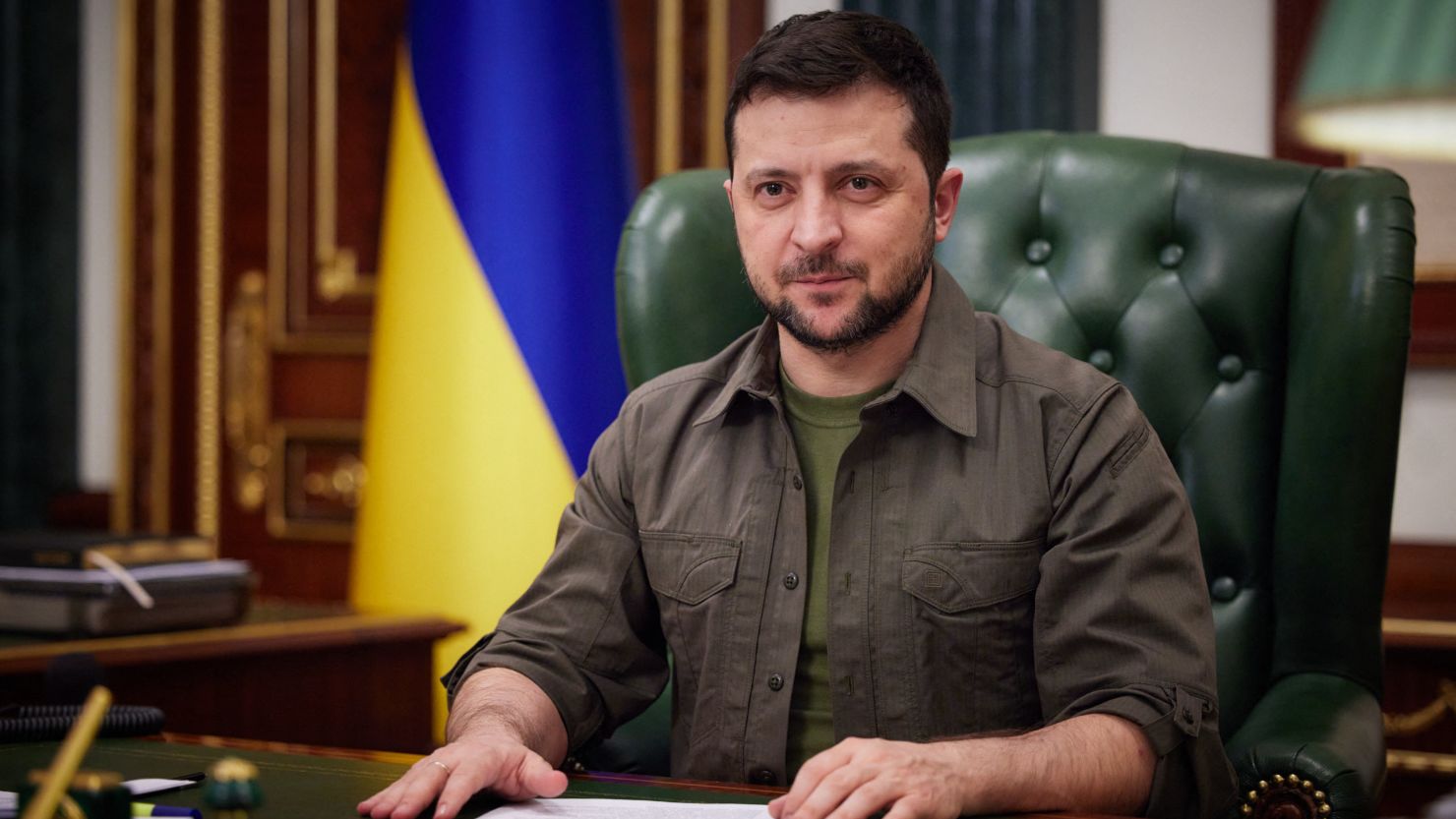
Volodymyr Zelensky, born on January 25, 1978, in Kryvyi Rih, Ukraine, has emerged as one of the most prominent political figures of the 21st century. His journey from comedian and actor to the presidency of Ukraine is a story of remarkable transformation and resilience. Zelensky’s rise to fame and his leadership during one of the most turbulent periods in Ukraine’s history have made him a symbol of resistance and determination on the global stage.
Early Life and Education
Volodymyr Zelensky was born into a Jewish family in the industrial city of Kryvyi Rih, located in central Ukraine. His upbringing was shaped by his parents’ influence; his father, Oleksandr Zelensky, is a professor and head of a department at the Kryvyi Rih State University of Economics and Technology, while his mother, Rimma Zelenska, worked as an engineer. Zelensky grew up speaking Russian, a common language in the region, and his family was part of the country’s Russian-speaking minority.
Zelensky pursued higher education in law, graduating from the Kyiv National Economic University. Despite earning a degree in law, Zelensky did not follow a legal career. Instead, he gravitated towards the entertainment industry, where his natural charisma and wit found a perfect outlet. His foray into entertainment marked the beginning of a journey that would eventually lead him to the highest office in Ukraine.
The Entertainment Career: From Comedy to Stardom
Zelensky’s entertainment career began in the late 1990s when he co-founded the production company Kvartal 95. The company quickly became one of the most successful in Ukraine, producing films, television series, and comedy shows. Zelensky’s sharp humor and relatable on-screen persona won him widespread popularity. However, it was his role in the television series Servant of the People that catapulted him to stardom.
In Servant of the People, Zelensky played the character of Vasyl Holoborodko, a high school teacher who unexpectedly becomes the president of Ukraine after a viral video of him ranting against government corruption goes viral. The show’s premise, where an ordinary man rises to power to fight against corruption and injustice, resonated deeply with the Ukrainian public, particularly in the post-2014 political climate, which was marked by widespread dissatisfaction with the ruling elites.
The success of the show was unprecedented, and Zelensky became a household name. The line between fiction and reality began to blur when, in 2018, Zelensky announced his candidacy for the Ukrainian presidency under the banner of a newly formed political party named after his TV show, Servant of the People. This move, seen by many as audacious, tapped into the public’s desire for a break from the traditional political establishment.
Presidential Campaign and Victory
Zelensky’s presidential campaign was unconventional, leveraging his celebrity status and social media presence to reach voters directly. He positioned himself as a political outsider, free from the corruption and cronyism that had plagued previous administrations. His campaign focused on anti-corruption, transparency, and reform, appealing to a population weary of political scandals and economic stagnation.
Despite having no prior political experience, Zelensky’s message resonated with millions of Ukrainians. He won the first round of the 2019 presidential election with a significant lead over incumbent President Petro Poroshenko. In the runoff on April 21, 2019, Zelensky secured a landslide victory, receiving over 73% of the vote, making him the sixth president of Ukraine since it gained independence in 1991.
Zelensky’s victory was seen as a clear rejection of the status quo and a mandate for change. His ascent to the presidency was not just a personal triumph but a reflection of a broader shift in Ukrainian society, where the public was eager for new leadership untainted by the legacy of the past.
Upon assuming office, Zelensky faced an array of daunting challenges. Ukraine was grappling with ongoing conflict in the eastern regions of Donetsk and Luhansk, where Russian-backed separatists had been fighting Ukrainian forces since 2014. Additionally, the annexation of Crimea by Russia in 2014 had left the country in a state of geopolitical tension, with relations between Ukraine and Russia at an all-time low.
Zelensky’s administration initially sought to ease tensions with Russia and end the conflict in the Donbas region. He advocated for a peaceful resolution through negotiations and engaged in direct talks with Russian President Vladimir Putin. However, these efforts were met with limited success, as the situation in the east remained volatile, and the broader relationship with Russia continued to deteriorate.
Domestically, Zelensky focused on implementing reforms aimed at curbing corruption, decentralizing power, and modernizing the Ukrainian economy. One of his key initiatives was the digitalization of government services, which aimed to reduce bureaucratic inefficiencies and increase transparency. Despite these efforts, Zelensky’s administration faced criticism from various quarters, including accusations of not doing enough to tackle corruption and concerns over his inexperience in handling complex political issues.
The Russian Invasion: A Defining Moment
The most significant and defining moment of Zelensky’s presidency came in February 2022, when Russia launched a full-scale invasion of Ukraine. The invasion, ordered by President Putin, was justified by the Kremlin as a “special military operation” aimed at “demilitarizing and denazifying” Ukraine, a narrative that was widely condemned as baseless by the international community.
In the face of this existential threat, Zelensky rose to the occasion, demonstrating extraordinary leadership and resilience. His decision to stay in Kyiv, despite the imminent danger, and his frequent public addresses rallied the Ukrainian people and garnered international support. Zelensky’s use of social media to communicate directly with citizens and global leaders was particularly effective, as he appealed for military and humanitarian assistance, while also exposing the brutality of the Russian assault.
Zelensky’s leadership during the invasion transformed him from a national leader into a global symbol of resistance against authoritarianism. His speeches to international bodies, including the United Nations and the United States Congress, were powerful, drawing parallels between Ukraine’s struggle and the broader fight for democracy and freedom worldwide.
The invasion has had devastating consequences for Ukraine, leading to massive displacement, widespread destruction, and a significant loss of life. However, Zelensky’s steadfast leadership has helped to unify the country and solidify its resolve to resist Russian aggression. His decision to apply for European Union membership shortly after the invasion was a bold move that underscored Ukraine’s desire to integrate more closely with the West, despite the ongoing conflict.
Personal Life and Public Image
Volodymyr Zelensky is married to Olena Kiyashko, whom he met during his school years. The couple married in 2003, and Olena, who is an architect and writer, has played a significant role in Zelensky’s public life, particularly during his presidency. She has been actively involved in social initiatives and is known for her efforts to improve children’s welfare and education in Ukraine.
The Zelenskys have two children, a daughter named Aleksandra, born in 2004, and a son named Kiril, born in 2013. Despite the pressures of political life, Zelensky has maintained a close relationship with his family, often emphasizing the importance of family values in his public statements.
Zelensky’s public image has evolved significantly over the years. Initially known as a comedian and entertainer, he has successfully redefined himself as a serious political leader and a wartime president. His ability to connect with people, both domestically and internationally, has been a key factor in his leadership style. Zelensky’s communication skills, honed during his years in entertainment, have proved invaluable in his political career, allowing him to effectively convey his message and rally support.
Legacy and Global Impact
Volodymyr Zelensky’s legacy is still being written, but his impact on Ukraine and the world is already profound. As a leader, he has faced unprecedented challenges, from navigating the complexities of Ukrainian domestic politics to leading his country through a devastating war. His ability to inspire and mobilize support, both within Ukraine and internationally, has been crucial in Ukraine’s ongoing struggle for sovereignty and independence.
Zelensky’s story is a testament to the power of resilience and the importance of leadership in times of crisis. He has shown that even in the face of overwhelming adversity, a leader with courage and determination can make a difference. Zelensky’s presidency has not only shaped the future of Ukraine but has also influenced the global discourse on democracy, sovereignty, and the fight against authoritarianism.
In conclusion, Volodymyr Zelensky is a leader whose journey from entertainer to president is a unique and remarkable narrative in modern history. His leadership during one of the most challenging periods in Ukraine’s history has earned him a place in the annals of global leadership. As Ukraine continues to fight for its future, Zelensky’s role as a symbol of resistance and hope will undoubtedly remain a key part of his legacy.


