
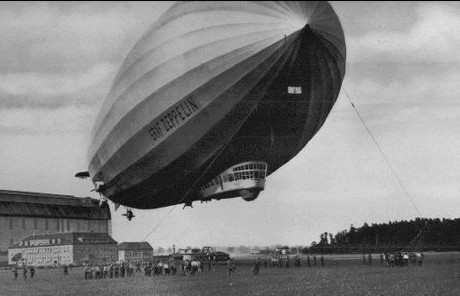
Lo Zeppelin, often simply referred to as the Zeppelin, is not just a type of rigid airship but also a symbol of innovation, ambition, and the adventurous spirit of the early 20th century. Named after its inventor, Count Ferdinand von Zeppelin, this remarkable airship revolutionized aerial travel and left a lasting impact on both military and civilian aviation. This article explores the age, fame, and life highlights of the Zeppelin, providing detailed insights into its historical significance, technological advancements, and the legacy it left behind.
The Birth of the Zeppelin
The concept of the Zeppelin emerged in a time when the world was eager to explore new frontiers of technology and transportation. On July 2, 1900, the first Zeppelin airship, designated LZ-1, took to the skies. This moment marked a significant milestone in the history of aviation, offering a new way to travel the world with relative safety and comfort.
Before the advent of the Zeppelin, aerial navigation was limited to hot air balloons, which, while ingenious, had significant drawbacks. These early balloons were difficult to control, had limited capacity, and exposed passengers to the elements. The Zeppelin changed all of this by introducing a rigid structure, powered propulsion, and enclosed cabins, allowing for longer flights, greater control, and more comfort.
Ferdinand von Zeppelin, a German count with a passion for aviation, was the visionary behind this innovation. Born in 1838 in Konstanz, Germany, Zeppelin was inspired by his experiences as a military observer during the American Civil War, where he witnessed the use of balloons for reconnaissance. He combined his military background with his love for science to create the airship that would bear his name.
Early Successes and Military Applications
The Zeppelin’s design was groundbreaking. The LZ-1 featured a rigid frame made of lightweight aluminum, with multiple gas cells filled with hydrogen to provide lift. Two 16-horsepower engines powered the airship, allowing it to reach speeds of up to 25 kilometers per hour. Though its first flight was not without challenges, it demonstrated the potential of this new technology.
Zeppelin’s early airships were primarily used for military purposes, particularly during World War I. The German military recognized the strategic value of these airships for reconnaissance, bombing raids, and transporting troops. The Zeppelin’s ability to fly long distances and carry heavy loads made it an ideal tool for warfare. By 1909, the Zeppelin had evolved significantly, with models like the LZ-6 and LZ-7 featuring improved engines, greater lift capacity, and enhanced maneuverability.
The most famous of these military airships was the LZ-38, which conducted the first aerial bombing raid on London in 1915. This marked the beginning of the Zeppelin’s role as a weapon of war, a role that would cement its place in history. The sight of these massive airships hovering over cities, dropping bombs from the sky, struck fear into the hearts of civilians and soldiers alike.
Despite their effectiveness in early warfare, Zeppelins had several vulnerabilities. Their reliance on hydrogen, a highly flammable gas, made them susceptible to catastrophic fires, especially when hit by enemy fire. As a result, the use of Zeppelins in military operations gradually declined as airplanes became more advanced and capable of achieving similar objectives with greater speed and precision.
Civilian Use and the Golden Age of Airships
After World War I, the Zeppelin shifted from a primarily military tool to a symbol of luxury and modernity in civilian aviation. The post-war period saw a surge in interest in using airships for passenger travel, and the Zeppelin company quickly adapted its designs to cater to this new market.
The Graf Zeppelin, launched in 1928, became the most famous of all Zeppelins. It was the first airship to circumnavigate the globe, completing the journey in 21 days. This achievement captivated the public’s imagination and solidified the Zeppelin’s status as a marvel of engineering. The Graf Zeppelin could carry dozens of passengers in relative luxury, with spacious cabins, dining rooms, and observation decks offering panoramic views of the landscape below.
During the late 1920s and early 1930s, the Zeppelin became synonymous with luxurious long-distance travel. The airship could cover vast distances, connecting continents with a level of comfort that airplanes of the time could not match. The Graf Zeppelin’s transatlantic flights between Germany and the United States were particularly popular, attracting wealthy passengers who were willing to pay a premium for the experience of crossing the ocean in style.
The Zeppelin’s popularity also extended to exploration. Airships were used for scientific missions, including expeditions to the Arctic and Antarctic. These missions demonstrated the versatility of the Zeppelin, showcasing its ability to operate in extreme environments and provide valuable data for researchers.
The Hindenburg Disaster and the Decline of the Zeppelin
Despite the success of the Graf Zeppelin and the growing popularity of airships for civilian travel, the Zeppelin’s dominance in the skies was short-lived. The end of the Zeppelin era is most closely associated with the tragic disaster of the Hindenburg.
The Hindenburg, launched in 1936, was the largest and most advanced Zeppelin ever built. It was a symbol of Nazi Germany’s technological prowess and was intended to be the pinnacle of airship design. However, on May 6, 1937, disaster struck as the Hindenburg caught fire while attempting to dock in Lakehurst, New Jersey. The fire, likely caused by a spark igniting the hydrogen gas used for lift, engulfed the airship in seconds, killing 36 people.
The Hindenburg disaster was a turning point in the history of aviation. The dramatic footage of the burning airship, broadcast around the world, shocked the public and shattered confidence in the safety of airships. This disaster, combined with the rapid advancements in airplane technology, led to the decline of the Zeppelin as a mode of transportation.
By the late 1930s, airplanes had surpassed airships in terms of speed, range, and safety. The era of the Zeppelin as a passenger vehicle was over, and the airships that had once symbolized the future of aviation were gradually retired from service.
Legacy and Modern Applications
Although the Zeppelin’s heyday ended with the Hindenburg disaster, its legacy endures. The Zeppelin remains a symbol of early aviation and an icon of a bygone era of exploration and luxury travel. The airship’s distinctive design and its role in both military and civilian aviation have left a lasting impact on the history of flight.
In the decades following the decline of the Zeppelin, airships continued to be used for specific applications, particularly in advertising, surveillance, and scientific research. Modern airships, often referred to as blimps, are typically non-rigid and filled with helium, a non-flammable gas, making them much safer than their predecessors.
One of the most notable modern uses of airships is in aerial advertising. Companies have recognized the visibility and novelty of airships as a means of promoting their brands, and blimps bearing corporate logos have become a common sight at major sporting events and festivals. These airships, though smaller and less grand than the original Zeppelins, continue to capture the public’s imagination.
In addition to advertising, airships have found new roles in surveillance and environmental monitoring. Their ability to hover in place for extended periods and operate at low altitudes makes them ideal for monitoring large areas, such as forests, coastlines, and urban environments. The U.S. military, for example, has used airships for radar surveillance and communication in conflict zones, taking advantage of their stability and long endurance.
There is also renewed interest in using airships for cargo transport, particularly in remote or difficult-to-access areas. Airships can carry heavy loads and require minimal infrastructure for takeoff and landing, making them well-suited for delivering goods to locations where traditional aircraft or ground transportation are impractical.
Historical Context and Influence
The Zeppelin’s development and rise to fame must be understood within the broader context of the early 20th century, a period of rapid technological advancement and geopolitical change. The Zeppelin emerged during a time when nations were exploring new forms of transportation and military technology, driven by both the ambitions of individual inventors and the strategic needs of their governments.
Ferdinand von Zeppelin’s work was part of a larger trend in which engineers and scientists sought to conquer the skies. The Zeppelin represented the culmination of centuries of experimentation with lighter-than-air flight, building on the work of pioneers like the Montgolfier brothers, who had developed the first hot air balloons in the 18th century.
The Zeppelin also played a role in shaping public perceptions of aviation. Its success in long-distance travel and exploration helped to establish the idea of air travel as a viable and desirable means of transportation. The Zeppelin’s impact on popular culture, from Jules Verne’s novels to the iconic imagery of airships in films, reflects its enduring place in the collective imagination.
Conclusion
The story of the Zeppelin is one of innovation, ambition, and the quest to push the boundaries of what was possible in the early days of aviation. From its origins as a military tool to its transformation into a symbol of luxury and modernity, the Zeppelin left an indelible mark on the history of flight.
Although the era of the Zeppelin as a dominant force in aviation was relatively brief, its legacy lives on in the continued use of airships for specialized applications and in the cultural memory of a time when the skies were filled with these majestic giants. The Zeppelin remains a testament to human ingenuity and the desire to explore new frontiers, reminding us of the enduring appeal of the skies and the endless possibilities they hold.


