
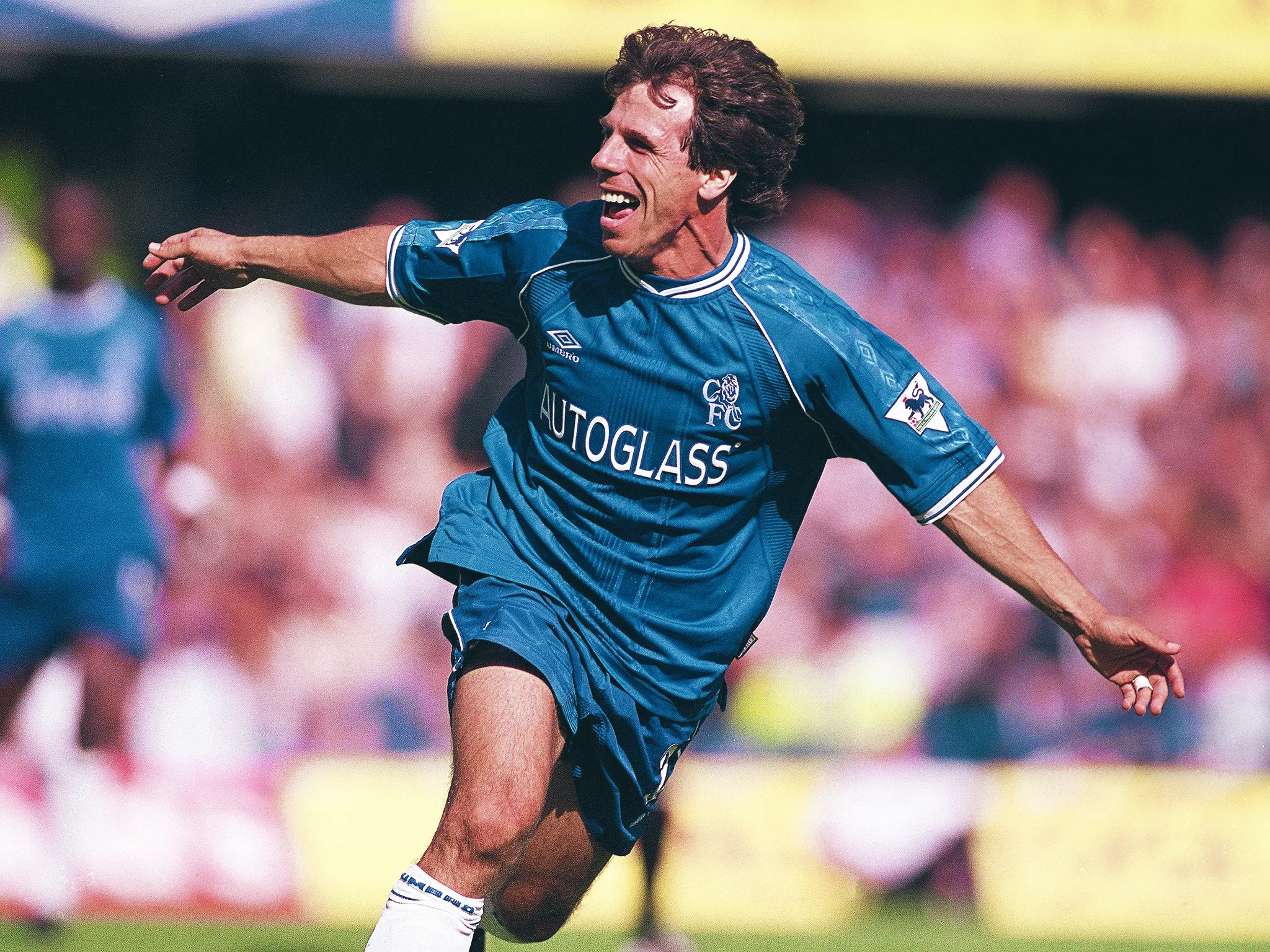
Gianfranco Zola, born on July 5, 1966, in Oliena, a small town in the province of Nuoro, Sardinia, is a name that resonates with football fans around the world. Known for his creativity, technical skill, and sportsmanship, Zola’s career spans decades, during which he became a beloved figure both in Italy and the United Kingdom. His journey from the dusty pitches of Sardinia to the grand stadiums of Europe is a testament to his talent, determination, and humility.
Early Life and Introduction to Football
Gianfranco Zola grew up in a football-loving family. His father, Ignazio, was deeply involved in the local football scene and even served as the president of the local team, Corrasi, where Zola began his football journey. Zola’s early years were marked by a passion for the game, and it quickly became evident that he possessed a natural talent that set him apart from his peers.
By 1984, Zola had made his move to the Nuorese, a club in the lower leagues of Italian football. His performances caught the attention of scouts, and in 1986, he was signed by Torres, a club based in Sassari, Sardinia. It was here that Zola’s potential began to shine through, as he played a pivotal role in helping Torres win the Serie C2 championship in 1987, scoring eight goals in 30 matches.
The Napoli Years: Learning from Maradona
Zola’s big break came in 1989 when he was signed by Napoli, a team that had just won the Serie A title and was home to the legendary Diego Maradona. Playing alongside Maradona was a dream come true for Zola, but it also came with immense pressure. Zola was often seen as the heir to Maradona, particularly in the role of playmaker, which Maradona had defined with his brilliance.
During his time at Napoli, Zola honed his skills under the tutelage of Maradona, absorbing every detail of the Argentine’s technique, especially his mastery of free kicks. Zola quickly became known for his quickness, vision, and technical ability, which allowed him to make a significant impact on the team. Despite often playing as a substitute, Zola managed to score two crucial goals in Napoli’s 1989-90 Serie A-winning campaign.
Zola’s development at Napoli was not just about learning from Maradona but also from other great players such as Careca and Ciro Ferrara. His time at the club helped him mature as a player, and by the time Maradona left Napoli, Zola was ready to step into the spotlight. Over four seasons, Zola scored 32 goals in 105 appearances, establishing himself as one of Italy’s most promising talents.
Success at Parma: Establishing Himself as a Star
In 1993, Zola transferred to Parma, where he would truly establish himself as a star in Italian football. Under the management of Nevio Scala, Parma was one of the rising teams in Serie A, and Zola’s arrival bolstered their attacking options. Playing alongside the likes of Faustino Asprilla, Zola flourished in a system that allowed him to express his creativity and technical prowess.
Zola’s impact at Parma was immediate. In his first season, he helped the team reach the final of the European Cup Winners’ Cup, although they lost to Arsenal. However, Parma bounced back the following year, winning the UEFA Cup by defeating Juventus in the final. Zola’s performances in these European competitions earned him widespread recognition, and he became known as one of the best second strikers in Europe.
Despite his success, Zola’s time at Parma was not without challenges. The arrival of Hristo Stoichkov, a Bulgarian superstar, created competition for attacking roles, and the team’s dynamics changed. Zola’s adaptability and professionalism were on full display as he continued to contribute to the team, even as his role evolved.
International Disappointments: The Italy Experience
Zola’s club success led to a call-up to the Italian national team, where he was expected to bring his club form to the international stage. Unfortunately, Zola’s international career was marked by a series of disappointments. His first major tournament was the 1994 World Cup in the United States, where Italy, under the guidance of Arrigo Sacchi, were among the favorites.
In a crucial match against Nigeria in the Round of 16, Zola was brought on as a substitute. However, his involvement in the game was short-lived as he was controversially sent off just 12 minutes after coming on. The decision was widely criticized, and Zola, known for his fair play, was devastated by the red card. Italy went on to win the match, but Zola’s World Cup dream was over.
Two years later, at the 1996 European Championship, Zola faced another setback. In a group stage match against Germany, Zola missed a crucial penalty, which ultimately contributed to Italy’s early exit from the tournament. These disappointments on the international stage were in stark contrast to his club success, and they remain one of the few blemishes on Zola’s illustrious career.
The Chelsea Chapter: A Legend in England
Frustrated by the challenges in Italy and eager for a new experience, Zola made a bold move in November 1996 by joining Chelsea, a club in the English Premier League. At the time, English football was undergoing a transformation, with an influx of foreign talent raising the level of competition. Zola’s arrival was part of this wave, and he quickly became a fan favorite.
Zola’s impact on Chelsea was immediate and profound. In his first season, he helped the club win the FA Cup, their first major trophy in over 25 years. His performances were so impressive that he was named the Football Writers’ Association Player of the Year in 1997, becoming the first Chelsea player to win the award.
Zola’s time at Chelsea was filled with memorable moments. He played a key role in the club’s successes in the late 1990s and early 2000s, including winning the League Cup, the UEFA Cup Winners’ Cup, and the UEFA Super Cup. Zola’s skill, vision, and sportsmanship endeared him to fans and players alike, earning him the nickname “Magic Box” for his ability to produce magical moments on the pitch.
Zola’s contributions to Chelsea were not limited to his on-field performances. He was also a mentor to younger players, setting an example with his professionalism and work ethic. His influence extended beyond the club, as he became a respected figure in English football. In recognition of his contributions, Zola was awarded an honorary Member of the Order of the British Empire (MBE) by Queen Elizabeth II in 2004.
Zola left Chelsea in 2003, but his legacy at the club endures. He was voted the greatest player in Chelsea’s history by the club’s fans, a testament to the lasting impact he had during his seven years at Stamford Bridge.
Return to Italy and Retirement
After his successful stint in England, Zola returned to Italy in 2003 to play for Cagliari, a club in his native Sardinia. Despite dropping down to Serie B, Zola’s love for the game and desire to give back to his roots motivated this decision. In his first season, Zola played a pivotal role in leading Cagliari back to Serie A, demonstrating that his skills and influence had not waned.
Zola played two more seasons with Cagliari, helping them secure their place in Serie A before retiring from professional football in 2005 at the age of 39. His final years on the pitch were marked by the same elegance, creativity, and sportsmanship that defined his entire career.
Post-Retirement: Coaching and Beyond
After hanging up his boots, Zola transitioned into coaching. In 2006, he became a technical consultant for the Italian Under-21 national team, working alongside his former Chelsea teammate Pierluigi Casiraghi. Zola’s coaching philosophy was deeply influenced by his playing career, emphasizing creativity, teamwork, and fair play.
In 2008, Zola took on his first managerial role with West Ham United in the English Premier League. Despite facing challenges, Zola’s tenure at West Ham was marked by his commitment to developing young talent and promoting an attacking style of play. After leaving West Ham in 2010, Zola continued his coaching career with various clubs, including Watford and Birmingham City, as well as a return to Cagliari.
Zola’s coaching career has had its ups and downs, but his contributions to football, both as a player and a coach, remain significant. His legacy as one of the game’s true gentlemen and a player who brought joy to fans wherever he went is secure.
Legacy and Impact
Gianfranco Zola’s impact on football is profound and enduring. As a player, he was a maestro on the pitch, capable of moments of brilliance that could change the course of a match. His ability to inspire those around him, both on and off the field, made him a beloved figure in the footballing world.
Zola’s legacy is not just about the trophies he won or the goals he scored; it is also about the way he played the game—with grace, humility, and a deep respect for the sport. His influence extends beyond the clubs he played for, as he set a standard for professionalism and sportsmanship that continues to inspire future generations of footballers.
In conclusion, Gianfranco Zola is a true legend of the game, whose contributions to football will be remembered for years to come. From his early days in Sardinia to his iconic status at Chelsea and beyond, Zola’s journey is a story of talent, perseverance, and the joy of playing football.


