
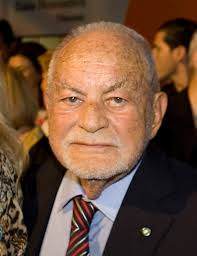
Dino De Laurentiis, often hailed as the “Italian Cecil B. DeMille,” was one of the most influential film producers of the 20th century. His name is synonymous with some of the most iconic films in both Italian and American cinema, a testament to his exceptional talent, vision, and relentless pursuit of excellence in filmmaking. This article delves into the life, career, and legacy of Dino De Laurentiis, exploring his age, rise to fame, and the highlights of his remarkable journey.
Early Life and Beginnings
Dino De Laurentiis was born on August 8, 1919, in Torre Annunziata, a small town in the province of Naples, Italy. His birth name was Agostino De Laurentiis, and he was the son of a pasta merchant. Growing up in a modest family, De Laurentiis was introduced to the value of hard work and perseverance from an early age. However, his ambitions extended beyond the family business.
In the late 1930s, as a young man, De Laurentiis moved to Rome, the burgeoning center of Italian cinema. He enrolled at the Centro Sperimentale di Cinematografia, Italy’s premier film school, with aspirations of becoming an actor. However, he soon realized that his true passion lay behind the camera, in the intricate and demanding world of film production.
The Dawn of a Legendary Career
De Laurentiis’s first foray into film production came in 1940 with the movie L’ultimo combattimento directed by Pietro Ballerini. Although this early work did not gain much recognition, it was a stepping stone that marked the beginning of a prolific career. His first significant success came the following year with L’amore canta, directed by Fernando Maria Poggioli. This success was the catalyst that propelled De Laurentiis into the spotlight as a rising star in the world of Italian cinema.
In the post-war years, De Laurentiis became a key figure in the Italian film industry. He joined Lux Film as an executive producer, where his knack for selecting compelling scripts quickly set him apart. His work during this period includes notable films such as Napoli Milionaria (1950), directed by Eduardo De Filippo, Dov’è la libertà…? (1952), directed by Roberto Rossellini, and Miseria e nobiltà (1954), directed by Mario Mattoli. These films not only cemented his reputation as a top-tier producer but also contributed significantly to the golden age of Italian cinema.
Collaboration with Carlo Ponti and International Success
In 1948, De Laurentiis teamed up with fellow producer Carlo Ponti to form the production company Ponti-De Laurentiis. This partnership marked a pivotal moment in both their careers. Together, they produced Totò a colori (1952), Italy’s first color film, which became a massive hit and demonstrated their pioneering spirit in embracing new technologies.
The 1950s and 1960s were perhaps the most illustrious period of De Laurentiis’s career. He collaborated with some of the greatest directors of the time, including Federico Fellini. Their partnership yielded masterpieces such as La Strada (1954) and Le notti di Cabiria (1957), both of which won the Academy Award for Best Foreign Language Film. These films were not just critical successes but also showcased De Laurentiis’s ability to blend artistic integrity with commercial viability.
During this time, De Laurentiis married actress Silvana Mangano in 1957, a union that produced a daughter, Raffaella, who would later follow in her father’s footsteps and become a producer herself. Mangano, who passed away in 1989, was a prominent figure in Italian cinema and starred in several of the films produced by De Laurentiis.
The Move to Hollywood and Continued Success
By the late 1960s, De Laurentiis recognized the shifting dynamics of the global film industry. The rise of Hollywood as the epicenter of cinema, coupled with restrictive Italian film production laws, prompted him to move to the United States in the early 1970s. This decision marked the beginning of the second act of his career, where he would leave an indelible mark on Hollywood.
In America, De Laurentiis continued to produce films that resonated with audiences worldwide. His notable works during this period include Serpico (1973), directed by Sidney Lumet and starring Al Pacino, Death Wish (1974), directed by Michael Winner and starring Charles Bronson, and Three Days of the Condor (1975), directed by Sydney Pollack and starring Robert Redford. These films were commercial successes and solidified De Laurentiis’s reputation as a master of his craft in Hollywood.
In 1976, De Laurentiis produced a remake of King Kong, directed by John Guillermin. The film was a major success and showcased his ability to blend spectacle with storytelling. This era of his career also saw the production of The Bounty (1984), starring Mel Gibson, and Dune (1984), an ambitious adaptation of Frank Herbert’s science fiction epic. Though Dune received mixed reviews at the time, it has since gained a cult following and is regarded as a visionary piece of cinema.
Later Years and Legacy
In the 1990s, De Laurentiis continued to produce films that spanned various genres, including thrillers, dramas, and action movies. Notable among these are Hannibal (2001), directed by Ridley Scott, which was a sequel to the acclaimed The Silence of the Lambs (1991), and U-571 (2000), directed by Jonathan Mostow. These films were not only commercial hits but also demonstrated De Laurentiis’s ability to adapt to changing cinematic tastes and trends.
In 1990, De Laurentiis married Martha Schumacher, with whom he produced several films, including Cat’s Eye (1985), Maximum Overdrive (1986), and Blue Velvet (1986). His collaboration with David Lynch on Blue Velvet was particularly notable, as it represented a daring exploration of the dark underbelly of American suburbia and remains one of the most influential films of the 1980s.
Throughout his 60-year career, Dino De Laurentiis produced over 600 films, earning 33 Academy Award nominations and winning numerous international awards. His contribution to cinema was recognized with an Honorary Academy Award in 2001, a fitting tribute to a man whose work transcended borders and languages.
Historical Context and Influence on Cinema
Dino De Laurentiis’s career was deeply intertwined with the evolution of cinema in the 20th century. His work in post-war Italy contributed significantly to the Italian neorealism movement, which sought to depict the harsh realities of life in a country ravaged by war. Although De Laurentiis himself later distanced his work from the neorealism label, his early films were undoubtedly influenced by this movement’s emphasis on realism and social commentary.
The 1950s and 1960s, often regarded as the golden age of Italian cinema, were also shaped by De Laurentiis’s collaborations with visionary directors like Federico Fellini. These collaborations produced films that not only achieved critical acclaim but also resonated with international audiences, helping to establish Italian cinema as a major force on the global stage.
De Laurentiis’s move to Hollywood in the 1970s coincided with a period of significant change in the American film industry. The end of the studio system and the rise of independent filmmakers created an environment ripe for innovation, and De Laurentiis was quick to seize the opportunity. His ability to produce films that combined artistic merit with commercial success was a hallmark of his work during this period.
The De Laurentiis Legacy
Dino De Laurentiis passed away on November 10, 2010, in Los Angeles at the age of 91. His legacy, however, continues to endure. He is remembered as a pioneering figure in the world of cinema, a producer who was never afraid to take risks and push the boundaries of what was possible in filmmaking.
De Laurentiis’s influence can be seen in the work of countless filmmakers who followed in his footsteps. His dedication to the craft of filmmaking, his willingness to embrace new technologies, and his ability to produce films that appealed to both critics and audiences have left an indelible mark on the industry.
In addition to his professional achievements, De Laurentiis’s personal life was marked by his enduring relationships with some of the most important figures in cinema, from directors and actors to screenwriters and composers. His marriage to Silvana Mangano and later to Martha Schumacher, along with his close collaborations with artists like Federico Fellini and David Lynch, reflect a life lived at the intersection of art and business.
Dino De Laurentiis’s story is not just that of a successful film producer; it is the story of a man who shaped the course of cinematic history. His films continue to be watched, studied, and celebrated, a testament to the enduring power of his vision and his contribution to the world of cinema.


