
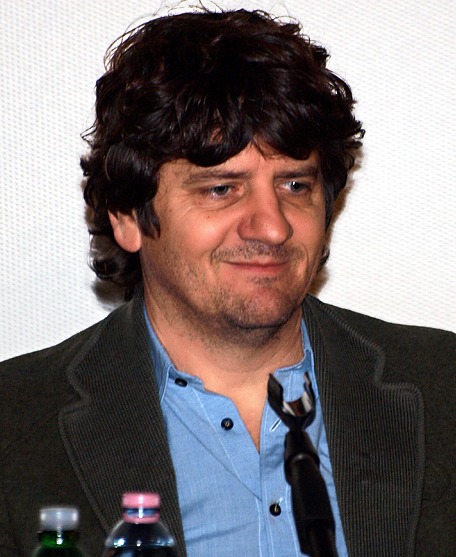
Fabio De Luigi, born on October 11, 1967, in Santarcangelo di Romagna, Italy, is a renowned Italian actor, comedian, and director. Over the past three decades, De Luigi has become one of Italy’s most beloved entertainment figures, known for his unique comedic style, versatility, and ability to connect with audiences across various mediums. This article explores the life, career, and significant milestones of Fabio De Luigi, offering insights into his journey to fame and his impact on Italian entertainment.
Early Life and Education
Fabio De Luigi grew up in the picturesque town of Santarcangelo di Romagna, located in the Emilia-Romagna region of Italy. From an early age, De Luigi displayed a keen interest in the arts, particularly in painting and drawing. After completing his secondary education at a local art high school, De Luigi pursued further studies in the arts by enrolling at the Accademia di Belle Arti di Bologna. His time at the academy was brief, but it helped lay the foundation for his creative pursuits.
In addition to his artistic interests, De Luigi had a strong inclination towards comedy. This passion led him to participate in various amateur performances and stand-up comedy shows, where he began to hone his skills as a performer. In 1990, De Luigi took part in “La Zanzara d’Oro,” a prestigious comedy competition that offered young comedians the chance to perform on the “Maurizio Costanzo Show,” one of Italy’s most popular television programs at the time. Although he finished fourth and did not win the opportunity to appear on the show, the experience motivated him to pursue a career in entertainment more seriously.
Early Career and Breakthrough
Fabio De Luigi’s early career was marked by perseverance and a steady climb through the ranks of the Italian entertainment industry. In 1991, he made his debut at the legendary Zelig comedy club in Milan, where he performed his one-man show titled “Il fosforo fa bene alla memoria” (Phosphorus Is Good for Memory). The performance helped him gain initial recognition and opened doors to further opportunities in television and theater.
De Luigi continued to develop his comedic talents while pursuing his studies. He eventually graduated with a degree in painting, submitting a thesis on “Comicità nella critica d’arte contemporanea” (Comedy in Contemporary Art Criticism), which reflected his deep understanding of the intersection between visual arts and humor.
His first notable television appearance came in the early 1990s on the show “Acqua Calda,” which aired on Rai Due, one of Italy’s national television channels. The program, hosted by Nino Frassica and Giorgio Faletti, provided De Luigi with a platform to showcase his comedic talents to a wider audience. This exposure led to more television opportunities, and De Luigi quickly became a familiar face on Italian TV.
Cinema Debut and Rise to Fame
Fabio De Luigi made his film debut in 1996 with a role in Marco Ferreri’s film Nitrato d’argento (Silver Nitrate), marking the beginning of his career in cinema. While his early roles were relatively minor, they helped him gain valuable experience and build connections within the industry.
His breakthrough in cinema came a few years later when he was cast in Cristina Comencini’s film Matrimoni (Weddings) in 1998. Around the same time, De Luigi joined the cast of the popular television program “Mai dire Gol” (Never Say Goal), a comedy show produced by the Gialappa’s Band, which featured sketches and parodies of popular sports and cultural events. His work on “Mai dire Gol” catapulted him to fame and established him as one of Italy’s leading comedians. De Luigi’s characters, often absurd and exaggerated, resonated with viewers and showcased his versatility as a performer.
In 1999, De Luigi starred alongside Claudio Bisio and Ivano Marescotti in the comedy Asini (Donkeys), directed by Antonello Grimaldi. The film was well-received, and De Luigi’s performance further solidified his reputation as a talented comedic actor. That same year, he appeared in the ensemble comedy Tutti gli uomini del deficiente (All the Idiots’ Men), a film by the Gialappa’s Band, which featured an array of Italy’s top comedic talent.
The 2000s: Establishing a Career in Comedy
The 2000s were a pivotal decade for Fabio De Luigi as he continued to build on his success and expand his career in both television and film. His collaborations with the Gialappa’s Band continued with shows like “Mai dire Maik,” “Mai dire Domenica,” and “Mai dire Grande Fratello,” where he created some of his most memorable characters. Among these were the eccentric Ingegner Cane (Engineer Dog), a satirical character responsible for the construction of the controversial bridge over the Strait of Messina, and Patrick, a parody of a contestant on the Italian version of “Big Brother.”
In cinema, De Luigi continued to land roles in various comedies. He appeared in Guido Chiesa’s Il Partigiano Johnny (The Partisan Johnny), based on the novel by Beppe Fenoglio, and in Giulio Manfredonia’s Se fossi in te (If I Were You). His performances in these films showcased his ability to balance humor with more dramatic undertones.
One of De Luigi’s most notable roles during this period was in the Italian adaptation of the British sitcom “Love Bugs,” where he starred alongside Michelle Hunziker in 2004. The show was a massive success and ran for multiple seasons, with De Luigi’s character becoming a household name. The chemistry between De Luigi and Hunziker was praised, and the series solidified his status as one of Italy’s top comedic actors.
In 2006, De Luigi entered the world of “cinepanettone,” a genre of Italian holiday comedies that are typically released around Christmas. He starred in Neri Parenti’s Natale a New York (Christmas in New York), marking his first appearance in a film of this genre. His performance was well-received, leading to further roles in subsequent cinepanettone films, including Natale in crociera (Christmas on a Cruise) and Natale a Rio (Christmas in Rio). Despite the formulaic nature of these films, De Luigi’s comedic timing and charm made him a standout performer.
Transition to More Diverse Roles and Directorial Debut
As Fabio De Luigi’s career progressed, he began to take on more diverse roles, exploring different genres and expanding his repertoire beyond comedy. In 2008, he appeared in Gabriele Salvatores’ film Come Dio comanda (As God Commands), based on the novel by Niccolò Ammaniti. The film was a departure from the lighthearted comedies that had defined much of De Luigi’s career, allowing him to showcase his dramatic acting skills.
De Luigi continued to work with acclaimed directors, including Pupi Avati, in Gli amici del bar Margherita (The Friends of the Margherita Café) in 2009, where he starred alongside Diego Abatantuono. The film, set in 1950s Bologna, was a nostalgic look at the lives of a group of friends who frequented a local café, and De Luigi’s performance was praised for its depth and nuance.
In the 2010s, De Luigi starred in a string of successful comedies, including Fausto Brizzi’s Maschi contro femmine (Men Against Women) and Femmine contro maschi (Women Against Men). These films were well-received by audiences and critics alike, further cementing De Luigi’s status as a leading figure in Italian cinema. He also collaborated with Alessandro Genovesi on La peggior settimana della mia vita (The Worst Week of My Life) and its sequel, Il peggior Natale della mia vita (The Worst Christmas of My Life), both of which were box office hits.
In 2015, De Luigi made his directorial debut with the film Tiramisù, a comedy in which he also starred. The film was a significant step in his career, showcasing his talents not only as an actor but also as a filmmaker. Tiramisù received mixed reviews, but it marked De Luigi’s transition from in front of the camera to behind it, demonstrating his versatility and ambition within the industry.
Recent Work and Continuing Influence
Fabio De Luigi has continued to remain active in the entertainment industry, taking on a variety of roles that showcase his range as an actor. In 2016, he starred in Giovanni Veronesi’s Una donna per amica (A Woman as a Friend) alongside Laetitia Casta, further diversifying his filmography with a romantic comedy. He also returned to television with roles in various Italian series and continued to participate in film projects that allowed him to explore different facets of his acting abilities.
Despite his success, De Luigi remains grounded and committed to his craft. He is known for his dedication to his work and his ability to bring authenticity and humor to every role he undertakes. His ability to connect with audiences, whether through comedy or drama, has made him one of Italy’s most beloved actors.
Personal Life and Legacy
Fabio De Luigi is known for keeping his personal life relatively private, focusing the public’s attention on his professional achievements rather than his personal affairs. He is married to Jelena Ilic, with whom he has two children. Despite his fame, De Luigi has maintained a low-profile lifestyle, allowing his work to speak for itself.
De Luigi’s legacy in Italian entertainment is defined by his versatility, his commitment to his craft, and his ability to adapt to various roles and genres. From his early days as a stand-up comedian to his rise as a leading actor and director, De Luigi has consistently demonstrated a deep understanding of comedy and storytelling. His influence extends beyond his performances, as he has also inspired a new generation of comedians and actors in Italy.
Conclusion
Fabio De Luigi’s journey from a small town in Emilia-Romagna to the heights of Italian cinema is a testament to his talent, perseverance, and passion for the arts. Throughout his career, De Luigi has entertained millions with his unique brand of comedy, while also proving his abilities as a dramatic actor and filmmaker. As he continues to take on new challenges and roles, there is no doubt that Fabio De Luigi will remain a central figure in Italian entertainment for years to come.
His ability to balance humor with sincerity, coupled with his dedication to his craft, ensures that Fabio De Luigi’s work will continue to resonate with audiences, both in Italy and around the world. As an actor, comedian, and director, De Luigi has left an indelible mark on the industry, making him a true icon of Italian cinema.


