
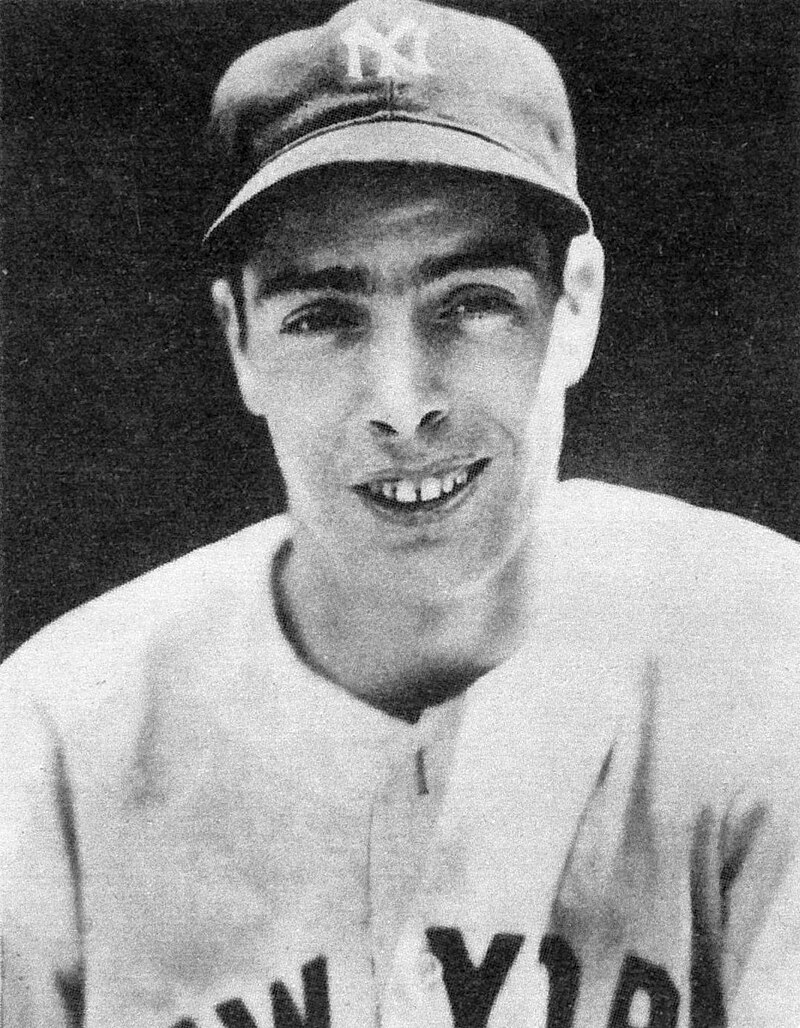
Joe DiMaggio, born Joseph Paul DiMaggio on November 25, 1914, in Martinez, California, is a name that resonates far beyond the world of baseball. Known for his exceptional career with the New York Yankees, his iconic 56-game hitting streak, and his high-profile marriage to Marilyn Monroe, DiMaggio’s life was marked by extraordinary achievements and intense public scrutiny. This article delves into the life of Joe DiMaggio, exploring his rise to fame, personal struggles, and the enduring legacy he left behind.
Early Life and Background
Joseph Paul DiMaggio, known to the world as Joe DiMaggio, was born to Italian immigrant parents from Isola delle Femmine, near Palermo, Sicily. He was the eighth of nine children in a large, working-class family. His father, Giuseppe DiMaggio, was a fisherman, and like many immigrant families of the time, the DiMaggios faced significant economic challenges. The family lived in a modest four-room house in Martinez, California, where Joe shared space with his four brothers and four sisters.
From a young age, Joe was expected to help with the family fishing business, but he had little interest in the trade. The smell of fish and the hard, grueling work on the docks did not appeal to him. Instead, Joe found his passion in baseball, a sport that would soon take him far beyond the small fishing village where he was raised.
Joe’s older brother, Vince DiMaggio, was already a professional baseball player, and it was Vince who first recognized Joe’s talent. He recommended Joe to the manager of the San Francisco Seals, a minor league team, and at the age of 17, Joe began his professional baseball career with a modest salary of $250 per month. For Joe, the opportunity to play baseball professionally was more than just a job; it was a chance to escape the hardships of his upbringing and pursue a dream that was rapidly becoming his life’s passion.
The Road to the Majors
DiMaggio’s early years in professional baseball were not without challenges. In 1934, he suffered a severe knee injury while stepping off a bus to visit his sister. The injury threatened to end his career before it had truly begun, as torn knee ligaments were a serious issue in an era with limited medical treatment options. However, despite the severity of the injury, DiMaggio’s talent and determination caught the eye of a New York Yankees scout, who believed that Joe had the potential to recover and become a star.
In 1936, after passing a rigorous test of his knee’s stability, DiMaggio signed a contract with the Yankees for $25,000—a significant sum at the time. His debut with the Yankees was nothing short of spectacular, and he quickly became a fan favorite. When DiMaggio first stepped onto the field at Yankee Stadium, he was greeted by 25,000 fans waving Italian flags, a testament to his popularity among the Italian-American community.
The Rise to Stardom
Joe DiMaggio’s impact on Major League Baseball was immediate and profound. He earned the nickname “Joltin’ Joe” for his powerful hitting, and “The Yankee Clipper” for his graceful and efficient playing style, reminiscent of the sleek Pan American Airways aircraft of the time. These monikers, coined by sports commentator Arch McDonald, highlighted both DiMaggio’s prowess on the field and his cultural significance during an era when baseball was America’s pastime.
Over the course of his 13-year career with the New York Yankees, DiMaggio led the team to nine World Series titles, cementing his legacy as one of the greatest players in baseball history. His 56-game hitting streak in 1941 remains one of the most unbreakable records in sports, a feat that continues to awe baseball enthusiasts to this day.
DiMaggio was known not just for his offensive capabilities, but also for his defensive skills. His ability to cover vast distances in center field, combined with his powerful throwing arm, made him a complete player. He was a three-time American League MVP and a 13-time All-Star, achievements that reflect his dominance in the sport. His influence extended beyond the diamond, as he became a national icon, embodying the spirit of excellence and resilience during a time when America was navigating the challenges of the Great Depression and World War II.
Personal Life and Public Attention
Joe DiMaggio’s life off the field was as eventful as his career on it. In January 1937, DiMaggio met Dorothy Arnold, an actress, on the set of the film “Manhattan Merry-Go-Round,” in which DiMaggio had a small part. The two married in 1939 and had a son, Joseph Paul DiMaggio III. However, the demands of DiMaggio’s baseball career, combined with the pressures of fame, took a toll on their marriage, and the couple divorced in 1944.
DiMaggio’s private life became a subject of intense public interest, especially after he began dating Marilyn Monroe, one of the most famous women in the world. The couple married in January 1954, and their union quickly became one of the most talked-about relationships in Hollywood. However, the marriage was tumultuous. DiMaggio’s traditional values clashed with Monroe’s career and lifestyle, leading to frequent arguments and, ultimately, their divorce just nine months later.
Despite their short-lived marriage, DiMaggio and Monroe maintained a deep connection. After Monroe’s marriage to playwright Arthur Miller ended, DiMaggio re-entered her life, offering support during some of her darkest moments. In 1961, when Monroe was admitted to a psychiatric clinic, it was DiMaggio who ensured her release and took her to Florida to recover. Rumors of a rekindled romance swirled, though the two never remarried.
Monroe’s tragic death in 1962 deeply affected DiMaggio. It was DiMaggio who organized her funeral, famously sending a dozen roses to her grave three times a week for the next 20 years. His enduring love for Monroe, despite their differences, became one of the most poignant aspects of his life story, adding to the mythos surrounding both figures.
Legacy and Influence
Joe DiMaggio’s legacy in baseball is unparalleled. In 1969, he was voted the “Greatest Living Player” in a poll conducted by Major League Baseball to celebrate the centennial of professional baseball. This accolade was a testament to the respect and admiration he commanded from both fans and peers alike. DiMaggio’s career statistics are remarkable: 2,214 hits, 361 home runs, and a .325 batting average. His consistency and excellence on the field made him a role model for generations of athletes.
Beyond his athletic achievements, DiMaggio’s cultural impact was significant. He became a symbol of American strength and perseverance during a time of great uncertainty. His clean-cut image, work ethic, and dedication to his craft resonated with the American public, who saw in DiMaggio the embodiment of the American Dream. His name became synonymous with excellence, and he was often referenced in literature, music, and film.
One of the most notable tributes to DiMaggio came in the form of a song. In 1968, Simon & Garfunkel released “Mrs. Robinson,” which famously includes the line, “Where have you gone, Joe DiMaggio? A nation turns its lonely eyes to you.” The song, written during a time of social and political upheaval, reflects a longing for the values that DiMaggio represented—integrity, grace, and a quiet confidence that seemed increasingly rare in a changing world.
Later Years and Passing
After retiring from baseball in 1951, DiMaggio remained connected to the sport, serving as a coach for the Oakland Athletics and working as a spokesman for various companies, most notably Mr. Coffee. However, he largely avoided the spotlight, preferring a private life away from the public eye.
In his later years, DiMaggio battled health issues, including lung cancer, likely the result of his long-time smoking habit. Despite his declining health, DiMaggio’s legacy continued to grow, with numerous accolades and honors reflecting his impact on the sport and American culture.
Joe DiMaggio passed away on March 8, 1999, at the age of 84. His death was widely mourned, and he was remembered not just as a baseball legend, but as a cultural icon whose influence extended far beyond the baseball field. His funeral was attended by many prominent figures, and he was laid to rest at Holy Cross Cemetery in Colma, California.
The Enduring Legacy of Joe DiMaggio
Joe DiMaggio’s life was one of extraordinary achievement and personal complexity. He remains one of the most celebrated figures in baseball history, with his records and contributions to the game standing the test of time. But beyond his statistics and accolades, DiMaggio’s legacy is also defined by the values he represented—dignity, perseverance, and a commitment to excellence.
His relationship with Marilyn Monroe, his enduring love for her despite their challenges, and his quiet philanthropy and support for various causes, including children’s charities and veterans’ organizations, further solidified his place as an American hero.
Today, Joe DiMaggio is remembered as much for his grace and humility off the field as for his prowess on it. His story continues to inspire, serving as a reminder of the power of dedication and the impact that one individual can have on a nation’s consciousness. As long as baseball is played, and as long as American culture values excellence, the legend of Joe DiMaggio will endure.


