
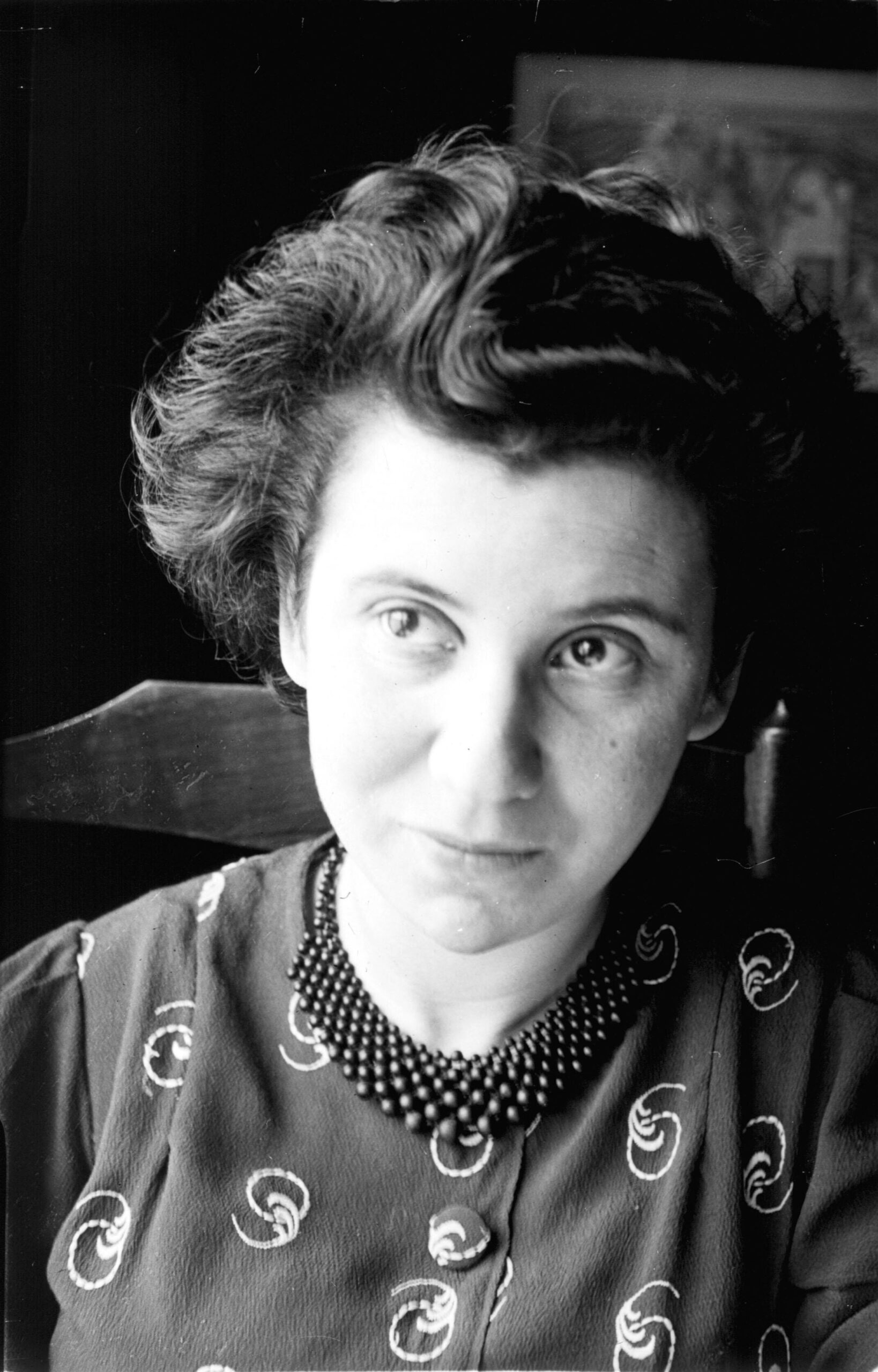
Etty Hillesum, born Esther Hillesum on January 15, 1914, in Middleburg, Netherlands, remains a figure of profound historical significance. Her life, tragically cut short by the horrors of the Holocaust, has been preserved through her introspective writings, offering the world a glimpse into the resilience of the human spirit amidst unimaginable suffering. Hillesum’s journey from a young, intellectual woman in Amsterdam to a martyr of Auschwitz is not just a story of victimhood but also one of spiritual awakening, resistance, and an enduring legacy of love and faith.
Early Life and Education
Esther Hillesum, affectionately known as Etty, was the firstborn of three children in a Jewish family. Her father, Levie (known as Louis) Hillesum, was a distinguished professor of classical languages, and her mother, Rebecca (Riva) Bernstein, had fled Russia in 1907 to escape anti-Semitic pogroms. The Hillesum family settled in the Netherlands, where Etty and her siblings—Jacob (Jaap) and Michaël (Mischa)—were raised in an intellectually stimulating environment.
Etty’s early education took place at the classical high school in Deventer, where she was enrolled in 1926. Demonstrating a passion for learning, she later moved to Amsterdam in 1932 to pursue a degree in law. It was in this vibrant city, known for its cultural and intellectual dynamism, that Etty’s spiritual and intellectual life began to flourish.
Life in Amsterdam and Personal Transformation
In 1937, Etty moved into the household of Hendrik Wegerif, an elderly Christian widower, where she managed the household in exchange for a modest wage. Wegerif, known as Han, became more than just her employer; the two developed a close relationship despite the 21-year age difference. This period marked the beginning of Etty’s intense spiritual and intellectual exploration.
By 1939, Etty had completed her law degree but chose to further her education by studying Slavic languages. She also began teaching Russian, showcasing her linguistic talents. However, the outbreak of World War II and the subsequent invasion of the Netherlands by Nazi Germany in May 1940 marked a turning point in her life.
The Influence of Julius Spier and the Start of Her Diary
The most significant event in Etty Hillesum’s life occurred on February 3, 1941, when she met Julius Spier, a psychoanalyst and disciple of Carl Gustav Jung. Spier, a Jewish refugee from Berlin, introduced Etty to psychochirology, a branch of psychology that analyzes an individual’s character and potential based on the study of their hands. This encounter ignited a profound transformation in Etty. She began attending Spier’s evening classes and soon started a therapeutic relationship with him, which quickly evolved into a deep emotional and spiritual bond.
Under Spier’s guidance, Etty began writing a diary on March 8, 1941. This diary, which she maintained until her deportation, chronicled her spiritual journey, her struggle with the external horrors of the Nazi occupation, and her internal battles with love, fear, and faith. Etty’s diary entries reveal a woman who, despite the escalating violence around her, sought to cultivate inner peace and a deep connection with the divine.
The War Years and Work at Westerbork
As the Nazi occupation intensified, the persecution of Jews in the Netherlands escalated. The implementation of the Nuremberg Laws in 1942 further restricted Jewish life. Jews were barred from using public transport, making phone calls, and marrying non-Jews. Amidst this backdrop of increasing oppression, Etty found solace in her spiritual practices and her work.
In July 1942, Etty was employed as a typist at the Jewish Council in Amsterdam, a position she reluctantly accepted. The Jewish Councils, set up by the Nazis, were intermediaries between the Jewish community and the German authorities, often enforcing the Nazis’ draconian policies. Etty, however, was not content with merely fulfilling her clerical duties. She sought a more active role in alleviating the suffering of her people.
Her request to be transferred to Westerbork, a transit camp in the northeastern Netherlands, was granted. Westerbork served as a holding camp for Jews before they were deported to extermination camps in Eastern Europe. Here, Etty worked in the department of social welfare, assisting fellow Jews who were facing deportation. Despite the bleak conditions, Etty maintained a remarkable degree of inner freedom, which she attributed to her spiritual discipline and unwavering faith.
The Final Months and Legacy
Etty’s final months were marked by increasing hardship. In June 1943, her parents and brother Mischa were also interned at Westerbork. The weekly transports to Auschwitz became more frequent, and the reality of the Holocaust loomed ever larger. Despite offers from friends to help her escape, Etty chose to stay with her family and share the fate of her people.
In July 1943, the German authorities revoked the special status of Jewish Council members at Westerbork, stripping them of their privileges. Etty refused to abandon her post, continuing her work and her writing. Two of her letters from Westerbork were clandestinely published in Amsterdam in late 1943, offering a rare and poignant glimpse into life at the camp.
On September 7, 1943, Etty, along with her family, was deported to Auschwitz. During the journey, she managed to throw a postcard from the train, which was later found and mailed. This postcard, addressed to a friend, was her final written communication. Etty Hillesum perished at Auschwitz on November 30, 1943, at the age of 29. Her parents had died just days after their arrival at the camp, and her brother Mischa died there in March 1944. Her brother Jaap, who had been deported to Bergen-Belsen, died in January 1945.
The Posthumous Fame of Etty Hillesum
Etty Hillesum’s diary and letters survived the war, thanks to her friend Maria Tuinzing, who had safeguarded them during the Nazi occupation. After the war, Klaas Smelik, a Dutch scholar, and his daughter Johanna played a crucial role in bringing Etty’s writings to light. Despite initial resistance from publishers, her diary was eventually published in the Netherlands in 1981, under the title Het verstoorde leven (An Interrupted Life). The book was an instant success, resonating with readers around the world for its profound insights into the human condition.
In 1982, her letters from Westerbork were published under the title Il cuore pensante della baracca (The Thinking Heart of the Barracks). Etty’s writings have since been translated into numerous languages, making her a symbol of spiritual resistance against the forces of hatred and evil. Her legacy continues to inspire people of all faiths and backgrounds to seek inner peace, cultivate compassion, and resist oppression in all its forms.
Etty Hillesum’s Enduring Impact
Etty Hillesum’s life and writings offer a unique perspective on the Holocaust. Unlike Anne Frank, whose diary reflects the fears and hopes of a young girl in hiding, Etty’s diary provides a mature, philosophical, and spiritual reflection on the nature of evil, suffering, and the human capacity for love. Her refusal to succumb to hatred, even in the face of unimaginable horror, sets her apart as a beacon of hope and resilience.
Etty’s insights into the human soul, her quest for inner peace, and her unwavering faith in the goodness of life, even in the darkest of times, continue to resonate with readers today. Her life serves as a testament to the power of the human spirit to transcend suffering and to find meaning in the midst of chaos.
In a world still grappling with the consequences of hatred and violence, Etty Hillesum’s words remind us of the importance of compassion, understanding, and the relentless pursuit of love and justice. Her story is not just a historical account but a timeless lesson in the power of the human spirit to overcome even the most daunting challenges.
Etty Hillesum may have lived a brief life, but her legacy endures, inspiring generations to come to seek the light of love and humanity in even the darkest corners of existence.


