
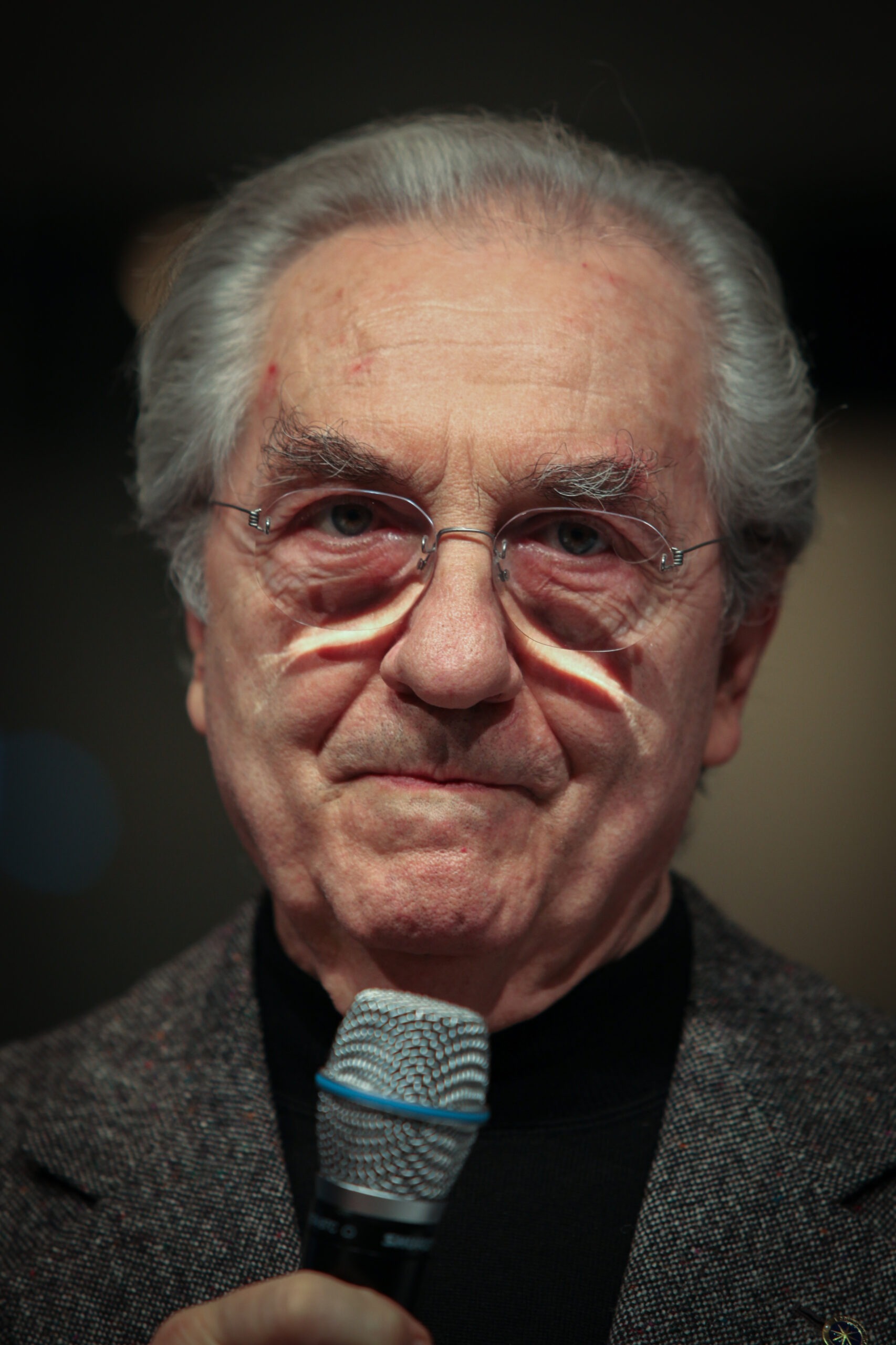
Early Life and Culinary Beginnings
Gualtiero Marchesi, born on March 19, 1930, in Milan, Italy, is widely regarded as the father of modern Italian cuisine. His journey to culinary greatness began in the bustling city of Milan, where he was born into a family of restaurateurs and hoteliers. Growing up in an environment steeped in culinary tradition, Marchesi was exposed to the art of cooking from a young age. His parents owned the hotel and restaurant “Mercato,” where Marchesi developed a deep appreciation for the culinary arts.
After World War II, Marchesi decided to refine his culinary skills and moved to Switzerland, where he attended the prestigious culinary school in Lucerne from 1948 to 1950. This education laid the foundation for his future as a chef, providing him with the technical expertise and discipline that would become the hallmarks of his cooking style. His time in Switzerland was not just about learning techniques; it was also about understanding the importance of ingredients, precision, and the role of a chef in crafting a dining experience.
The Rise to Culinary Fame
Upon returning to Italy, Marchesi worked in his family’s establishment, honing his skills and experimenting with traditional Italian dishes. However, it was his stint in Paris, the epicenter of haute cuisine, that truly broadened his horizons. In Paris, Marchesi was exposed to the innovative techniques of French chefs, which inspired him to think beyond the confines of traditional Italian cooking.
In 1977, Marchesi took a bold step and opened his first restaurant in Milan, simply named “Gualtiero Marchesi.” This marked the beginning of a new era in Italian cuisine. The restaurant quickly gained acclaim, and in 1978, it was awarded its first Michelin star. The recognition was a testament to Marchesi’s unique approach, which combined the elegance and refinement of French cuisine with the rich flavors and traditions of Italian cooking.
Marchesi’s culinary philosophy was rooted in simplicity and the idea that the quality of ingredients should shine through in every dish. He was a pioneer in what would later be known as the “New Italian Cuisine,” a movement that emphasized the use of fresh, local ingredients and innovative techniques. Marchesi’s dishes were known for their clarity of flavor, artistic presentation, and a sense of balance that reflected his deep understanding of both tradition and innovation.
Achieving the Pinnacle: Three Michelin Stars
The pinnacle of Marchesi’s early career came in 1986 when his restaurant became the first in Italy to be awarded three Michelin stars, the highest honor in the culinary world. This achievement not only established Marchesi as a culinary icon but also put Italian cuisine on the global map. His restaurant became a pilgrimage site for food lovers from around the world, who came to experience his groundbreaking approach to Italian cooking.
One of Marchesi’s most famous dishes from this period is the “Riso, Oro e Zafferano” (Rice, Gold, and Saffron), a minimalist take on the traditional Milanese risotto, which he adorned with a thin leaf of edible gold. This dish exemplified Marchesi’s philosophy: elevating simple ingredients to an art form and infusing them with a sense of luxury and sophistication.
Mentorship and Legacy
Gualtiero Marchesi’s influence extended far beyond his own kitchen. He was a mentor to a generation of chefs who would go on to become some of the most prominent names in the culinary world. Among his protégés are Carlo Cracco, Andrea Berton, Davide Oldani, and Enrico Crippa—each of whom has carried forward Marchesi’s legacy in their own restaurants.
Marchesi’s mentorship was characterized by his insistence on precision, creativity, and respect for ingredients. He believed that a chef’s role was not just to cook but to create an experience that could evoke emotion and tell a story through food. His teachings emphasized the importance of discipline in the kitchen, the need for continual learning, and the value of innovation.
Controversy and the Michelin Star Debate
Despite his success and acclaim, Marchesi was not one to shy away from controversy. In 2008, he made headlines by “returning” his Michelin stars, criticizing the Michelin Guide’s evaluation process. Marchesi argued that the guide’s focus on consistency stifled creativity and innovation, two elements that were central to his culinary philosophy. He believed that chefs should be free to experiment and evolve without the fear of losing their stars, which he felt had become more of a burden than a recognition of excellence.
This bold move sparked a debate in the culinary world about the role of awards and recognition in shaping a chef’s career. Marchesi’s decision was seen by many as a statement against the commercialization of fine dining and a call to return to the true essence of cooking—artistic expression and the joy of creation.
As a result of his stance, the Michelin Guide removed Marchesi’s restaurant from its listings in 2009, a move that did little to diminish his stature as a culinary giant. Instead, it solidified his reputation as a chef who valued integrity and creativity over accolades.
The Italian Culinary Academy and Global Influence
In 2006, Marchesi founded the Italian Culinary Academy in New York, further extending his influence beyond Italy. The academy was established with the aim of promoting Italian culinary traditions while encouraging innovation and experimentation. Marchesi’s vision was to create a global community of chefs who would carry forward the principles of Italian cuisine while pushing the boundaries of what it could be.
The academy offered a comprehensive curriculum that combined traditional techniques with modern culinary science, reflecting Marchesi’s own approach to cooking. Students from around the world came to learn not just how to cook, but how to think about food in a way that was both respectful of tradition and open to new ideas.
Through the academy, Marchesi’s impact on the culinary world became even more pronounced. His teachings influenced a new generation of chefs who took the principles of Italian cuisine to different parts of the world, adapting them to local ingredients and tastes while staying true to the essence of what Marchesi had taught them.
The Marchesino: A Culinary Legacy in Milan
In the latter part of his career, Gualtiero Marchesi continued to innovate and surprise the culinary world. In 2008, he opened “Il Marchesino,” a café-bistro-restaurant located in the heart of Milan, adjacent to the renowned Teatro alla Scala. The establishment was a reflection of Marchesi’s evolution as a chef, offering a more casual dining experience while still adhering to the principles of quality and creativity that had defined his career.
“Il Marchesino” quickly became a popular spot in Milan, attracting both locals and tourists who wanted to experience Marchesi’s cuisine in a more relaxed setting. The restaurant’s menu featured a mix of traditional Italian dishes and innovative creations, showcasing Marchesi’s ability to balance the old with the new.
The opening of “Il Marchesino” was significant not just because it was another successful venture in Marchesi’s illustrious career, but because it represented his belief that great food should be accessible to everyone. He wanted to create a space where people could enjoy high-quality cuisine without the formality and expense that often accompanied fine dining.
Honors and Recognitions
Throughout his life, Gualtiero Marchesi received numerous honors and awards that recognized his contributions to the culinary world. In 1991, he was awarded the title of Commendatore of the Order of Merit of the Italian Republic by President Francesco Cossiga, one of the highest honors in Italy. This recognition was a testament to Marchesi’s impact not just on Italian cuisine, but on Italian culture as a whole.
In addition to this, Marchesi received the Ambrogino d’Oro, the highest honor awarded by the city of Milan, further cementing his status as a cultural icon in his hometown. These accolades, while prestigious, were secondary to Marchesi’s true passion: the art of cooking and the pursuit of culinary excellence.
In 2001, the Universitas Sancti Cyrilli in Rome awarded Marchesi an honorary degree in Food Science, recognizing his contributions to the field of gastronomy. This honor highlighted Marchesi’s role not just as a chef, but as a thought leader in the culinary world, whose ideas and innovations had transformed the way people thought about food.
Final Years and Legacy
Gualtiero Marchesi passed away on December 26, 2017, at the age of 87, leaving behind a legacy that continues to influence chefs and food lovers around the world. His death marked the end of an era in Italian cuisine, but his influence lives on through his many protégés, the Italian Culinary Academy, and the countless chefs who have been inspired by his work.
Marchesi’s legacy is not just in the dishes he created or the awards he received, but in the way he changed the perception of Italian cuisine. He elevated Italian cooking to an art form, showing that it could be as sophisticated and innovative as any other cuisine in the world. His emphasis on quality, simplicity, and creativity continues to guide chefs today, making him a true pioneer in the culinary world.
Conclusion
Gualtiero Marchesi’s life and career are a testament to the power of innovation, creativity, and a deep respect for tradition. From his early days in Milan to his rise as a global culinary icon, Marchesi consistently pushed the boundaries of what Italian cuisine could be. His influence extends far beyond his own restaurants, shaping the careers of countless chefs and transforming the culinary landscape in Italy and beyond.
Marchesi’s story is one of passion, dedication, and a relentless pursuit of excellence. His legacy is not just in the dishes he created, but in the way he changed the world’s perception of Italian cuisine. As the father of modern Italian cooking, Gualtiero Marchesi will be remembered not just as a great chef, but as a visionary who redefined what it means to cook with passion and purpose.


